Technology

Toledo father and son build robot on display at Henry Ford Museum

Written by Jason Mack | | jmack@toledofreepress.com

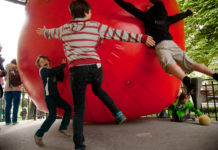
Vic Miller and his son Mick are taking a different approach to recycling this summer, spending up to eight hours in the garage every Saturday using old junk to build a robot. They are displaying their Recyclobot project from July 28-29 during Maker Faire Detroit at the Henry Ford Museum in Dearborn, Mich.

“It’s part art and part mad science,” Vic said. “That’s what Maker Faire is about. There is a lot of science there and heavy engineering guys. At the same time, there are a lot of artistic makers that just make big crazy crap. There’s a life-size version of the Mouse Trap game. They use a real bathtub and drop a safe on top of a pickup truck. That’s pretty damn cool.”

“I was drawn to the engineering and artistic aspects of it,” Mick said. “It seemed like a really cool project to do. I love seeing people’s reaction to it. People driving down the street honk, stop and ask what it is.”

The artistic aspects of the project come naturally to Mick, who is entering his junior year at Toledo School for the Arts with a focus on photography and guitar playing.

The idea for the project came from wanting to do something with old bikes in the garage. Vic said they wanted their creation to be unique, so they built a reverse tricycle using extra tires and duct tape to create a pulley system. Recyclobot is made almost exclusively of stuff they had or found laying around such as a crank shaft, bed frame, street signs, fencing and a globe.

Vic Miller and his son Mick with Recyclobot.

“It really was what we had on hand,” Vic said. “Everything about this was fabricated this way because of what we had. We wouldn’t buy stuff to incorporate an idea. A lot of stuff has changed because of the parts we had.”

Vic participated in Maker Faire for the first time last year with an electronic performance piece he designed for Artomatic 419! called Tech Disobey Lab. It is being incorporated into Recyclobot as part of a laser target game for the fair. The targets are made of CDs, bottle caps and the solar panels from old garden lights, and Recyclobot will be run on a stationary track by a solar-powered motor. It is one of more than 450 projects that will be on display at the third annual Maker Faire Detroit.

“There’s a whole do-it-yourself thing going on now,” Vic said. “Some people are calling it the third industrial revolution. Everyone is starting to make their own stuff. Instead of patenting something and selling it, people make something and put the instructions on the Internet so everyone can make it. There’s a whole open source thing. That’s what Maker Faire is. It’s a sharing of innovation.”

“I think it’s fantastic because it’s an opportunity for a family to create something together, and it’s creating much more than having fun,” said Christian Overland, executive vice president of the Henry Ford Museum. “It’s a meaningful memory that they will have forever. More importantly, the kids will learn from the creation process of doing things with their hands and figuring things out and using that to create a better future. That’s what Henry Ford is about. Our mission is to inspire people to build a better future.”

One skill Mick learned from building Recyclobot is how to weld.

“I had somewhat of an idea from watching my dad, but when I started working with it and testing it out it felt different,” Mick said. “I got it down pretty fast. I did burn myself though.”

His little sister Melody was less concerned with any accidents and more worried about the mess their projects make.

“It’s good, but really messy,” Melody said. “I’ve had to clean up after them for the past few years.”

“We don’t know what we’re going to do with this after Maker Faire,” Vic said. “It’s already kicked my car out of the garage.”

His wife Sandy said she is content as long as there is room for her car.

“I used to say, ‘No more junk,’ and now I find myself looking for things he could use,” she said. “Even my parents, they’ll clean out their garage and ask if Vic can use different things. Besides Recyclobot, Vic has made some pieces of art out of stuff he found in the garage that had been there since the original owners had the house.”

Sandy was impressed by how they turned so much junk into the robot she sees today.

“It started out walking in the garage and seeing pieces spread all over, and I swear every time I go in there it became more and more of a personality,” she said. “Now that it’s done, I walk in there and it makes me smile. It makes me laugh, especially when I see my son riding it because it’s kind of goofy looking. It amazes me that they took all that stuff and made something cool out of it.”

“[Sandy] knows that we’re kind of nuts,” Vic said. “We all are. My daughter is kind of nuts, too. She is outnumbered. She is the rock.”

After learning to build from a young age, Vic was naturally drawn to an event like Maker Faire.

“I grew up in a family where my grandfather was a hands-on kind of guy and I was taught a lot of those skills as a kid,” he said. “They have been incredibly useful as an adult, even though I don’t work with my hands for a living. I’m a digital producer. I work on the Internet. But being able to put up your own fence and fix your washer and dryer, that is incredibly valuable. Mickey has been raised the same way.”

“There is nothing practical about this, but that’s the fun of it,” Vic said. “It’s like being a kid. It gives me hope when you see young people doing awesome things.”

Tags: ,

Historian kicks off museum’s Titanic Tuesdays lecture series

Written by Sarah Ottney | Managing Editor | sottney@toledofreepress.com

Author and scholar Edward Tenner is fascinated by the unintended consequences of innovation.

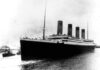
One of the most compelling examples is Titanic, the luxury liner thought to be unsinkable that struck an iceberg on its maiden voyage in 1912 and sank, killing more than 1,500 people.

The belief Titanic was unsinkable was so ingrained many passengers left valuables in their cabins.

“In a sense, it was lucky Titanic had its architect aboard,” Tenner told Toledo Free Press. “He was able to do some quick calculations and see the ship wasn’t going to make it. If the architect hadn’t been there, who knows how many people would have died because there would have been more optimistic assumptions about the ship’s ability to manage the inflow of water.”

Tenner, who recently spoke at the Henry Ford Museum in Dearborn to kick off its Titanic Tuesday lecture series with a lecture titled “Thinking about the Unsinkable,” said he helps people put historical events into context.

Edward Tenner

“It’s impossible to unlearn or disregard everything we have seen or heard, but what I hope is that people can at least partly suspend the extremely powerful visual images they have seen of Titanic and try to put themselves into the mentality of people who have not yet seen those images and to revisit the actual world of April 14, 1912,” Tenner said.

For example, many believe Capt. Edward Smith acted rashly by continuing to travel despite iceberg warnings, but Tenner said it was not unusual for ship captains to proceed at normal speeds in such conditions.

“When you see in films he was getting warnings about ice and kept going you think, ‘What an idiot,’ but at the hearings in London, captains testified they were all doing it. Where ships collided with sea ice, ships did pretty well,” Tenner said. “Of course, they had never seen ‘A Night to Remember’ or ‘Titanic.’”

Fog was more feared by captains than icebergs, Tenner said.

“It wasn’t that captains were unconcerned about the risks, but they happened to be focusing on the wrong risks,” he said. “I believe everyone thought they had that part under control and were worried about other things, like fog.

“My own conclusion is that although there were many serious omissions, the big problem of Titanic was really an unusual set of conditions that were hard to foresee, none of which in itself would have been fatal, but together made the disaster such a stunning one.”

Overconfidence is another factor in many disasters. Paradoxically, leaders with the most experience may be most at risk for accidents.

“They discount a lot of risks that terrify younger captains,” Tenner said. “The captain of the Californian, for example, was in his 30s and absolutely terrified of sea ice.”

Overconfidence plus too much faith in modern navigation software may also have been factors in the recent fatal wreck of the Italian cruise ship Costa Concordia, which ran aground in January under the command of an experienced captain, Tenner said.

Sometimes fixing one problem can lead to a different problem.

The Titanic disaster prompted many new regulations, including a requirement ships carry enough lifeboats for everyone aboard. Ironically, the weight of additional lifeboats likely caused the already top-heavy SS Eastland to topple on the Chicago River in 1915, killing more than 800 people.

Upcoming speakers

The Titanic Tuesday lecture series debuted in conjunction with the museum’s new exhibit, Titanic: The Artifact Exhibition, which runs through Sept. 30.

The series will continue 7 p.m. May 8 when filmmaker Stephen Low will discuss the making of his IMAX film “TITANICA,” which features archival photos of the ship’s construction and footage of its wreckage combined with recollections of Titanic survivor Eva Hart.

Other upcoming speakers include:

  • 7 p.m. June 12, “The Philadelphia Experience: Time Takes its Toll”: Shipwreck sleuth and underwater photographer Tony Gramer will discuss his film about the search for an 18th century Great Lakes schooner.
  • 7 p.m. July 10, “Michigan Connections to R.M.S. Titanic”: Underwater archaeologist Ken Vrana will compare the Great Lakes to the bottom of the Atlantic Ocean and discuss Michigan’s connections to Titanic.
  • 7 p.m. Aug. 14, “The Ship Magnificent”: Author and Titanic historian Bruce Beveridge.
  • 7 p.m. Sept. 11, “RMS Titanic: A Century in Cinema”: Ron Bartsch, senior projection manager for the Henry Ford IMAX Theatre, will discuss how the disaster was portrayed in films leading up to James Cameron’s 1997 film.

Lectures are free with admission to the museum. Museum admission is $17 for adults (age 13-61), $15 for seniors (62 and older), $12.50 for youth (age 5-12) and free for members and children (age 4 and under). The museum is open daily from 9:30 a.m. to 5 p.m. with extended hours until 9 p.m. on Tuesdays.

The Titanic exhibit is a separate admission and has timed tickets. Cost for both the museum and exhibition is $27 for adults, $22.50 for youth, $25 for seniors (62 and older), $10 for members and free for children. Reservations are encouraged.

For more information and a full listing of lectures, visit www.hfmgv.org/events/titanicTuesdays.aspx.

Tags: , ,

History

Henry Ford exhibit brings Titanic experience to life

Written by Sarah Ottney | Managing Editor | sottney@toledofreepress.com

Titanic buffs, history buffs and movie buffs alike may want to make time for a trip across the state line to visit the Henry Ford Museum in Dearborn.

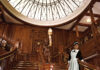
“Titanic: The Artifact Exhibition,” on display through Sept. 30, features more than 300 Titanic artifacts, 250 of which have never been displayed in Michigan. There are also several re-creations, including a first-class stateroom, first-class hallway, third-class cabin, an iceberg and the grand staircase, said Tom Varitek, senior manager of program operations.

The exhibit takes visitors chronologically through the history of Titanic, from its construction to its ill-fated voyage to the discovery of its wreck and artifact recovery efforts.

All the artifacts on display were collected from the debris field at the wreck site; none were taken from the ship itself, which is treated as a memorial, Varitek said.

Display items include a lump of coal, a collection of men’s travel items and a suitcase full of preserved papers.

“The exhibit uses everyday artifacts to create context of extraordinary historic events. The lump of coal is a touchstone to the boiler operators who, even though they knew the ship was going down, stayed at their stations and kept shoveling coal, which kept the lights on,” Varitek said. “You can imagine the terror if the lights would have gone off on top of everything else. Who can say how many lives they saved with people still able to see exits and stairs.”

Grand Staircase replica

The travel items include a shaving kit and instructions on how to work a new camera.

“That really brings the story home to me because those are things I would bring on a trip,” Varitek said.

The papers in the suitcase were preserved because the tanning oil in the leather kept out microorganisms, Varitek said.

“It’s amazing that after seven, eight, nine decades that paper didn’t disintegrate,” he said. “You can still read the writing on letters and postcards even though it’s been on the ocean floor.”

At the start of the exhibit, each guest is handed a boarding pass with the name of an actual Titanic passenger or crew member. At the end of the exhibit, visitors learn the fate of their person.

“If people can associate themselves with a historic event, it becomes a little more real,” Varitek said. “What the museum tries to do is create a touchstone for a historic event, so hopefully at the end it will become a little more real as a tribute to the people and the lives lost and history in general.”

The re-created portions of the ship and iceberg also help bring the story to life, Varitek said.

“We’re really happy to have the staircase. It’s the only traveling grand staircase that’s out there,” he said. “If you’ve seen the movie, it’s the famous ‘Meet me at the clock’ moment for Jack and Rose.”

Visitors can relive that famous on-screen moment in 3-D on the museum’s IMAX movie screen as James Cameron’s “Titanic: 3-D” will be showing through July 19 and again from Sept. 4-30 on the 62-foot-by-85-foot wide screen, the largest movie screen in Michigan. The IMAX theater will also screen filmmaker Stephen Low’s “Titanica,” featuring archival photos of the ship’s construction and footage of its wreckage on the ocean floor combined with recollections of Titanic survivor Eva Hart.

Even 100 years after it sank, people are still fascinated by Titanic, Varitek said.

“Part of it, I think, comes from the rumor that Titanic was unsinkable; at a time when the world was really changing, with the automobile and the airplane, it seemed like nothing could stop new technology, so a tremendous failure of technology really caught people’s attention at the time,” Varitek said.

“People are intrigued by moments where they can say, ‘If only we could have done this or that differently,’ and the fact this was the maiden voyage with some

celebrities on board doesn’t hurt. Plus the movies — Hollywood

has done such a good job of

telling the story, it’s kept it fresh in everyone’s minds.”

Nonmember exhibit ticket prices include admission to the museum and are $27 for adults (13-61), $22.50 for youth (5-12) and $25 for seniors (62 and older). Children 4 and younger are free. Admission for members is $10. The museum is open daily from 9:30 a.m. to 5 p.m. with extended hours until 9 p.m. on Tuesdays and for the IMAX theater.

Because the Titanic exhibit is timed, visitors are encouraged to make reservations to ensure a time slot is available when they plan to visit, Varitek said.

Other Titanic-related programming planned at the museum includes:

O “Titanic Remembered: 100th Anniversary Event,” a sold-out commemorative event set for 7 p.m. April 14, featuring hors d’oeuvres, a champagne welcome, dinner, dessert and exclusive access to the exhibit.

O Titanic Tuesdays, a speaker and author series set for the second Tuesday of each month. The lectures are free with admission to the

museum. The series kicked off April 10 with author and historian Edward Tenner presenting “Thinking about the Unsinkable” about the unintended consequences of innovation. The series will continue May 8 with Low discussing his

film “Titanica.”

For a full listing of events, visit the website www.hfmgv.org/events/titanicTuesdays.aspx.

For more information or to reserve tickets, call (313) 982-6001 or visit www.thehenryford.org/titanic.

Tags: ,