Home Blog

How to vote in 2024

0
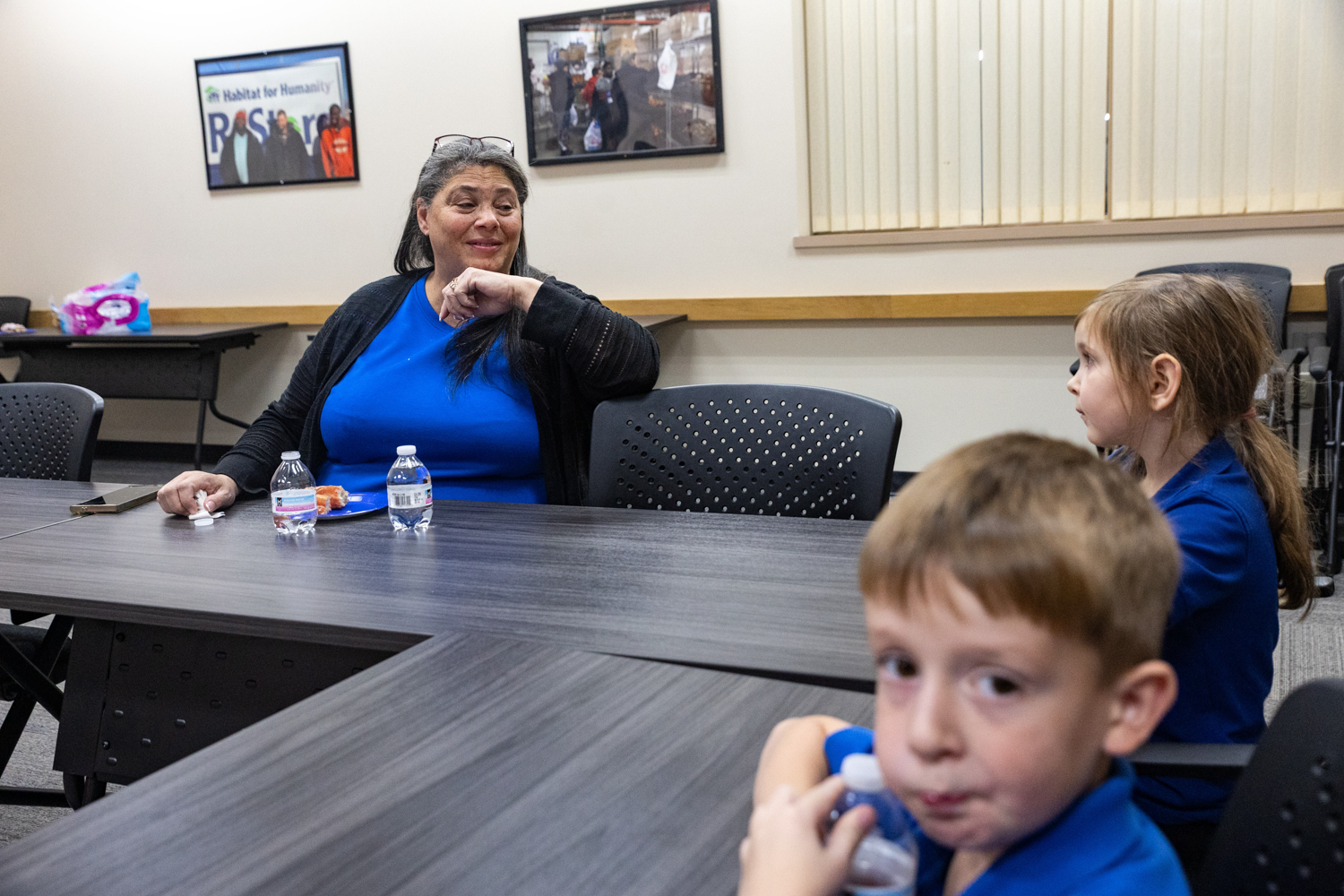
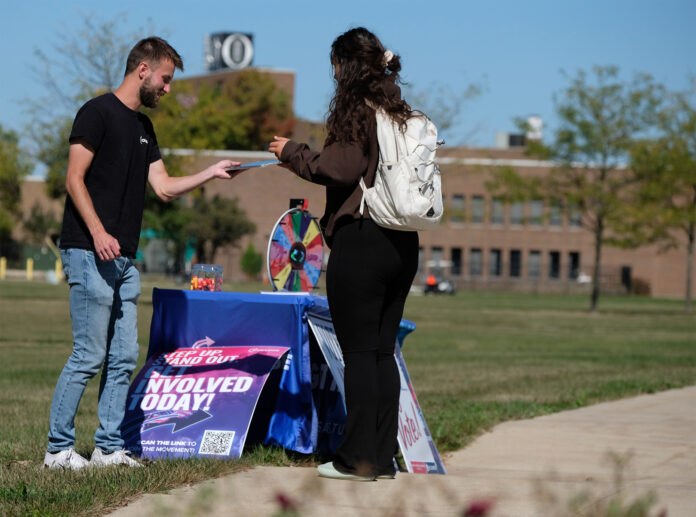
Lucas Zielinksi, with Turning Point USA, hands Amelia Mathkour, a music, business and tech major at Owens Community College, a pamphlet about voting registration. Zielinksi said he was on campus for the day to help students register to vote. (TFP Photo/Lori King)

Lucas County Board of Elections explains voting details, process

Toledo – With Election Day a month away, preparations are in full swing at the Lucas County Board of Elections office.

“We’re up and running and getting everything ready,” said Timothy Monaco, deputy director of the elections office. “It’s a wonderful time. It’s important to exercise your right to vote.”

Logistics that the staff and officers have been handling for weeks on behalf of Lucas County’s 303 voting precincts include preparing ballots, training precinct election officials, and getting early voting dates and times posted on their website.

Monaco said the most commonly asked question from voters during the past couple of weeks has been when absentee ballots will arrive in the mail. 

Here’s the answer: Ohio voters can look for the absentee ballots starting Oct. 8, which is one day after registration ends for the Nov. 5 election.

The Lucas County Board of Elections staff doesn’t give predictions on voter turnout, Monaco said. But, according to state election records, 67 percent of registered Lucas County voters participated in the 2020 presidential election, and 66 percent did so in the 2016 presidential election. This participation includes absentee voting, early in-person voting and traditional Election Day voting.

Those choices are meant to help all eligible voters participate, whether they prefer going in person to a local polling site or to cast a ballot before they travel out of town.

“It’s important to make your plan as to who you are going to vote for,” Monaco said. “Make sure you make a plan and know what is on your ballot.”

While the presidential campaign is the key race of the Nov. 5 election, there are also races in Lucas County for local judges and city officials. For those who want to see the list ahead of time, ballot proofs are available for review on the election board’s website.

“Ballots will be three pages for everyone and four pages for some,” Monaco said.

While some people remember how they wish to vote when going to the polls, others find it helpful to bring paper notes or refer to a list on their phone, Monaco said. “Some folks really come prepared,” he said.

“It’s also important to be respectful at the location,” he added, referring to an Ohio law that prohibits photos of marked ballots. “We do ask that you limit cell phone use at the ballot.”

Many other election details are explained at lucascountyohiovotes.gov.

Election calendar

Key dates for the November 5 election:

  • Military and overseas civilian voting: Started Sept. 20.
  • Voter registration deadline: 9 p.m. Oct. 7.
  • Early in-person voting season: Oct. 8.-Nov. 3.
  • Absentee ballot postmark deadline: Nov. 4.
  • Election Day: Nov. 5.

CAMPUS TALK

OWENS COMMUNITY COLLEGE STUDENTS SOUND OFF ABOUT VOTING

Question: How important is voting to you?

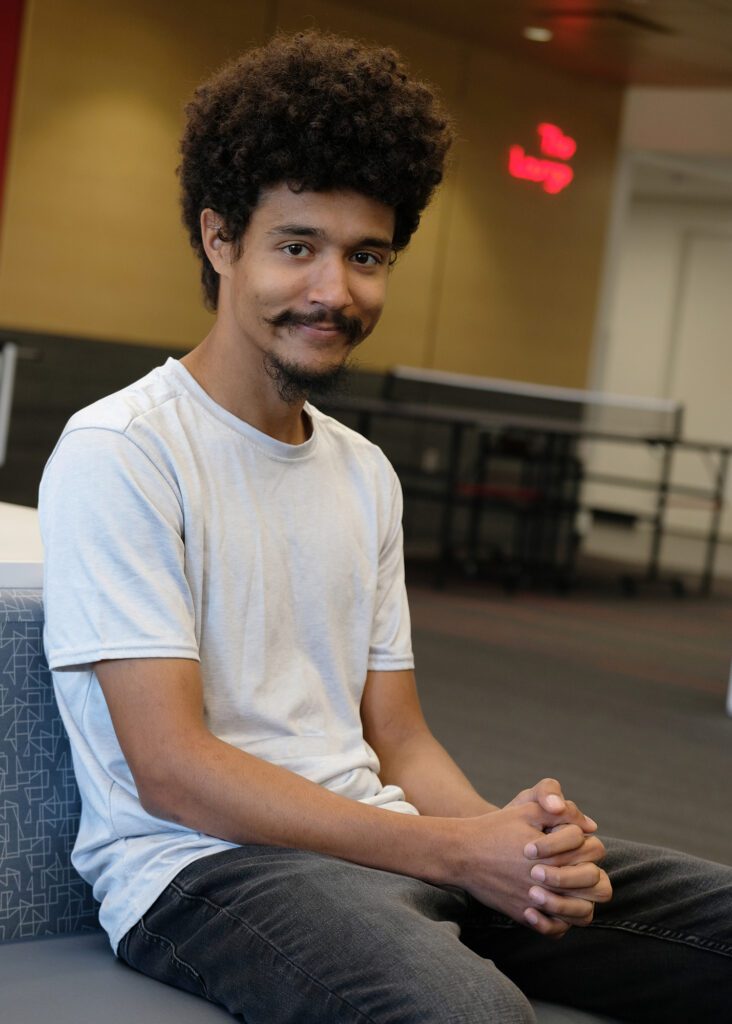
Voting is not my main concern, but it is pretty important because it is the future of America and I would like to have a say in what is gonna be my future. I usually try to vote on voting day, if I can’t I’ll do the absentee ballot.

Oliver Odendahl | EMT Major | Tontogany Resident

I am not a registered voter. If I was to lie to you I’d say yes. But honestly, I don’t have enough time … it’s not really a main priority, even though it should be. I do plan on voting at some point, maybe when I’m in my adult phase. Even though I’m not a registered voter I do think voting is important because it basically determines the society and the rules and regulations we live by.

James Johnson | Broadcast Media Technology Major | Toledo Resident

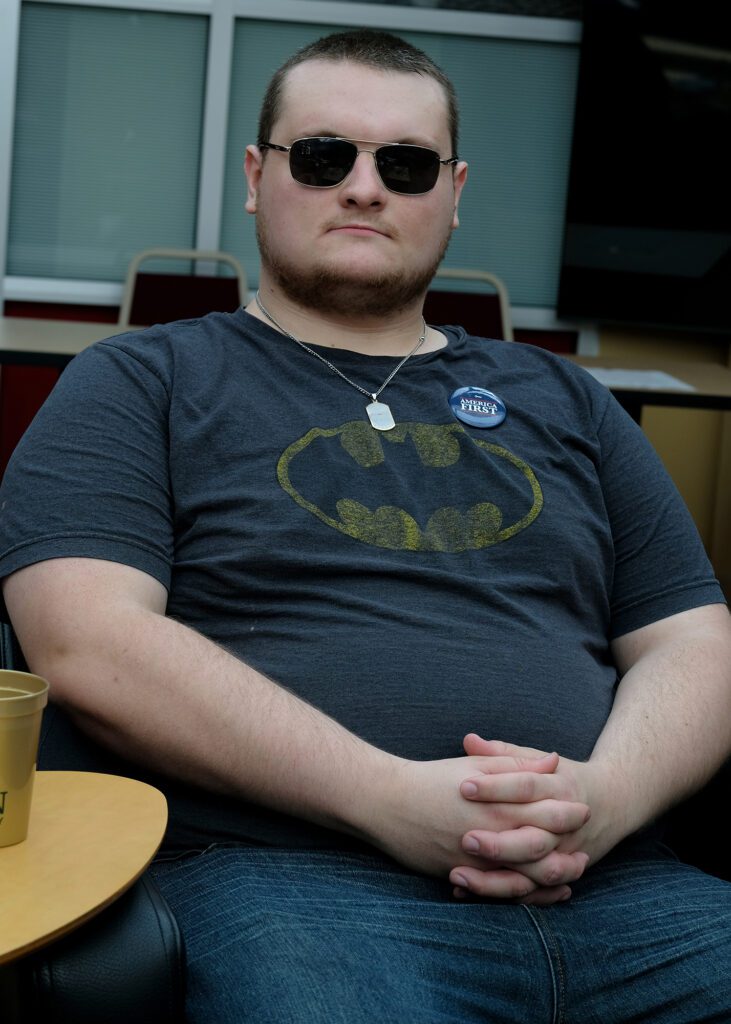
I’d say voting is very important. There’s certain aspects of it that do feel sort of depressing, when you think about it, because a lot of people would say people voting normally wouldn’t matter because of a small majority in the Electoral College – their votes matter 100 times more than your own. That’s what it feels like at least from what I know. It does feel a little degrading knowing that’s going to happen.

Nivant Dawson | Business Major | Toledo Resident

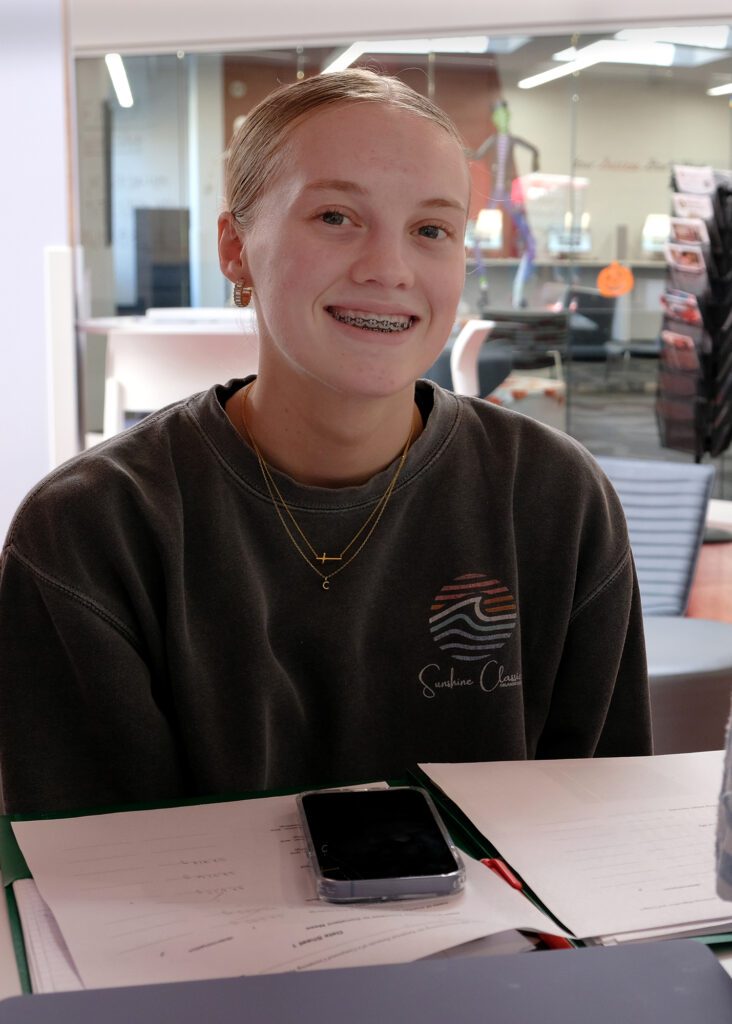
I think voting is important, but I’m not exactly sure why it’s important. I mean, there’s a lot of things that come from it. You’re voting for someone that you’re putting your trust and you’re faith into to guide us all in the right direction, but we just all don’t know what that direction is yet. So, we’re just kind of free-balling it, in a way. So, I don’t know … I’ve never voted before but this will be interesting. I really don’t know what all is involved. I just have a lot to learn about voting – like what I should be looking for in the leader I’m going to be voting for. So, yeah, it’s coming up soon. There’s a lot to learn.

Sydney Stanley | Chemistry Major | Millbury Resident

Voting is very important, especially in this day and age, when everything’s going on.

David Chase III | Literature Major | Toledo Resident
Registration details

Ohio voters must be registered by 9 p.m. Oct. 7 to be eligible to vote in the Nov. 5 election.

Residents can register to vote, look up voter registration, change their address, find an early voting location, look up Election Day polling location or track an absentee ballot at VoteOhio.gov.

Photo ID requirement

Bring your photo ID when voting. The options are:

- Current Ohio driver’s license or State of Ohio ID card.

- Interim ID form issued by Ohio Bureau of Motor Vehicles.

- U.S. passport or U.S. passport card.

- U.S. military ID card, Ohio National Guard ID card or U.S. Department of Veterans Affairs ID card.

A registered voter who has changed his or her name since the photo ID was issued will need to show proof of legal name change and sign a form. A photo ID card can show a former address if a current address is on file with the voting records. If you forget a photo ID, you can request a provisional ballot. 

How to vote absentee

An absentee ballot in Ohio needs to be requested, signed, dated and submitted for each election. Military personnel and civilian overseas voters can file one application for all elections happening in a given year.

The application asks for the number on your Ohio driver’s license or Ohio ID card, last four digits of your social security number, or a photocopy of other eligible ID such as a U.S. passport or military ID.

Mailed absentee ballots must be postmarked by Nov. 4 and can be hand delivered to the Board of Elections on Nov. 5.

Additional instructions are on the Ohio Secretary of State’s website.

In-person early voting

Ohio’s in-person early voting season begins Oct. 8 and ends Nov. 3. 

The Lucas County Early Vote Center is at 3737 W. Sylvania Ave. Suite 121 Entrance C (at the rear of the Lucas County Board of Elections building) in west Toledo.

Voting times and dates can be found at LucasCountyOhioVotes.gov.

Election Day voting

Polling sites are open in Ohio from 6:30-7:30 p.m. on Nov. 5. You can look up your polling location at VoteOhio.Gov.

What’s on the ballot?

A “ballot proof” is available for review on the Lucas County Board of Elections page. It lists candidates and ballot issues by precinct, so voters know what to expect.

For example: Six president/vice president candidate teams have declared in Ohio, with an additional write-in option available. Other candidate races include U.S. Senator, Lucas County Sheriff and openings on Toledo City Council.

Ohio Issue 1 is a proposed state constitutional amendment that has gained a lot of attention. This issue, if approved, would designate a redistricting commission to draw state legislative and congressional districts.

There are other issues locally, such as a proposed bond issue for the Toledo-Lucas County Public Library and a tax renewal request from the Toledo-Lucas County Port Authority.

Are ballot “selfies” allowed?

Ohio does not permit photos to be taken of a marked ballot. It’s actually a fifth-degree felony should that take place, according to Ohio law.

The “I Voted” Sticker

A traditionally popular way to showcase voter participation is through an “I voted” sticker, picked up on Election Day at the polling site.

Ohio’s current “I Voted” sticker design was adopted in 2019 through a student art contest. A red squiggle depicts a map of Ohio, nestled in a blue circle outline, with the phrase “Ohio Voted.”

Voters are invited to download the image to share on social media at the Ohio Secretary of State website. That website also has also a “future voter” coloring page for children available for download.

Is campaigning allowed at election sites?

Ohio does not allow election campaigning, also known as electioneering, within 100 feet of a voting site. This means no campaigning messages on attire such as shirts or hats, Monaco said.

Two small United States flags are placed at each voting site to designate the “neutral” zone where this applies. 

Where is the Board of Elections office?

If you need to visit the Lucas County Board of Elections regarding a voting matter, that office moved about two years ago from its former location at One Government Center to 3737 W. Sylvania Road in West Toledo.

When are election numbers official?

Ballots cast on Election Day will be delivered in person to the Lucas County Board of Elections for the counting procedures.

There will be numbers reported after that count is complete. 

The Ohio Secretary of State does not consider voter counts to be official until two or three weeks later, after provisional ballots are accounted for and to give time for absentee ballots to arrive that met the postmark deadline.
City Council agenda review draws unusual crowd due to Flock

0
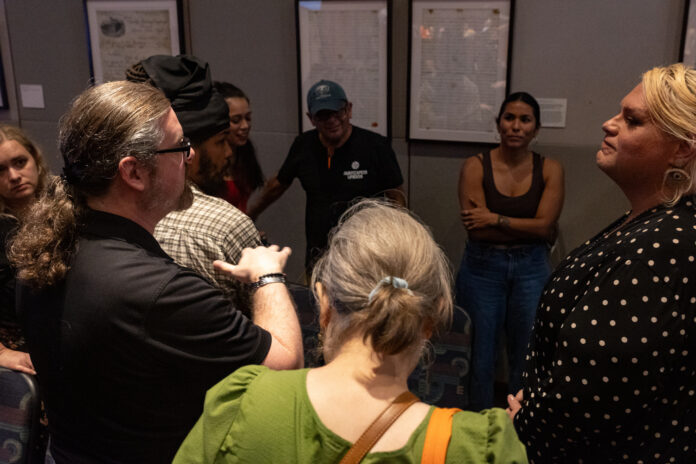
Sean Nestor, an outspoken activist against Flock Group, Inc. speaks with other anti-Flock activists during a Toledo City Council agenda review at Toledo City Hall, 1 Government Center, in downtown Toledo, on Tuesday, Oct. 13. (TFP photo by Stephen Zenner) *Disclosure: Nestor is the president of the Toledo Free Press board.

TOLEDO – Heated discussion on Flock Group, Inc.’s Automated License Plate Reader (ALPR) cameras dominated Toledo City Council’s agenda review at city hall on Tuesday, Oct. 13.

Public attendance

Members of Abriendo Puertas Para Soluciones (APPS), a nonprofit supporting immigrants, and an anti-Flock activist, Jessica Molina, posted across social media asking all who opposed the ALPR cameras to sit-in on the agenda review on Tuesday afternoon to show support for a resolution asking Toledo Mayor Wade Kapszukiewicz to rescind the contracts with Flock.  

“You do not have to speak or give public comment. Simply show up! More people in the room sends a clear message that our community is paying attention and cares about this issue,” Molina’s social media comment read.

Before the meeting began, Molina said, “I am out here because APPS has been working with or next to City Council for some time now, trying to get these Flock cameras to come to an end.”

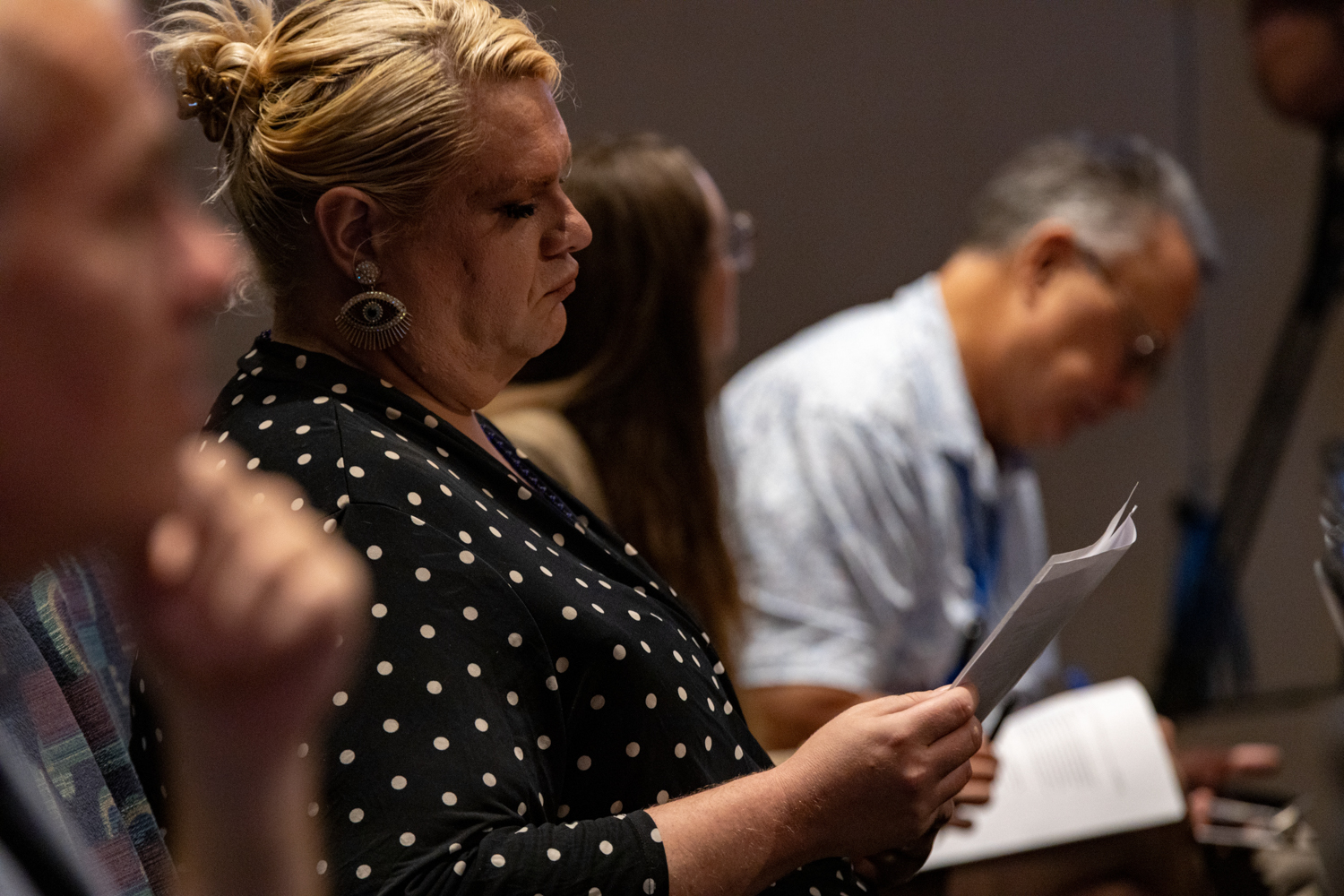
Agenda reviews are generally empty meetings, but around 40 people showed up to quietly voice opposition to the surveillance system. Council Member At-Large Nick Komives made sure to acknowledge the guests to the meeting.

“…This room is generally not filled…when we have agenda review meetings, and it’s very clear that the public is concerned, I would say mostly about this issue [Flock], which is why they’re here.”

Nick Komives, Toledo City Council member at-large, speaks during a Toledo City Council agenda review meeting. (TFP photo by Stephen Zenner)

Message to the mayor

Resolution file name: TMP-12977, originally drafted on Oct. 9, will be voted on this coming Tuesday, Oct. 20, and requests the removal and deactivation of all Flock equipment, the deletion of Flock data and the termination/non-renewal of contracts with Flock Group, Inc. 

Clear opposition came from District 2 Councilman Adam Martinez, who had previously put forth an ordinance, O-307-26, expanding Flock equipment in his district. After a September vote to audit the Flock system, his ordinance was tabled, pending the audit of the Flock system.

Martinez called the new resolution against Flock “political theater.”

“At the end of the day, we know where the mayor is going to stand on this, or at least, I presume we know where the mayor is going to stand. Even if this council is split, it doesn’t do anything,” he said. 

George Sarantou, Toledo City Councilman at-large, talks about how Flock Group, Inc.’s technology has been supported by Mayor Wade Kapszukiewicz. (TFP photo by Stephen Zenner)

A strong proponent of Flock cameras, George Sarantou, councilman at-large, echoed Martinez’s sentiments, and told his colleagues that last week, Kapszukiewicz assured Sarantou that he was in favor of “retaining and maintaining” the Flock system. Sarantou also quoted TPD Chief Mike Troendle, who warned of an uptick in crime if the contract with Flock was canceled. 

In response to the Flock resolution, George Kral, chief of safety and internal services, spoke on behalf of the administration, and said halting the Flock system before the external audit of the Flock system was completed would be premature. 

Regardless, Molina said, “The mayor, at this point in time, through our meetings with him, has mentioned that City Council has all of the power, so I think this resolution is really putting out there who actually has the power to end the contract.” 

She added, “I think this is a mayoral dominant city.”

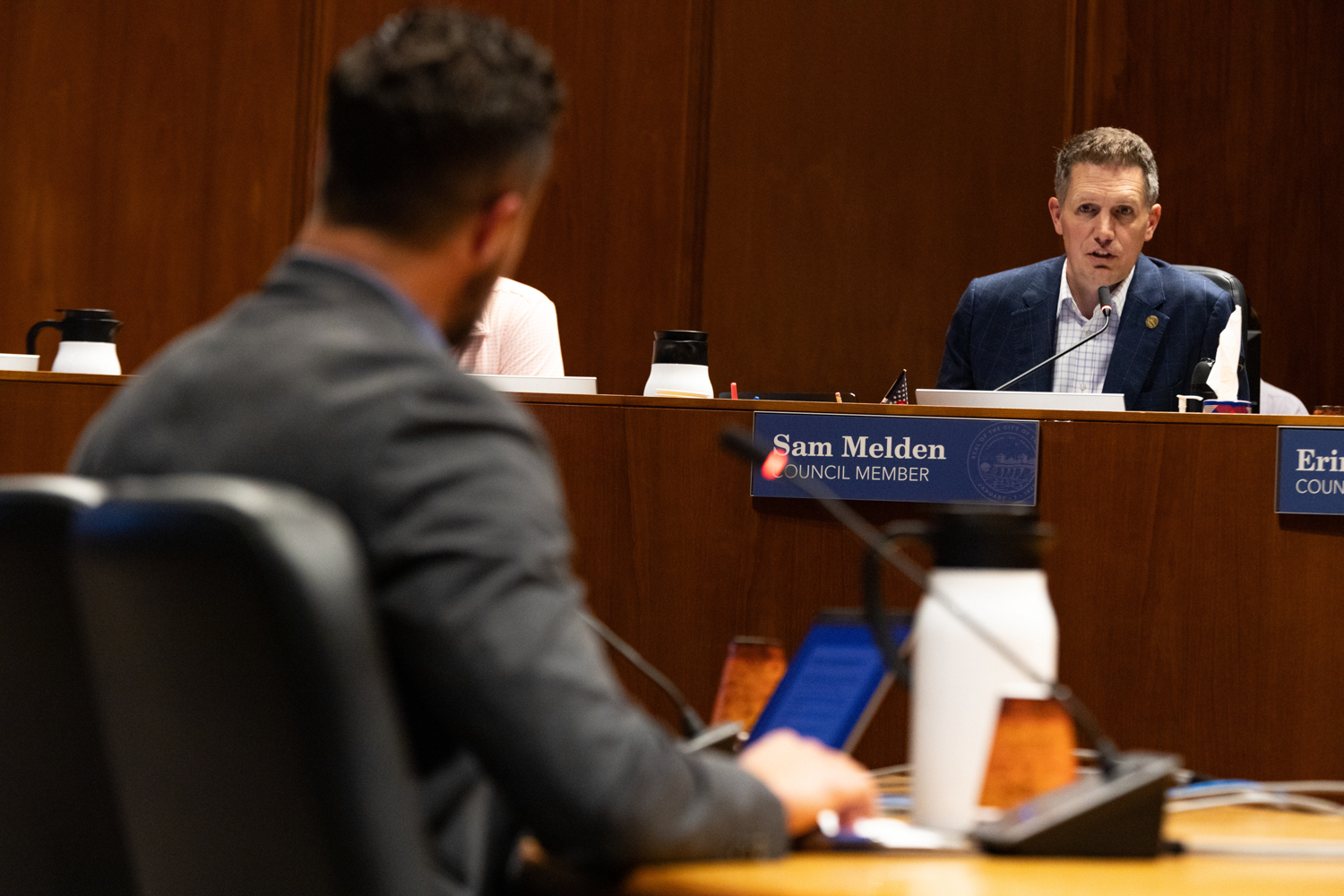
Sam Melden, Toledo City Council member for District 5, speaks to Brandon Sehlhorst, chief growth officer for the city of Toledo. (TFP photo by Stephen Zenner)

Divide in Council

Most members of Council did not rehash their opinions on Flock during the agenda review. 

Five members, Komives, Brittany Jones (At-Large), Theresa Gadus (District 3), Mac Driscoll (At-Large) and Erin Kramer (At-Large), sponsored the resolution stopping the use of Flock. 

And when asked if Komives even had the votes to make this resolution possible he said, “I’m counting right now on six votes ‘yes,’ and I am hopeful that a seventh vote will join us and listen to the public, truly, and do what the public is asking us to do.”

Driscoll and Sam Melden (District 5) both walked a more center line on the Flock discussion, with Driscoll outright supporting getting rid of Flock and Melden raising concerns. 

Both councilmen brought up the issue of data security and AI usage as major concerns to moving forward with Flock, although Melden expressed a desire to review the usage of AI with other partners of the City of Toledo as well. 

Driscoll concluded, “We’ve got to be very careful about what we’re collecting or what somebody else is collecting on our behalf,” and rejected the idea of using Flock. 

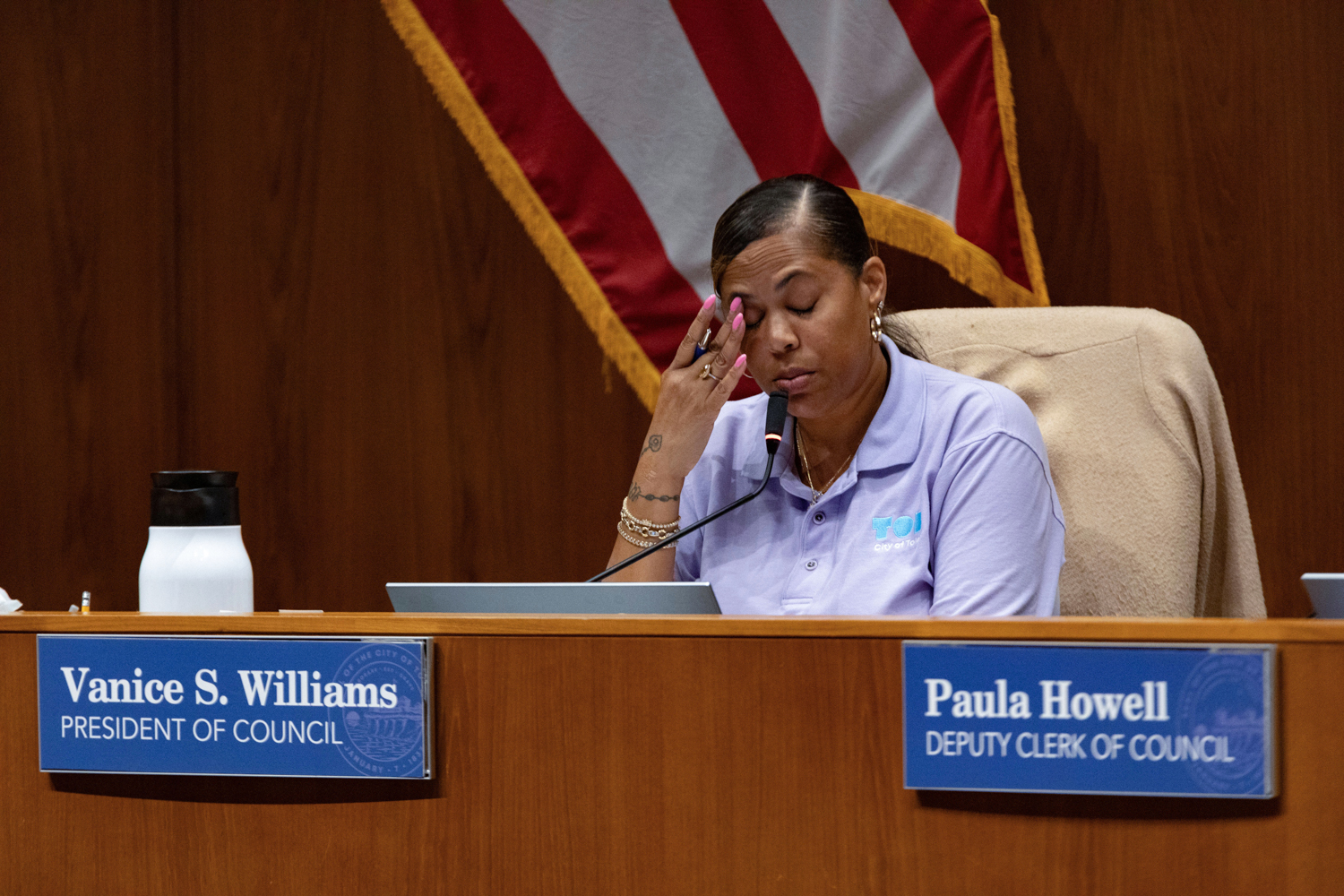
Vanice Williams, Toledo City Council president and representative for District 4, has her patience tested during a Toledo City Council agenda review meeting. (TFP photo by Stephen Zenner)

Attendees erupted in applause following Driscoll’s remarks, and Vanice Williams, president of Council and representative for District 4, banged the gavel five times to interrupt attendees’ cheers. 

“We don’t do that at agenda review,” she said and invited attendees to come to committee meetings, where that would be an appropriate response. Williams never spoke on the issue of Flock at the agenda review, but it was clear her patience was tried as someone trying to keep order and as an ardent supporter of Flock and police.

“Bias against Flock,” is how Martinez explained the national uproar against ALPR cameras, and pointed out that a gang intelligence software was approved unanimously without any second thoughts from Council or the public in August. 

GangScope is the name of the software, purchased at $35,000 a year, which works as a database cataloguing information police departments have, specifically on gangs and gangmembers. 

Information within GangScope includes names of gang members or suspects along with their photos, cars or other assets that have been part of investigations, and this information has been made searchable across departments.

There is no surveillance component to GangScope, only information curated by law enforcement in relation to gang activity and made available to the Toledo Police Department (TPD) for about 12 percent of the cost of the main annual Flock contract ($282,000).

Martinez later said that he would reevaluate his position on Flock if the audit brought back concerns, but without information telling him to doubt the system, he said he trusted the word of the TPD officers who had said there was no abuse of Flock in Toledo. 

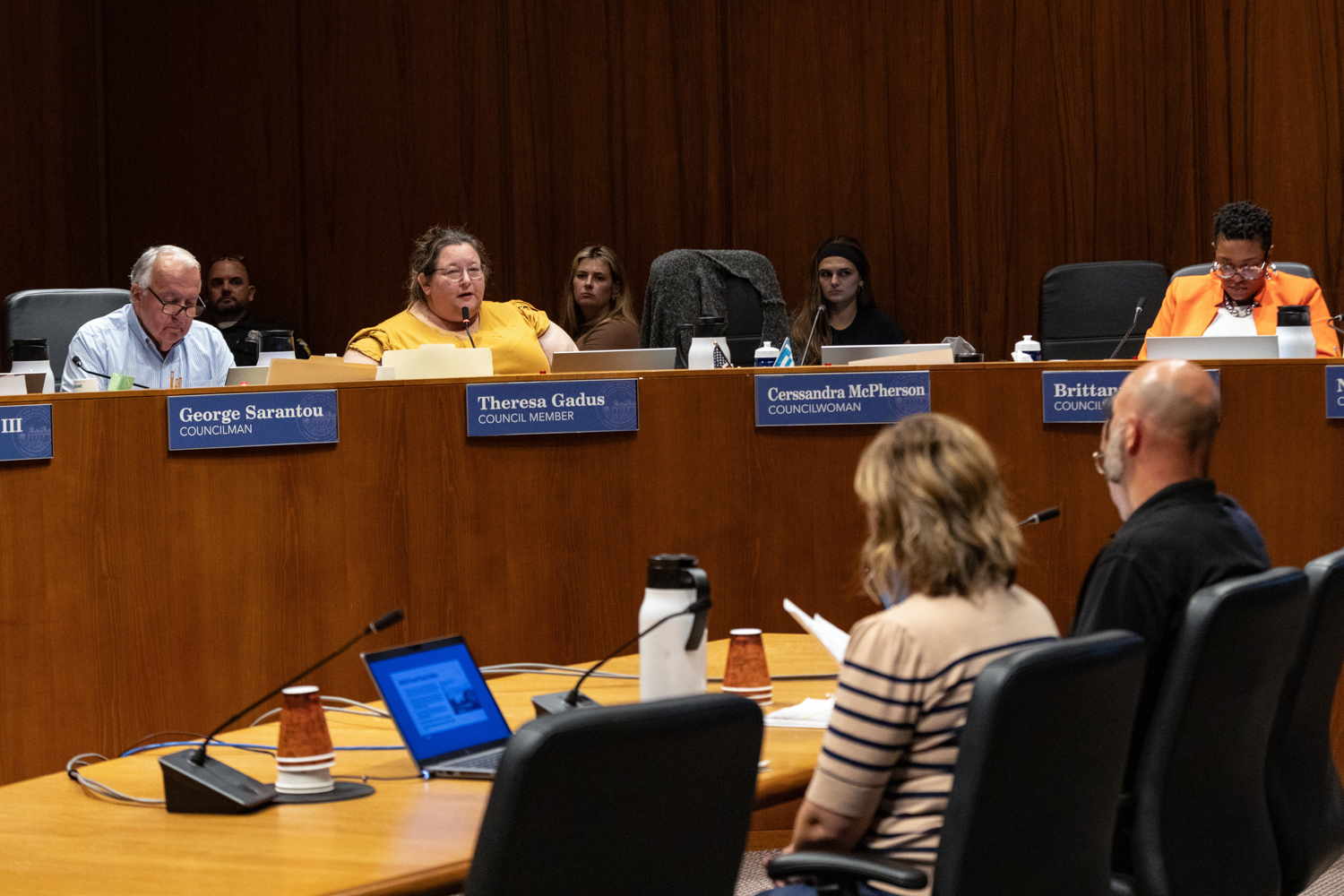
Theresa Gadus, Toledo City Council member for District 3, speaks about how happy she is to receive the funds to redevelop the intersection of Front Street and Main Street. (TFP photo by Stephen Zenner)

A matter of privacy

The main concern from those who were there to oppose Flock was not specifically abuse from within TPD, but a broader issue of privacy in general. 

Local drag queen, entrepreneur and political figure David Gedert (Sugar Vermonte) was at the meeting as well. 

“The Flock system that we have in Toledo, Ohio is a mass AI citizen surveillance system that no one voted on and no one agreed to. We all found out after the fact, and it’s a ‘no’ from me, and I think it’s a ‘no’ from a lot of citizens now that we know that it’s happening,” Gedert said. 

Komives’ general point was that getting rid of Flock was the will of the people, and that the money used for Flock could be used more effectively in community policing (i.e. training), and hiring more officers for the force.

Molina said, going forward, people would be calling council members leading up to the vote on the 20th, and trying to meet with them to change their minds about the Flock system. 

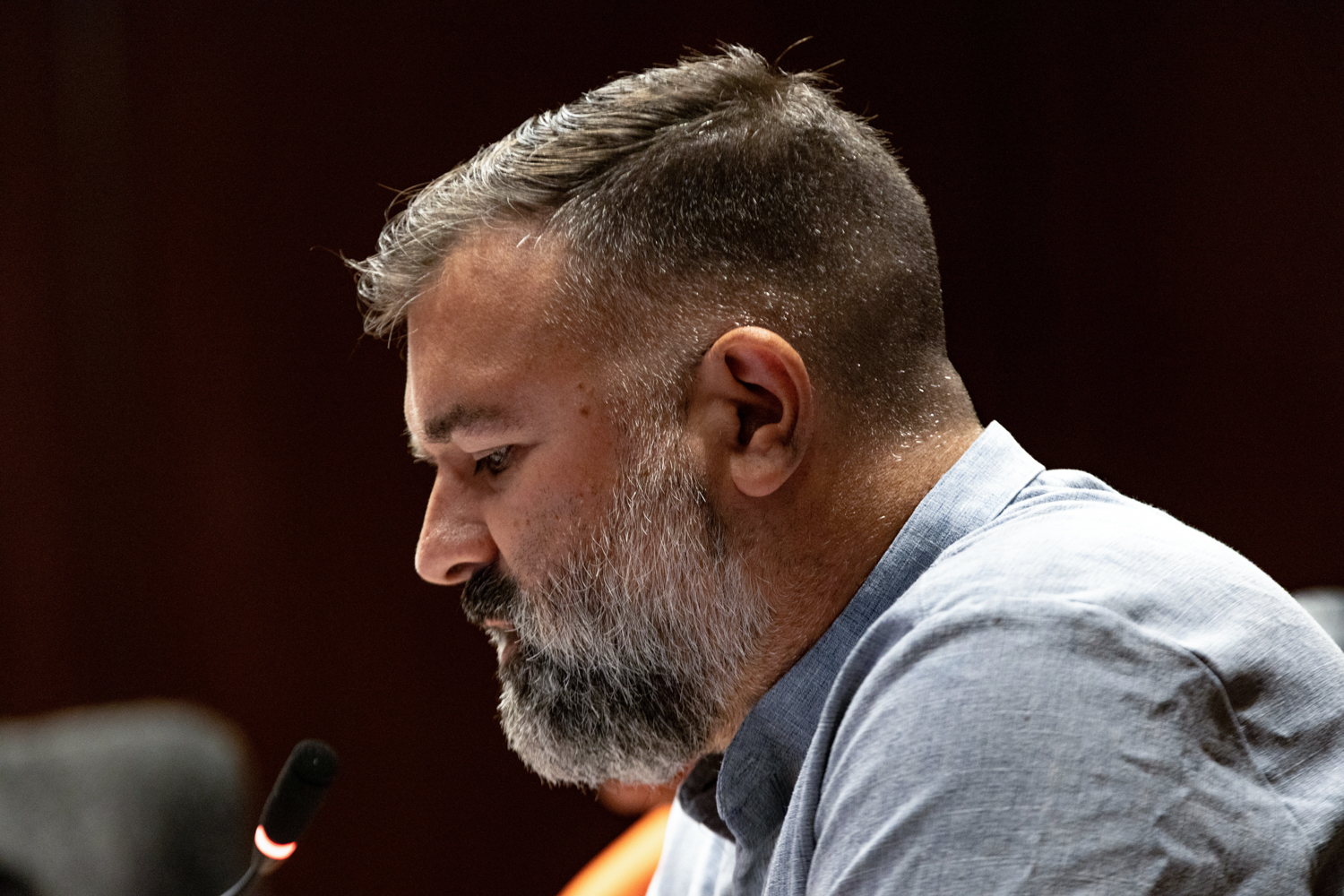
David Gedert (also known as drag queen Sugar Vermonte), a Toledo entrepreneur and politician, sits in on a Toledo City Council agenda review meeting to oppose Flock ALPR cameras. (TFP photo by Stephen Zenner)

AW grads mark 40th anniversary where they met in school cafeteria

0
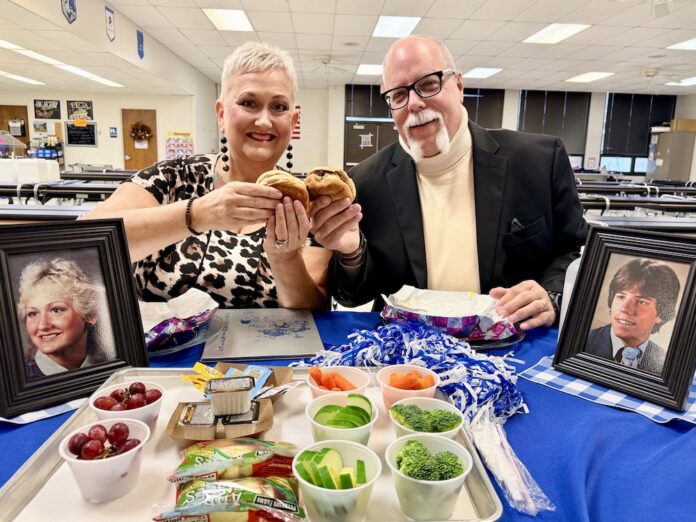
Rhonda (Schalow) Simpson and Matt Simpson celebrated their 40th wedding anniversary in the Fallen Timbers Middle School cafeteria, where they met in 1978. Rhonda, a 1984 graduate, and Matt, a 1983 graduate, married on October 18, 1986. Their framed graduation photos are on the table. (AWFP photo by Karen Gerhardinger)

WHITEHOUSE – Rhonda (Schalow) Simpson hasn’t stepped foot in the Fallen Timbers Middle School cafeteria since seventh grade, but it’s always held a special place in her heart. After all, it’s where she met her future husband in 1978.

Matt Simpson was an eighth grader at the Anthony Wayne High School South Building (now the junior high), and was volunteering to serve lunches in the school, which held grades 5-7 at the time. As he was doling out food, he noticed Rhonda right away.

“He thought I was cute. He mentioned it to the twins, Matt and Mark Schweyer. I was friends with their sister Marcy. And she said one day, ‘See that guy over there? He thinks you’re really cute and he’d like to meet you.’ He was working right there at the end of the line,” Rhonda said, pointing to the serving area. “He was super cute. We exchanged phone numbers and met.”

While the two dated others off and on before he graduated in 1983 and she in 1984, they remained friends. 

“Matt was always my fall guy and I was always his fall girl. One day in college we wizened up and got together,” she recalled. On October 18, 1986, Rhonda and Matt were married at Hope United Methodist Church in Whitehouse. They made their home in Sylvania, and now have three sons and seven grandchildren.

As Rhonda was looking for a way to celebrate their 40th, an idea hatched.

“I wanted to do something special for him. We’d been to the homecoming game and met Kevin [Herman], the superintendent. He said anytime we wanted to take a tour to let him know. So I thought I’d see about having lunch in the cafeteria for old times’ sake,” Rhonda said.

On Oct. 14, Rhonda asked Matt to dress nice, and took him on a drive. As they passed through Waterville, then Whitehouse, he was stumped as to where Rhonda was headed – until she pulled up in front of the middle school. A few years ago, Rhonda had matching bracelets made containing the GPS coordinates of the school – 41.5296° N latitude and 83.7795° W longitude – but this was their first time back.

Principal Matt Smith and Herman met the Simpsons at the door and escorted the couple to the cafeteria, where a table was set with AW candles, a tablecloth, napkins and photos of the two from high school. Matt was visibly surprised, and so was Rhonda.

“This is so nice. You went above and beyond,” she told Herman, who was happy to put together the luncheon for AW graduates. 

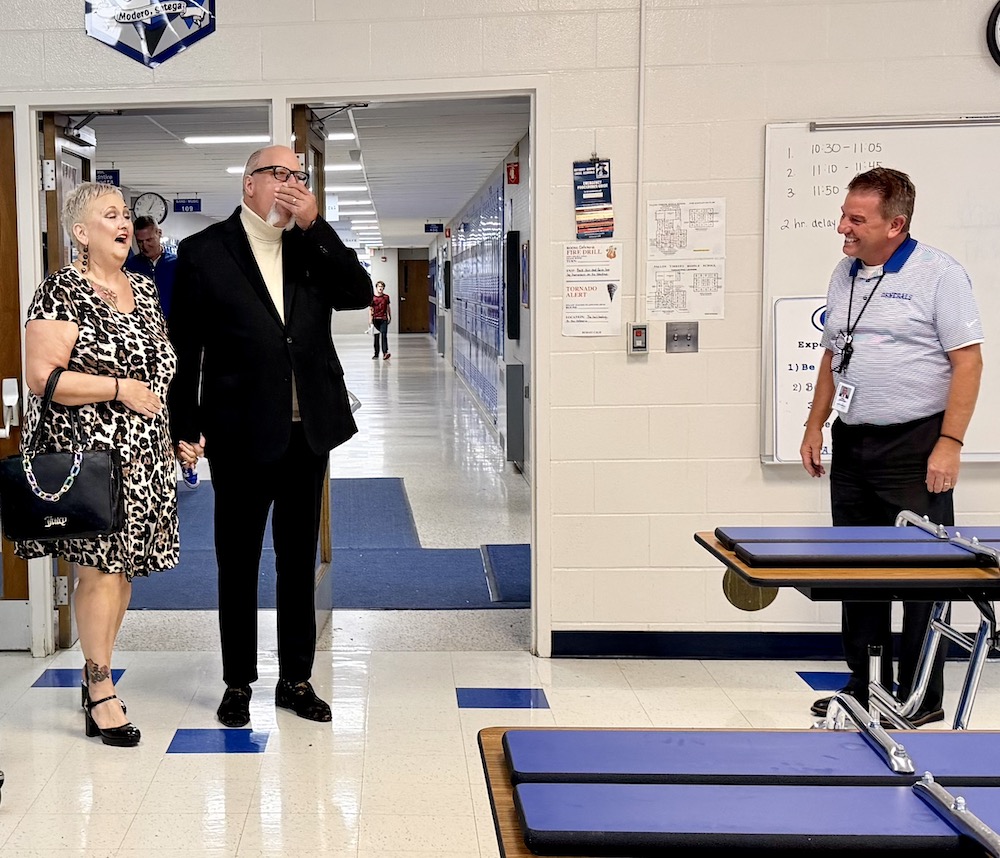
Rhonda and Matt Simpson express surprise as Anthony Wayne Superintendent Kevin Herman shows them the table set up for their 40th anniversary dinner. (AWFP photo by Karen Gerhardinger)

Megan Menchaca, food services director, delivered cheeseburgers and a tray with grapes, cut vegetables, apple slices and condiments. Herman delivered a white cake with a blue “40” on top.

“Want to be super nostalgic and have milk?” Menchaca asked.

“I’d like to order a cocktail please,” joked Rhonda.

For Matt, being back in his alma mater sparked a lot of memories.

“This school meant so much to our lives. I played soccer and was very involved in that program. She was in band. The soccer team would be out back practicing and the band would be next door practicing,” he recalled.

His father, the late Roger Simpson, moved to Whitehouse in 1969 from England, and decided to bring his home country’s tradition of soccer to the Anthony Wayne area. At home, he taught Matt and his older brothers, Brian and Ken how to plan, then, in 1971, he formed the Whitehouse Rangers, and helped other schools form teams and hold soccer clinics.

“I grew up at the soccer fields. When they made it a varsity sport, it was awesome. My older brothers were not able to play on the varsity team,” said Matt, who played on the team throughout high school.

The last time he tried to play soccer, Matt pulled a hamstring, so now he limits himself to playing the sport in the back yard with grandkids.

Rhonda played the flute for the Marching Generals, under the direction of the late Robert Shoemaker.

“I still have all my sheet music from marching band. I will bust it out from time to time and play the fight song and my kids will roll their eyes,” she laughed.

Their first photo together shows Matt on a motorcycle next to Rhonda, who was wearing her Marching Generals uniform for the first time.

“I had the spats on backwards. When I got to the game, the seniors made fun of me,” she said.

Her parents forbade her from riding on a motorcycle, so when they went out, Matt would arrive to the Schalow family’s Yawberg Road home in his car, pick her up, and drive to his family’s South Finzel Road home to get his motorcycle.

“My parents didn’t even want me on his moped,” she said.

Rhonda points to the first photo that was taken of the couple together, in 1980. He was on his motorcycle and she was wearing her Marching Generals uniform for the first time – with her spats on backwards. (AWFP photo by Karen Gerhardinger)

When she was attending Bowling Green State University and he the University of Toledo, he would often ride that motorcycle down I-75 to pick her up for dates. Instead of graduating from college, they got married and started a family. Matt is marking 40 years of employment with La-Z-Boy Furniture Galleries, serving as the sales and marketing director. Rhonda retired from La-Z-Boy and is now a “full time gramma.”

Because Ronald McDonald House is a charity of choice for La-Z-Boy, the family got involved with that organization, making it a tradition to serve breakfast every Christmas morning. Their son, Adam, now serves as the Toledo marketing coordinator for Ronald McDonald House.

“We both feel in our hearts that if you’re able to help you should,” Matt said of volunteering. 

As the couple reminisced, they both agreed that school was a lot of fun. It’s a message that they share with their grandkids – along with stories of growing up in the Anthony Wayne area.

“It’s really special to be here,” Rhonda said.

A Lott to appreciate: Nonprofit leader celebrated by team

0
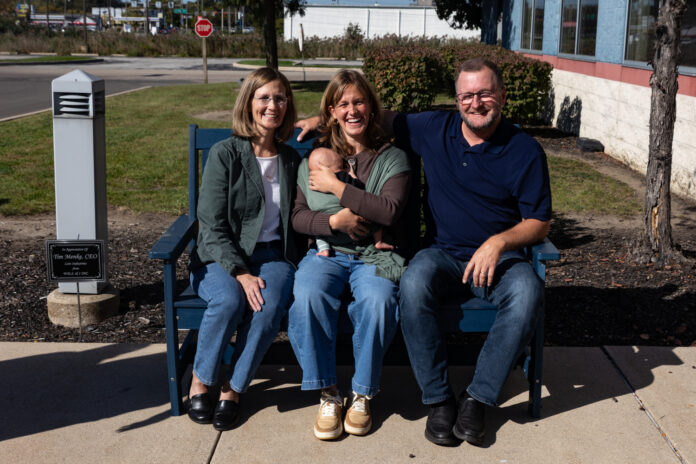
Julie Menke (Tim Menke’s wife), Katie Turner (his daughter), Valor Turner (his grandson), and Tim Menke the CEO of Lott Industries Inc., sit on a bench donated by Widows Empowered Strengthened & I at Lott Industries, 3350 Hill Ave, to show appreciation for the CEO, in Toledo on Wednesday, Oct. 7. (TFP photo by Stephen Zenner)

TOLEDO – A warehouse building at 3350 Hill Avenue may seem like any other box warehouse in Toledo, but this is where Lott Industries Inc. has made their home. 

“Everything we do at Lott, we do out of our heart,” said Tim Menke, the CEO of Lott, a nonprofit that specializes in providing work to people with disabilities. 

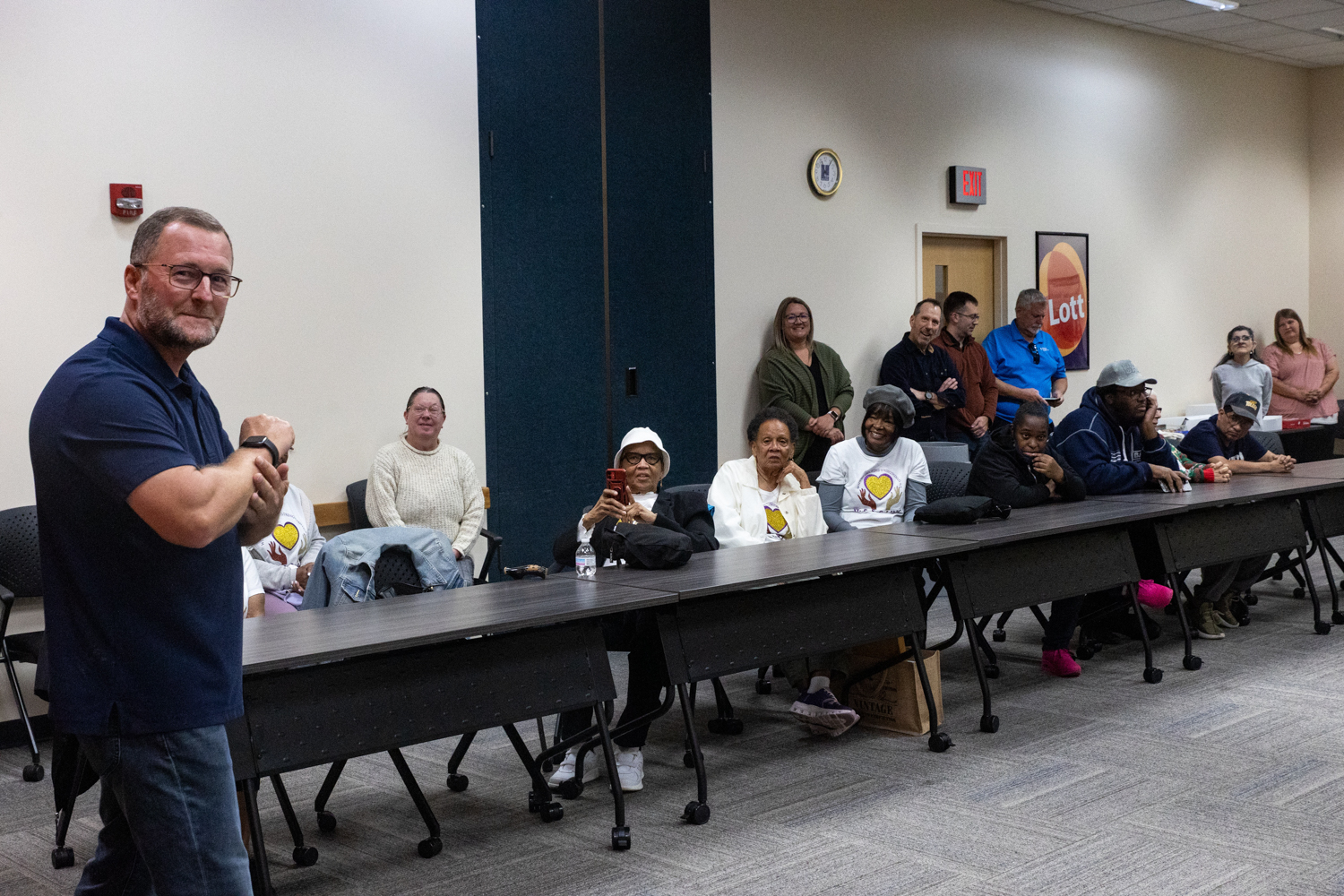
Tim Menke, the CEO of Lott Industries Inc, expresses appreciation for a surprise celebration for him inside a board room at Lott Industries Inc. Idell Watson, the founder of Widows Empowered Strengthened & I (W.E.S. & I) organized the celebration to show gratitude to Menke, who allowed her group of widows to use Lott’s facilities. (TFP photo by Stephen Zenner)

Community building

But beyond the general mission of Lott helping those with developmental disabilities find vocational training or employment, an unspoken cultural mission is deep at work, providing space and resources to other groups who strengthen the fabric of Toledo. 

“He’s always looking to how he can help the community,” said Mayra Leitner, the principal of God’s Lighthouse Academy (GLA), of Menke’s (Mr. Tim’s) leadership of Lott. “We need that community, and he’s always been willing to help in that.”

GLA, a school focusing on individual attention for kids K-12, is one of the latest organizations Lott has partnered with. 

Leitner mentioned Lott allowed them space at their facility without major expense while the school goes through the chartering process. 

Lott, works with Harbor rehabilitation services, Food for Thought mobile food pantry, Lucas Soil Water Conservation District, Water for Ishmael’s (WFI) Global Opportunities program, Widows Empowered Strengthened & I Inc (W.E.S. & I Inc.) and with Maumee Valley Habitat for Humanity to help “10 of our people become homeowners over the last decade,” Menke said. 

Up and coming for Lott is a new collaboration with the Epilepsy Center of Northwest Ohio and Anne Grady Services to create a new brewery in the back of Lott’s property called HopAbility.

“We like to use every inch of our space here,” said Larry Deitering, the CFO of Lott Industries Inc.


Mayra Leitner, the principal of God’s Lighthouse Academy (GLA), watches kids enjoying donuts at the celebration. (TFP photo by Stephen Zenner)

Gratitude 

When TFP spoke with Menke on Oct. 7, he admitted that there were a lot of hoops to jump through with the Department of Developmental Disabilities (DODD), Opportunities for Ohioans with Disabilities (OOD) and the Department of Labor (DOL).

“I was kind of browbeating myself,” he said, but little did he know that members of W.E.S. & I had organized an appreciation celebration for Menke that day, aided by his workers, the school and a number of the organizations Menke has helped out over the years. 

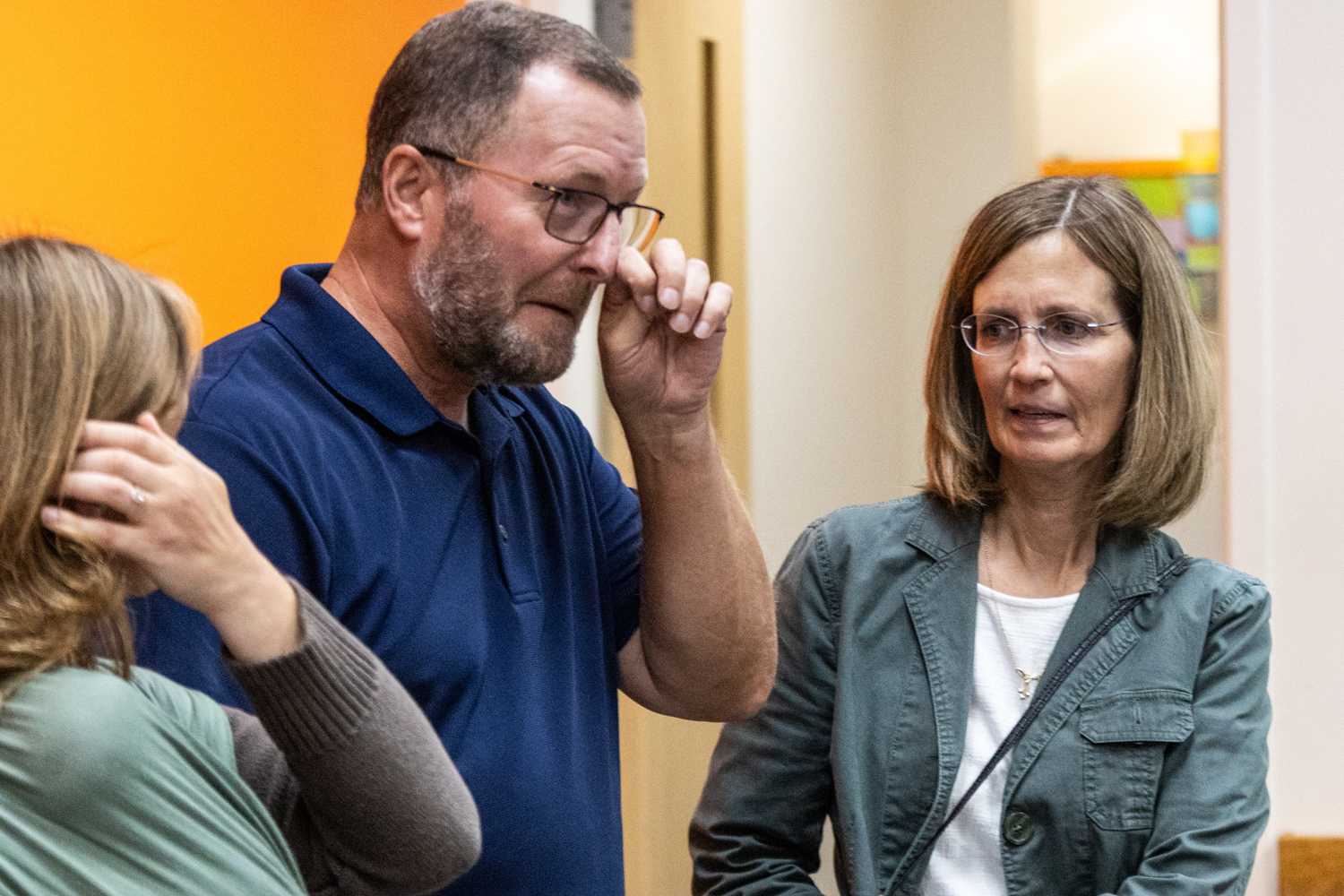
Upon walking into the Lott Industries’ main conference room, Menke was overcome, and shed a tear. Scores of employees and members of various organizations clapped and celebrated his leadership, as his wife and daughter also joined in. 

“Everything he does, he puts his full heart into. And I know people see him here at work a lot, and of course they love and appreciate who he is,” said Katie Turner, Menke’s daughter.

Turner said it was significant to see other people appreciate her father the way she appreciates him.

Julie Menke, Tim’s wife, speaks with Beverly Lyles, a member of Widows Empowered Strengthened & I, during the celebration. (TFP photo by Stephen Zenner)

Lott’s CFO summarized Menke’s heart in an anecdote. “Every time I would walk around with Tim, he knew every single person’s name, every client’s name out there, and that has always stuck with me,” Deitering said. “You have to have good memory for one thing, but you have to take a vested interest. And that’s what I immediately saw in Tim.”

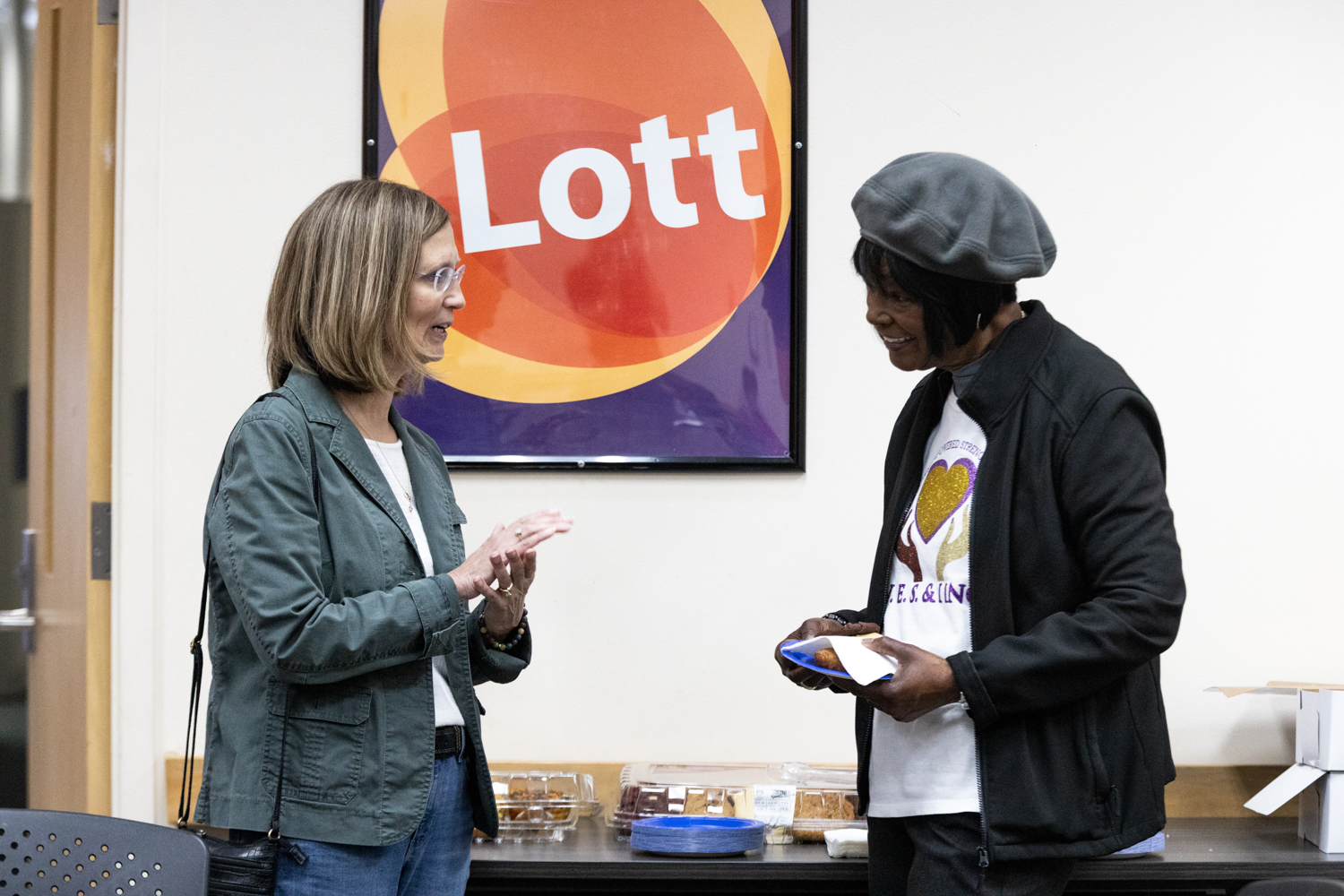
Organizer of the event, Idell Watson, founder of W.E.S. & I Inc., said she had been putting it together for a few months. Together with staff at Lott, W.E.S. & I Inc. presented Menke with an honorary bench at the entrance to Lott, and bought a number of donuts the GLA students were appreciative of.

“We just wanted to show Tim that we appreciate it,” Watson said. Recalling walking into Lott to just share about her organization’s goals, Menke volunteered his conference rooms as a place for the widows to meet without charge. 

“He just has such a big heart…I’m so thankful to have him [and] Lott Industries as our partner.”

A few brief words from Watson celebrated Menke, and then he shared how this uplifted him to keep doing his work.

“I am my own worst enemy,” Menke said. “Am I doing everything that I could be doing to make this the best place it can be for the people we serve?

“It was kind of a neat surprise to put things into perspective. Maybe you are doing a good job after all,” he said of himself. Menke said he appreciated all his partners for their gratitude. 

Tim Menke sheds a tear next to his wife, Julie, and his daughter, Katie, while being celebrated by his employees and other partner organizations. (TFP photo by Stephen Zenner)

Story preview: Norman Finkelstein’s appearance at the UMAT dinner

0
Norman Finkelstein, a university professor, political scientist and activist, speaks with admirers during the United Muslim Association of Toledo Annual Dinner at the Franciscan Center, 6832 Convent Blvd., in Sylvania on Sunday, Oct. 11. (TFP photo by Stephen Zenner)

TOLEDO – Jewish political scientist and longtime activist in support of the Palestinian people, Norman Finkelstein, gave the keynote address during the United Muslims Association of Toledo (UMAT) 30th Annual Dinner. 

Dr. S. Maseeh Rehman, the president of UMAT and an allergist/immunologist, spoke about the history of UMAT and the dinner. 

“For us, there are at least 35 different nationalities who live here [in Greater Toledo], and the idea of the organization [UMAT] was to connect with them,” he said. “They have different languages; they have different cultures; they have different traditions; they have different cuisines. We got to know them, to know each other, to connect each other, and then to work for the betterment of the city, of the town, and of the country.”

The other objective Rehman mentioned was to reach out to their non-Muslim friends, so they can learn about Muslim traditions, values and culture. 

“We have to take responsibility. We have to define ourselves rather than others,” Rehman said. 

Civic engagement was an open part of the dinner, and members of both the Republican and Democratic parties were present to give their respective pitches to the attendees. UMAT said they seek to remain neutral, but to provide a space for open discussion. Derek Merrin, who is running for Ohio’s 9th Congressional District, spoke, and Abdul El-Sayed, who is running in Michigan for U.S. Senate, recorded a video addressing attendees of the dinner. 

Part of the open discussion revolved around the words from the famous Finkelstein, who mapped where the United States was concerning issues of Israel, Palestine and Gaza, and how freely people could exercise their first amendment rights in regards to publicly opposing Israel in the United States.

A tired Finkelstein asked if he should continue with his lecture, but was halted for time restraints and began shaking hands and signing his latest book, Gaza’s Gravediggers. 

When Rehman was asked how he felt about both candidates for Ohio’s 9th Congressional District not calling what is going on in Gaza a genocide, he admitted that he was disappointed, but that “yes, we are disappointed that this is not being addressed, but that’s what I say to everybody. That doesn’t mean that you should get discouraged. Your vote-it’s a civic obligation. Go and vote. Go and express yourself,” he said. “We live in America.”

A more in-depth story on the event is forthcoming.

Political Campaigns 2026: To the Point with Doni Miller

0

This content was originally published on WGTE Public Media’s channel. Find the original post here.

The views and opinions expressed in To The Point are those of the host of the programs and its guests. They do not necessarily reflect the views or opinions of WGTE Public Media or the Toledo Free Press.

Ohio’s political landscape is changing, and younger voters may be driving more of that change than many realize. Jaden Jefferson, reporter for the Toledo Free Press, has been following the voices, concerns, and political attitudes shaping the next generation of voters. Jaden and Doni discuss where Ohio is headed and whether traditional political labels still fit.

Defiance manufacturer celebrates tradespeople

0
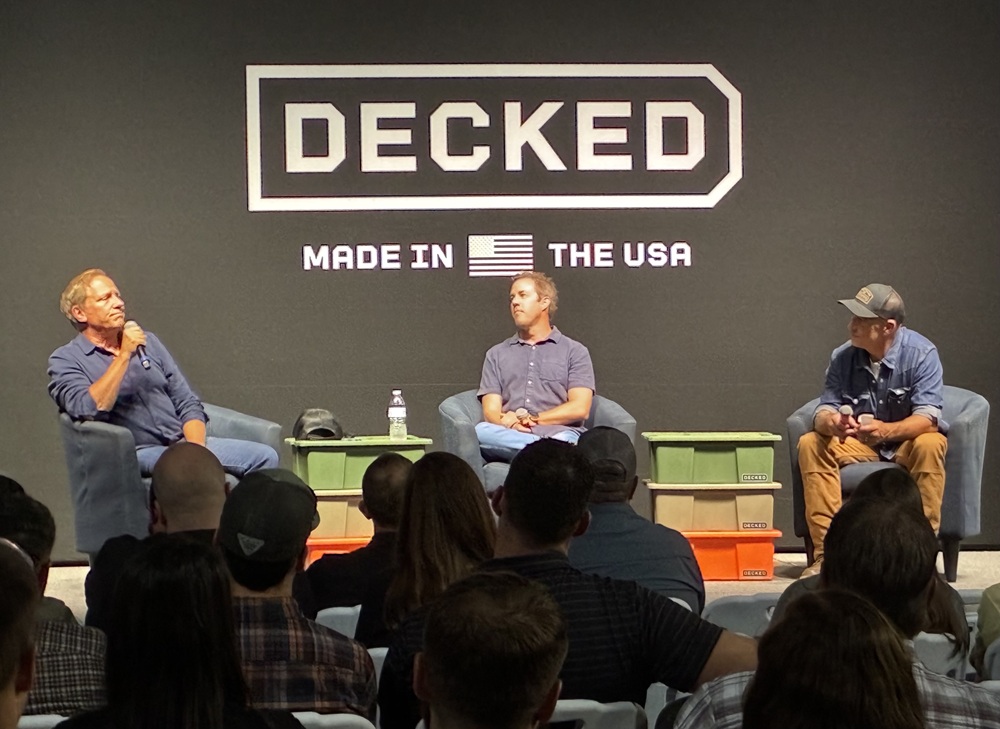
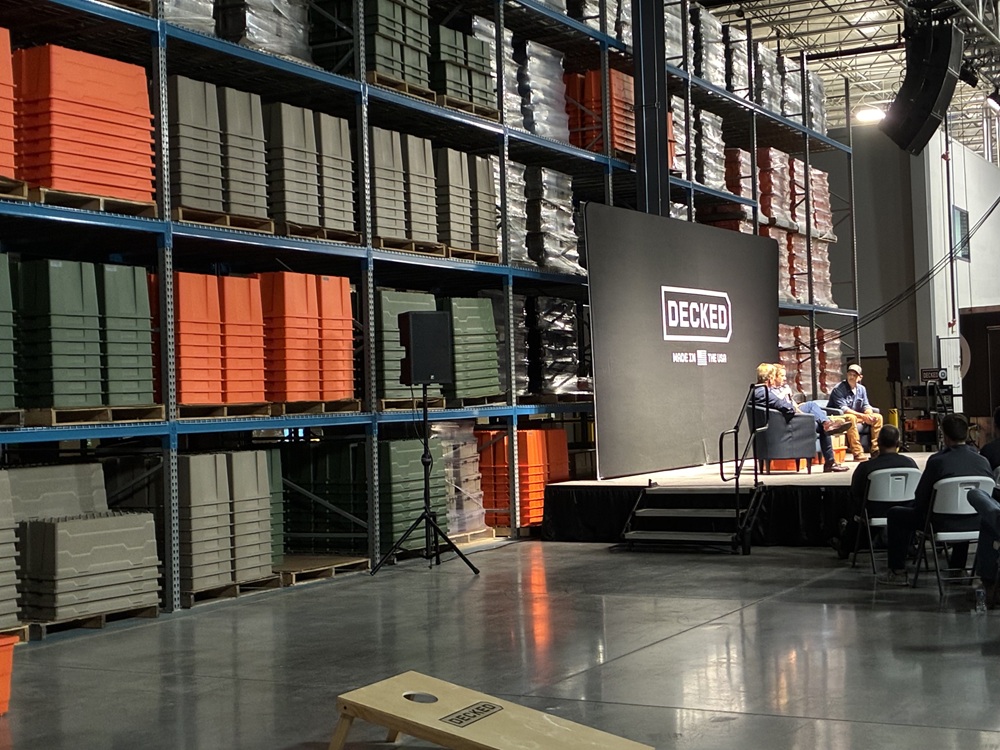
DECKED CEO Bill Banta (left) and Vice President of Marketing Greg Randolph (right) take guest Mike Rowe (center) on a tour of their Defiance facility. (Photo courtesy of DECKED)

DECKED program supporting community and schools

DEFIANCE – If you’re looking for an excellent-paying job, we have good news: the skilled trades world is looking for you. And it may be a much better career value (financially) than attending a four-year college.

The U.S. Department of Education estimates that by 2030, 2.1 million skilled trades jobs in the U.S. could go unfilled, with potential economic losses reaching $1 trillion annually. Electricians, HVAC technicians, plumbers, pipefitters, welders and industrial maintenance mechanics are among the most in-demand positions.

In discussion with DECKED employees at their Builder’s Day Sept. 30 are (left to right), Mike Rowe, skilled trades advocate and TV host, Bill Banta, DECKED CEO, and Greg Randolph, DECKED vice president of marketing. (TFP photo by Julie Pompa)

Local business highlighting skilled trades

Bridget Noonan, DECKED senior brand director. (Courtesy photo)

DECKED, a Defiance manufacturer of storage and organization products for tradespeople and other audiences, is celebrating tradespeople and partnering with local schools to encourage participation in the trades. The company kicked off the effort on Sept. 30 with a Builder’s Day for Defiance employees and local officials, and an appearance by skilled trades advocate and TV host Mike Rowe. 

“Skilled trades are the cornerstone of our business,” explained Bridget Noonan, senior brand director with DECKED. The company commissioned two studies to explore the current economic state and feelings within the skilled trades industry, including interviews with 500 skilled tradespeople. From that information came the “Built for Those who Build” campaign, which Noonan said, “highlights and dispels the bad stereotypes around the skilled trades,” while focusing on the value such a career can bring versus a college education:

  • *94 percent of tradespeople report job satisfaction, but 78 percent say Americans undervalue the trades
  • *73 percent of tradespeople graduate debt-free; of those who borrowed, 83 percent paid off trade school loans within three years
  • *83 percent of tradespeople say their jobs cannot be replaced by AI

“The conversation we’re having now is one I’ve been trying to have for 20 years,” said Rowe. “The removal of shop class [from high schools] started this all. 

“What’s worse is that there are 6.9 million able-bodied people who are not working and not looking for work. This has never happened in our history. More than 1 in 4 trades workers are age 55 or older, and for every five tradespeople who retire, only two new people become tradespeople. Where is the workforce hiding? They’re in the eighth grade. This gap is the story we’ve failed to tell, until now.”

Rowe is known for his work on the Discovery Channel series Dirty Jobs, where he performed difficult jobs along with current employees. In 2008, he launched the mikeroweWORKS Foundation, which focuses on supporting the skilled trades. He has been an advocate for skilled trades since his television series, even testifying in 2011 on trade activism before the U.S. Senate Committee on Commerce, Science and Transportation. His Work Ethic program has awarded $20 million in scholarships for skilled trades educational programs. And in July 2026, his scholarship program was awarded $10 million by the Department of Defense to train skilled workers for jobs (currently estimated at 400,000) in the defense industrial base.

DECKED’s Defiance manufacturing facility, where their first Builder’s Day was held. (TFP photo by Julie Pompa)

Campaign features video series, school outreach

“The ‘Built for those who Build’ campaign is an opportunity to get in touch with who we are as tradespeople,” said Bill Banta, DECKED CEO. “How fulfilled are you by the work? How do you find the passion for the work? We’re investing in the folks we have and investing in our infrastructure.” The company, headquartered in Ketchum, Idaho, and with manufacturing in Defiance, is beginning construction of its third new local manufacturing facility in four years. 

According to Noonan, the campaign features a three-part video series, “The Backbone of Everything,” which highlights the stories of tradespeople working around the country. “We’re changing attitudes about skilled trades,” she said. “We’re rooted in manufacturing in the Ohio culture, but we’re scaling this effort to the national level.”

DECKED is also beginning conversations with two Defiance area schools – Northwest State Community College and Four County Career Center – to develop local support and build a pipeline for the growth of the Defiance operations. 

The campaign, including Rowe’s involvement, is helping to change attitudes about the skilled trades while preparing for the growth of future generations of tradespeople. “We’re telling the stories of what it takes to build things,” Rowe said. “In the short term, I think we’re entering the Golden Age of the trades. Everyone is paying attention to this. People should understand that the trades is a choice, followed by opportunity. The ship is starting to turn.”

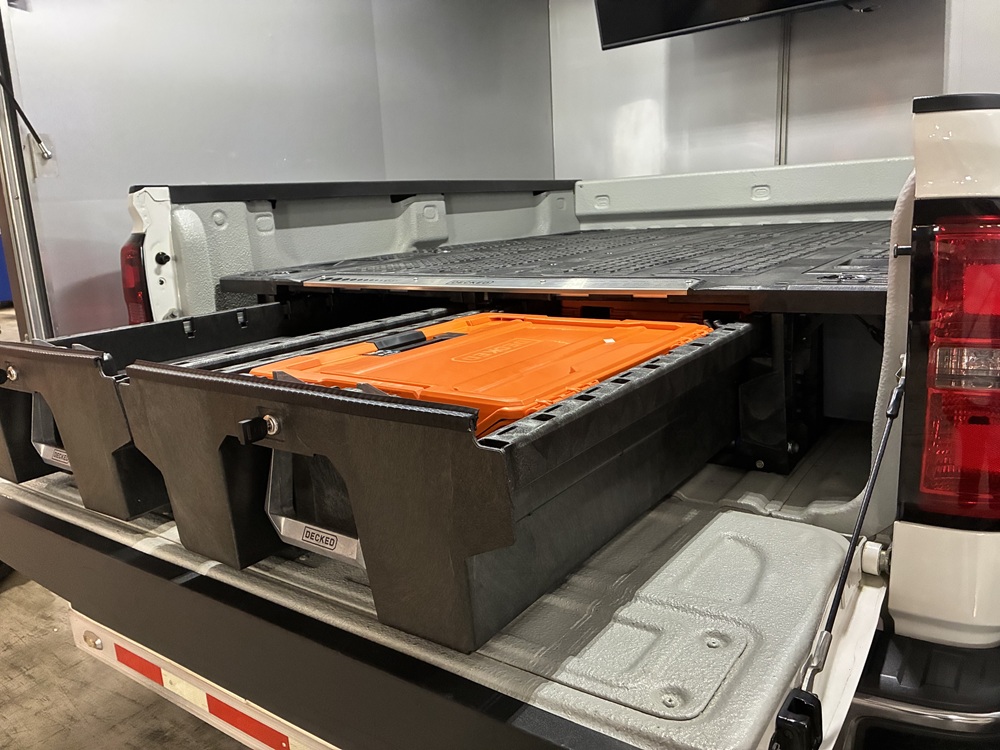
One of DECKED’s pickup truck bed storage systems. (TFP photo by Julie Pompa)

Letter to the Editor: What if nonprofits built the future together?

0
Photo courtesy of Center for Community Impact.

Letters to the editor and opinion submissions do not necessarily reflect the views of the Toledo Free Press.

Recently, more than 60 nonprofit organizations and mobile programs, along with community leaders, businesses and supporters, and the movement Five and Rising gathered in Toledo for the third annual IMPACT event.

The day was about collaboration. But more importantly, it was about challenging ourselves to think differently about what is possible when we stop working within the limitations of the systems we have inherited and begin imagining the systems our communities actually need.

Bert Jacobs, co-founder and Chief Optimist of Life is Good, delivered the keynote message. His message was simple, but it carries enormous implications: optimism is not about ignoring problems. It is about believing that problems can be solved, particularly when we work together.

That idea was put into practice throughout the day.

One breakout session, hosted by Social Current and RISE Northwest Ohio, brought approximately 25 community leaders together to begin a conversation about what might be required if we were to create a blueprint for the future of the social sector.

The questions were intentionally bigger than any single organization:

What does a thriving, equitable human services ecosystem look like, and what should it prioritize to meet people’s needs?

What mindsets, funding practices, policies and other barriers are keeping us from achieving that vision?

And what innovative practices, partnerships and structural changes will be necessary to create a human services system that is adaptive, community-led and adequately resourced?

These are not easy questions.

But perhaps we need to ask bigger questions precisely because the problems facing our communities are bigger than the structures currently designed to address them. Too often, the social sector is asked to solve increasingly complex problems while operating within funding models, organizational structures and assumptions that were created for a different time.

Organizations compete for limited resources. Programs are divided by funding categories. Infrastructure is sometimes treated as an expense rather than an investment. Collaboration can be encouraged in principle while the systems around organizations continue to reward competition.

The leaders participating in this gathering’s conversation offered a different perspective.

A panel of nonprofit and business leaders explored how collaboration and shared resources can drive strategic success and amplify community impact. Their advice was remarkably consistent, even though they represented different organizations and sectors.

Dream big.

Be flexible.

Don’t give up on the BHAG – the Big Hairy Audacious Goal, because someone in the community is depending on it.

Trust each other and be patient.

Recognize that every nonprofit brings a distinct perspective. Collaboration does not necessarily mean merging organizations. Complementary strengths can create more impact.

And perhaps most importantly: reject the scarcity mindset. When resources are constrained, we may need to become bigger, bolder and broader in how we think about solving problems.

That last point deserves particular attention.

There is a difference between acknowledging that resources are limited and allowing scarcity to define our imagination.

We can recognize financial realities while still asking: What would we do if we were designing this system from the beginning?

What resources already exist in our community that are not being fully connected?

What could businesses contribute beyond traditional sponsorship?

What could nonprofits accomplish by sharing infrastructure, knowledge, technology, talent or purchasing power?

What role should people with lived experience play in designing the solutions intended to serve them?

What would happen if we measured success not by how well individual organizations protect their programs, but by whether people actually experience better outcomes?

Those questions point toward a different kind of community leadership. Not leadership by one organization. Not leadership by one sector. Leadership through collaborative relationships.

The annual Care for Kids Coat Drive, which also kicks off with IMPACT, provides a wonderfully tangible example. Since the drive began in 2021, more than 11,000 coats have been collected to help children and families across the region.

A coat is a simple thing. But getting thousands of coats into the hands of children who need them requires donors, businesses, nonprofits, volunteers, transportation, distribution and community awareness. It is collaboration made visible. And that is ultimately what the conversations at IMPACT were about.

The future of our communities will not be built by nonprofits alone. It will not be built by businesses alone, government alone, philanthropy alone or individual community members alone. It will be built by all of us, bringing different resources, experiences and perspectives to the SAME table.
That does not mean we will always agree. It does not mean collaboration is easy. And it certainly does not mean that every partnership will work. It means we have to be willing to trust one another enough to try.

We have to be willing to share resources without assuming that sharing means there will be less for us. We have to be willing to challenge funding practices and policies that unintentionally reinforce the very problems we are trying to solve. And we have to be willing to imagine a future that is not simply an improved version of today’s system, but something fundamentally better.

That is where optimism becomes powerful.

Optimism is not a substitute for strategy, resources or hard work. It is what allows us to believe that change is possible long enough to do the work required to create it.

The people gathered at IMPACT were not suggesting that northwest Ohio has all the answers. They were doing something more valuable. They were asking better questions. And perhaps the most important question we can take with us from the event is this:

What could our community become if we stopped asking what each of us can accomplish alone and started asking what we can accomplish together?

Someone in our community is depending on the answer.

Anthony Wayne Events

0
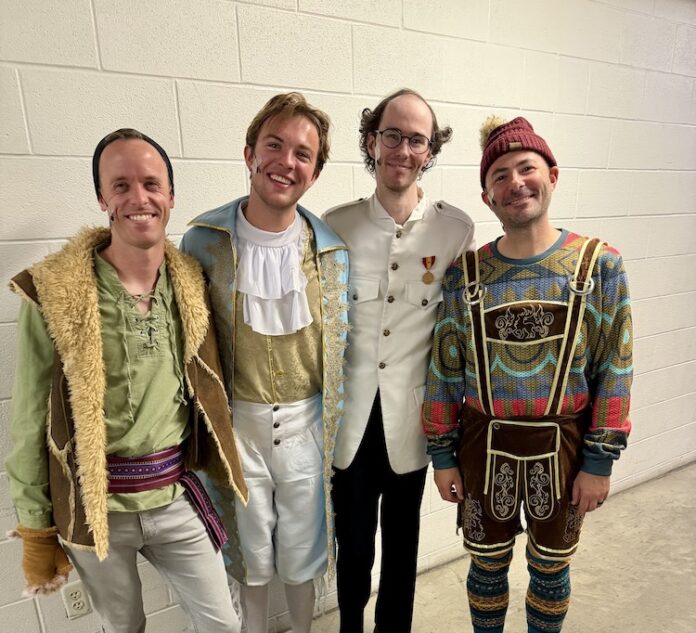
Kyle Moninger as Kristoff, Cooper Unverferth as Hans, Alec Simon as Duke of Weaselton and Bob Marzola as Oaken. (Courtesy photo)


Thursday, Oct. 15 – Sunday, Oct. 18 – Waterville Playshop will present Disney’s Frozen, the Broadway musical, at the Maumee Indoor Theatre. Based on the Academy Award-winning animated feature film, Disney’s Frozen includes all the film’s songs by Kristen Anderson-Lopez and Robert Lopez, along with new music written exclusively for the stage. Directed by Tammy Fitch, Joe Barton, Janine Baughman, Bob Marzola and Mark Pike, the Waterville Playshop cast includes 21 actors, and both an adult and children’s ensemble. Performances will be held at 7:30 p.m. Thursday, Friday and Saturday, October 15-17, plus a 2:30 p.m. performance on Sunday, October 18.

For tickets, visit watervilleplayshop.org.


Haunted Waterville Tours – Visitors will meet a ghost hunter or medium in Robbins House Museum for the first half of the program and will then board a horse-drawn trolley to travel through old Waterville hearing tales of hauntings both old and new. Tours last for an hour and a half. Tours begin at 5:15, 6, 6:45, 7:30 and 8:15 p.m. Tickets are $30; kids receive a free t-shirt.

Upcoming tours:

Saturday, Oct. 17

Thursday, Oct. 22

Saturday, Oct. 31


Saturday, Oct. 24 – PricePro Ford Trunk-or-Treat – noon-3 p.m. at 9830 OH-64, Whitehouse. Join PricePro Ford for their first annual Trunk-or-Treat — FREE, no registration, open to everyone. Whitehouse Fire & Rescue is bringing a fire truck. Get up and close with one and take some pictures! Costume Contest and Best Decorated Car judging on-site.


Sunday, Nov. 8 – Benefit for Sean Griewahn – From 3-7 p.m., the Swanton American Legion Hall will host a benefit for Sean. November is Pancreatic Awareness Month, and this event is to support Sean during his battle with cancer. The event includes food and drinks, raffle baskets, and a silent auction. For more information and to donate, visit gofundme.com/f/AnswerTheCallForSean.

Wild Side: Sumac with early fall ice

0
Frosty sumac captured in October 2024 at Wildwood Preserve. (Photo by Art Weber, nature photographer for Metroparks Toledo)

Fall color isn’t just reds and yellows. The arrival of the new season eventually comes dressed in white -pure white – as in frost. Sometimes frost puts a white border on leaves that are changing color, outlining shapes and adding a delicate and beautiful touch. This stand of sumac taken two years ago displays this magic.

Toledo Free Press Voter’s Guide: 2026 General Election

0

The midterm general election is fast approaching; early voting began on Oct. 3, and Election Day is coming up on Nov. 3. For those who haven’t already, it’s time to familiarize yourself with what is on the ballot. Our Toledo Free Press Voter’s Guide covers statewide elections, as well as those specific to Lucas County. We do not cover any other county elections at this time, though we will be expanding in future election years to cover more.

This guide is updated frequently through Election Day, so make sure to check in for links to new stories, updates on campaigns, and more.

Below you’ll find a description of the candidates, what the role entails, and linked resources to learn even more about those candidates. The Voter’s Guide is constantly growing up until election day as we cover the candidates and ballot issues, so make sure to refer to it often as you consider how to cast your vote this election.

Statewide candidates


Governor and Lieutenant Governor 

The governor is the chief executive of the state. Their powers and/or responsibilities include managing state departments, cabinet members, agencies, and state military forces; proposing the state budget; signing/vetoing bills passed by the Ohio General Assembly; convening and adjourning legislatures; and the ability to pardon criminal convictions.

The lieutenant governor serves as successor if the governor can no longer serve. Their powers and/or responsibilities also include representing the governor at meetings as needed, leading major departments as needed, and generally carrying out executive orders from the governor and what is mandated by state law.


Amy Acton and David Pepper (Democratic)

Quick facts about Amy Acton:

Relevant experience:

-Served as Director of the Ohio Department of Public Health from 2019-2020

  • -Graduated Northeast Ohio Medical University 
  • -Master’s in Public Health from The Ohio State University 
  • Website: actonforgovernor.com

Quick facts about David Pepper:

– Served as Chairman of the Ohio Democratic Party from 2015-2021

  • – Ran for Ohio Attorney General, lost to Mike DeWine (R), Pepper received 38.5 percent of the vote
  • – Ran for Ohio Auditor; lost to Dave Yost (R), Pepper received 44.9 percent of the vote
  • Websites: davidpepper.com and actonforgovernor.com
  • Learn more about Acton and Pepper here.


Don Kissick and James L. Mills (Libertarian)

Quick facts about Don Kissick:

  • – Has served as County Development Coordinator for the Libertarian Party of Ohio since 2018
  • – Ran for United States Senate in Ohio in 2024 and lost to Bernie Moreno (R); Kissick received 3.4 percent of the vote. 
  • – Ran for Ohio’s 5th Congressional District in 2018 and lost to Bob Latta (R); Kissick received 2.6 percent of the vote.
  • Website: donkissick.com
  • Quick facts about James L. Mills:
  • – Has served as vice chair for a third party political party for Ohio and Warren County since 2024
  • – Has served as brokerage director at Brokerage Solutions since 2025
  • – Co-founded Mills Residential, a construction company, with his brother in 2018
  • Website: donkissick.com
  • Learn more about Kissick and Mills here.

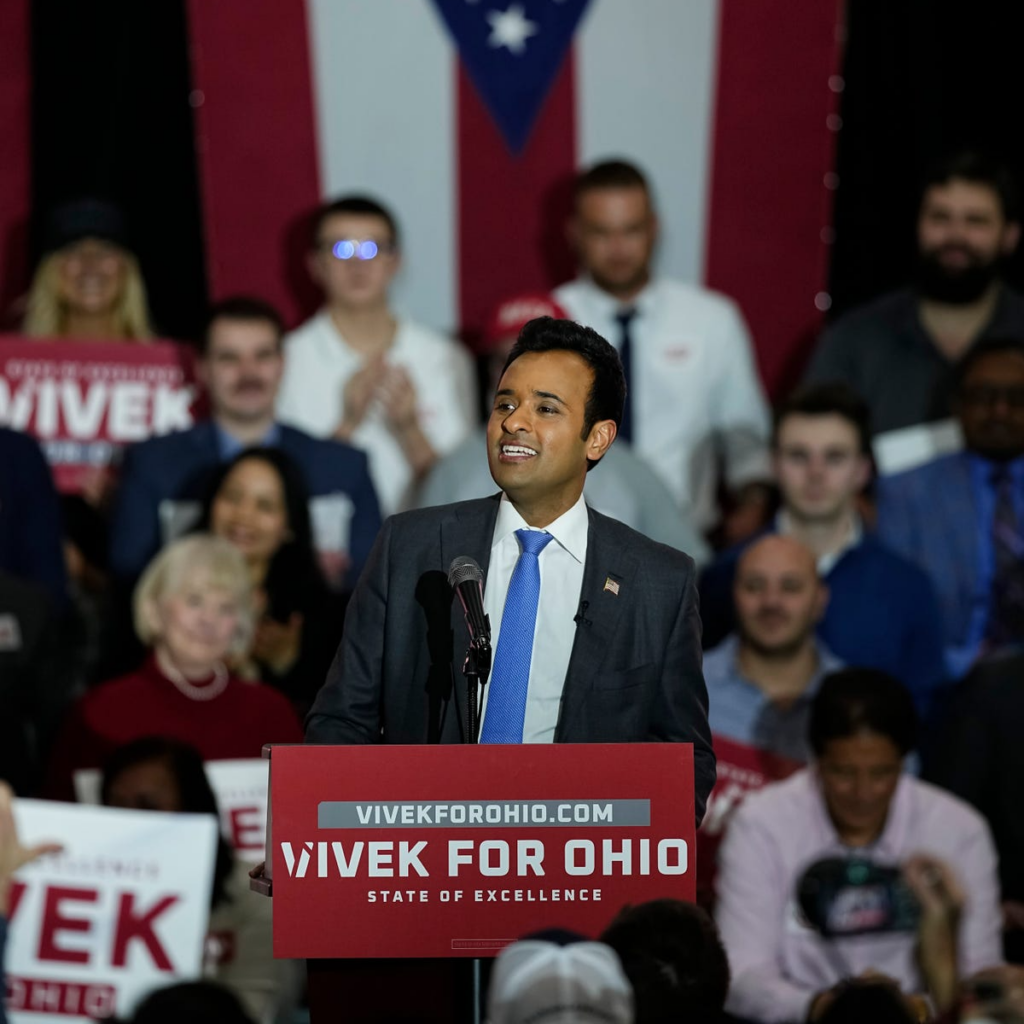
Vivek Ramaswamy and Robert A. McColley (Republican)

Quick facts about Vivek Ramaswamy:

  • – Vivek Ramaswamy ran as a presidential candidate in the Republican Primary 2023-2024, but lost the primary to current President Donald Trump.
  • – Ramaswamy was part of the Department of Government Efficiency (DOGE) with Elon Musk, before stepping down from his role there to pursue the Ohio Governor’s race.
  • – Trump endorsed Ramaswamy for the Ohio Governor. 
  • Website: vivekforohio.com
  • Quick facts about Robert A. McColley:
  • – Since 2017, he has served as State Senator for Ohio Senate’s 1st Senate District including Defiance, Hancock, Hardin, Henry, Paulding, Putnam, Van Wert and Williams Counties and parts of Auglaize, Fulton and Logan Counties.
  • – From 2015-2017, he served as State Representative for the Ohio House of Representatives in the 81st district, which includes Henry, Putnam, Williams, and part of Fulton Counties.
  • – Co-sponsored Senate Bill 23, which prohibited abortion after the detection of a heartbeat. [6] Gov. Mike DeWine (R) signed SB 23 on April 11, 2019.
  • Related Story: Republican rally at Chevy’s: Ramaswamy, McColley, & Merrin

Write-in Candidates

Tim Grady and Andrea Neutzling (Independent)

Quick facts about Tim Grady:

  • – Served as chair of the Ohio Forward Party
  • – Was the Libertarian nominee for state representative of Richland County in 2018
  • – Working toward his MA in Public Administration at Ohio State University, Glenn College of Public Affairs
  • Website: timgradyforohio.com
  • Quick facts about Andrea Neutzling:
  • – Served in the Army as an active duty Intelligence Analyst at Camp Essayons, South Korea, and Fort Gordon, GA from 2001-2004
  • – Currently serving as District Senior Vice Commander at VFW District 12
  • – After serving in Iraq and being exposed to the Burn Pit on Camp Bucca Iraq, she advocate with others to get the PACT Act passed in 2022
  • Website: timgradyforohio.com

Heather Hill and Patrick Manley (Republican)

*Though Ohio write-in candidate Heather Hill was disqualified on April 22 after her running mate, Stuart Moats, dropped out as her running mate, she reentered the race on June 10 with a new running mate, Patrick Manley.

Quick facts about Heather Hill:

  • – Was appointed by Gov. Mike DeWine in 2023 to serve on the Ohio Dr. Martin Luther King, Jr. Holiday Commission
  • – Described on her campaign website as “the only gubernatorial candidate who has actively protested for the last 25 years to end abortions throughout the United States.”
  • – Formed a branch of the Morgan County Martin Luther King Scholarship Foundation, where she served as president from 2005 – 2013
  • Website: heatherhillohio.com
  • Quick facts about Patrick Manley:
  • – Has worked as an adjunct instructor in the Construction Sciences Department at Columbus State Community College for more than 20 years
  • -Has served for more than 20 years on the board of directors for Dave Fox Design Build
  • – Served a 10-year term as president of the Ohio Chapter of the Association of Licensed Architects
  • Website: heatherhillohio.com

Renea Turner and Jalen Turner (Independent, Republican Party)

Renea Turner is a write-in candidate (independent, Republican Party) running for Ohio governor. (Courtesy photo)

Ron Ula and Michael Lehnerd (Independent)


U.S. Senator

Senate terms last six years with elections being staggered so that no two U.S. senators in Ohio are seeking election at the same time. This year, Sherrod Brown (D) is facing incumbent Senator Jon Husted (R). U.S. Senators’ roles are legislative, meaning they are responsible for proposing and voting on federal bills. They are also charged with approving U.S. presidential appointments (cabinet members), convicting or exonerating impeachment cases, and can approve or reject treaties. The U.S. Senates is the upper house of Congress.

Sherrod Brown (Democratic)

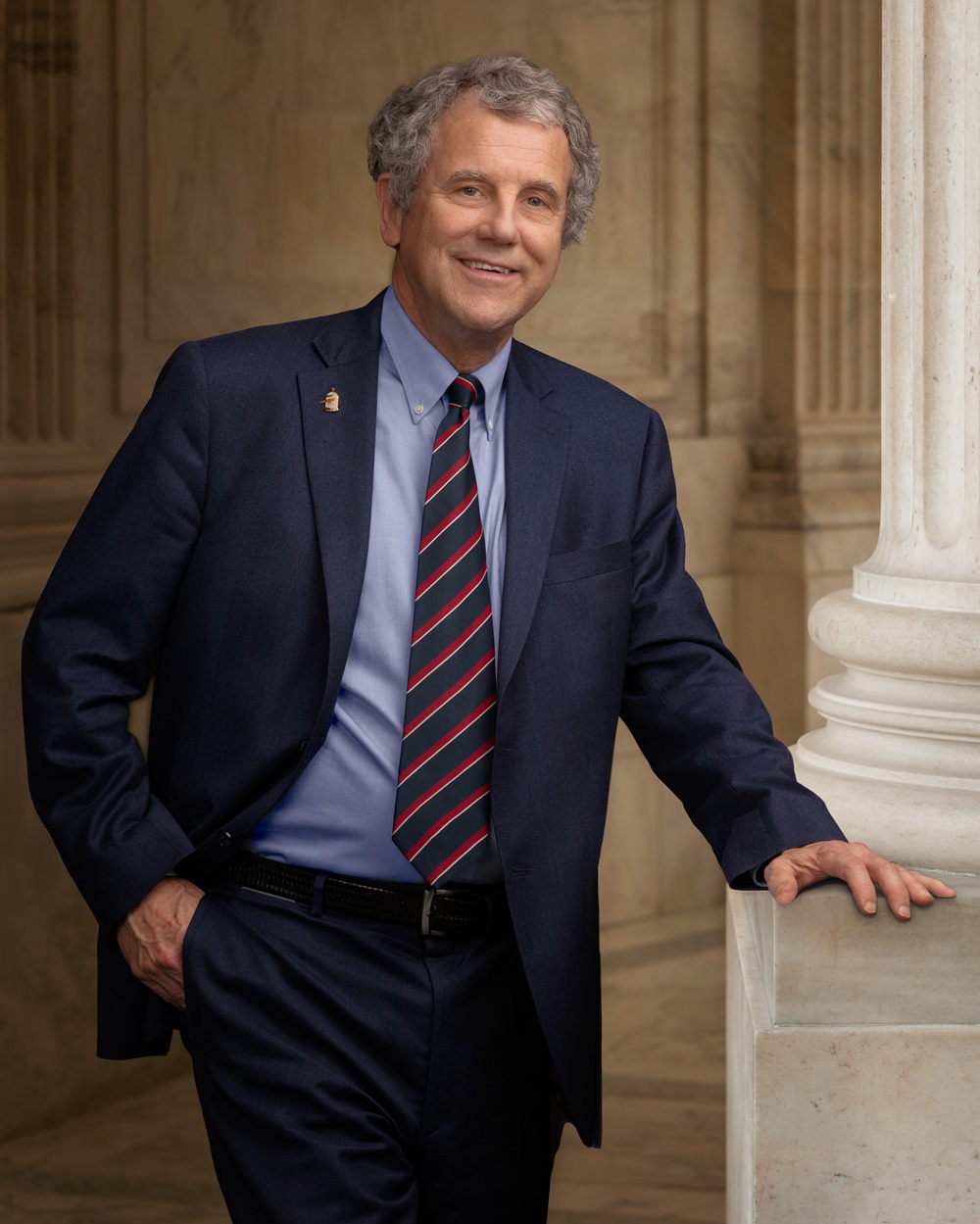
Sherrod Brown. (Official U.S. Senate photo by Rebecca Hammel)

Quick facts about Sherrod Brown:

  • – Ran in the General Election for U.S. Senate for Ohio in 2024 and lost to Bernie Moreno (R). Brown received 46.5 percent of the vote.
  • – Served as Ohio U.S. Senator from 2007-2024
  • – Served as a U.S. Congressman from 1993-2007
  • Website: sherrodbrown.com
  • Learn more about Brown here.

Jon Husted (Republican)

Jon Husted (Courtesy photo)

Quick facts about Jon Husted:

  • – Has served as Ohio U.S. Senator since 2025. Appointed by Mike DeWine to replace J.D. Vance, as Vance took on his new role as Vice President of the United States. 
  • – Served as Lieutenant Governor of Ohio from 2019-2025
  • – Served as Ohio Secretary Of State from 2011-2019
  • Website: husted.senate.gov
  • Learn more about Husted here.

  • • Gregory Levy (Independent)
Gregory Levy (Independent). (Courtesy photo)

Quick facts about Gregory Levy:

  • – A member of the Party for Socialism and Liberation (PSL)
  • – Military veteran
  • – A community organizer from Akron
  • Website: greg4senate.com

William B. Redpath (Libertarian)

Bill Redpath

Quick facts about William Redpath:

  • – Ran for Illinois U.S. Senate in 2022. Redpath received 1.7 percent of the vote and lost to Tammy Duckworth (D). 
  • – Ran for U.S. House to represent Illinois’s 6th District in 2020. Redpath received 1.7 percent of the vote and lost to Sean Casten (D).
  • – Ran for the U.S. House to represent Virginia’s District 10 in 2014. Redpath received 1.5 percent of the vote and lost to Barbara Comstock (R).
  • Website: billredpath.com
  • Learn more about Redpath here.

Attorney General

The attorney general serves as the primary legal counsel for the state of Ohio. The position supports law enforcement, consumers, and heads up the following divisions under the Attorney General’s office: antitrust, appeals, Bureau of Criminal Investigation, charitable law, civil rights, collections enforcement, constituent services, constitutional offices, consumer protection, court of claims defense, crime victim services, criminal justice, education, employment law, environmental enforcement, executive agencies, health & human services, health care fraud, Ohio Organized Crime Investigations Commission, Ohio Peace Officer Training Academy, policy and legislation, public utilities, special prosecutions, taxation, and workers’ compensation. Read more about the specifics of these AGO sections here.

Keith Faber (Republican)

Quick facts about Keith Faber:

  • – Has served as Ohio’s Auditor of State since 2019.
  • – Served as Ohio’s U.S. Congressman representing District 84 from 2016-2018.
  • – Served in the Ohio State Senate representing District 12 from 2007-2016.
  • Website: keithfaber.org

John J. Kulewicz (Democratic)

John Kulewicz (left) was interviewed by Jaden Jefferson in late May. (TFP photo by Jaden Jefferson)

Quick facts about John J. Kulewicz:

  • – 44-year member of the Columbus law firm Vorys, Sater, Seymour and Pease LLP, where he argued cases against the U.S. Supreme court and other state courts.
  • – Wrote An Ohioan’s Odyssey: Lessons in Leadership, Law, and Public Service
  • – Currently serving his second term on City Council for Upper Arlington.

Website: john4ohioag.com

Learn more about him in TFP’s coverage here.


Auditor of State

• Annette Blackwell (Democratic)

• Frank LaRose (Republican)

Secretary of State

• Tom Pruss (Libertarian)

  • • Allison Russo (Democratic)
  • • Robert Sprague (Republican)

Treasurer of State

  • • Jay Edwards (Republican)
  • • Seth Walsh (Democratic)

Justice of the Ohio Supreme Court (Term commencing Jan. 1, 2027)

• Daniel R. Hawkins (Republican)

• Marilyn Zayas (Democratic)

Justice of the Ohio Supreme Court (Term commencing Jan. 2, 2027)

• Jennifer Brunner (Democratic)

• Colleen O’Donnell (Republican)

LUCAS COUNTY

U.S. Representative – 9th District

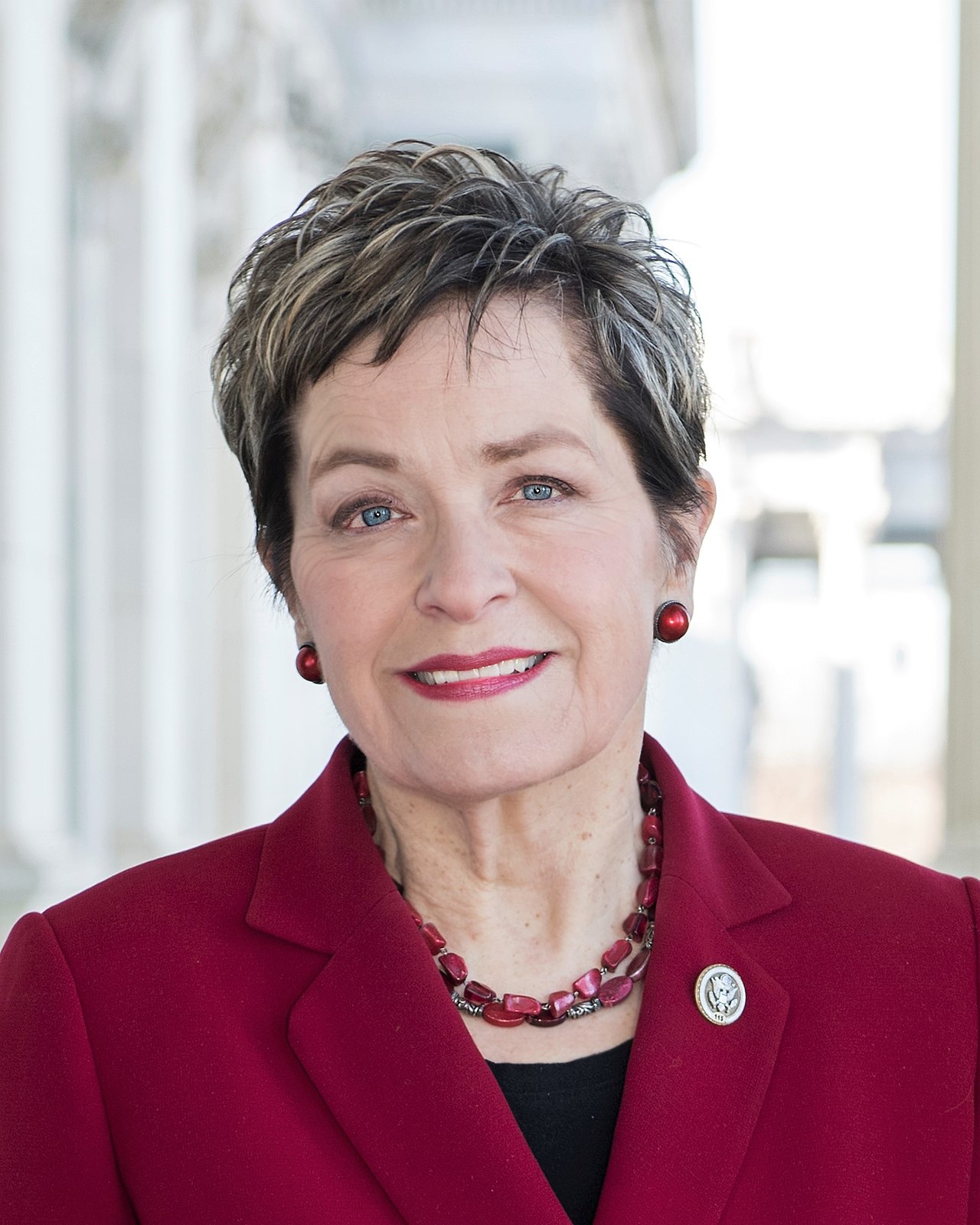
• Matthew Althaus (Libertarian)

Matthew Althaus. (Courtesy photo)

• Marcy Kaptur (Democratic)

Marcy Kaptur. (Courtesy photo)

• Derek Merrin (Republican)

Derek Merrin. (Courtesy photo)

State Senator – 11th District

• Paula Hicks-Hudson (Democratic)

• Kenneth W. Sharp (Libertarian)

• James Nowak (Republican)

State Representative – 41st District

• Ian Chamberlain (Republican)

• Erika White (Democratic – Write-In)

State Representative – 42nd District

• Elgin Rogers Jr. (Democratic)

• Robert McMahon (Republican – Write-In)

State Representative – 43rd District 

• Michele Grim (Democratic)

• Zach Hall (Libertarian)

• David Karmol (Republican)

State Representative – 44th District

Two attorneys and an architect are on the ballot to replace outgoing Rep. Josh Williams (R-Sylvania) in Ohio House District 44. The 119,000 population district is dubbed “the sliver on the river” because just a small section of the Maumee River connects portions of Sylvania, Berkey, Whitehouse, Waterville, Monclova, Providence Township and Swanton Township to the west with and portions of Perrysburg Township, Rossford, Northwood, Genoa and Curtice to the east.

Dave Fournier is running as a Democrat, Ed Schimmel as a Republican, and Lyndsey Stough as an Independent.

• David J. Fournier (Democratic)

• Edward L. Schimmel (Republican)

• Lyndsey Stough (Independent)

Court of Common Pleas – Domestic Relations

• Lisa D. McGowan (Republican)

• Nedal Adya (Democratic – Write-In)

Court of Common Pleas – Probate

• Tom Puffenberger (Democratic)

• Jaime Agnew (Republican)

Court of Appeals – 6th District

• Myron C. Duhart (Democratic)

• Michael R. Goulding (Republican)

• CJ Kamm (Republican)

Lucas County Commissioner

• Lisa A. Sobecki (Democratic)

• Brenden Johnson (Libertarian)

• Laura Brown (Republican)

Lucas County Auditor (Vote for 1)

• Katie Moline (Democratic)

• Carolyn Munn (Republican)


Issues on the ballot

Issue 3

Statewide, voters are deciding whether or not to enshrine Ohio’s existing requirement of photo ID to vote in the state constitution. Issue 3 would define approved forms of photo ID as:

• an unexpired Ohio driver’s license or state identification card; 

• a United States passport or passport card; 

• or a United States military identification card, Ohio National Guard identification card, or United States Department of Veterans Affairs identification card.

Issue 8

Issue 8 is about a five-year levy to cover the Toledo Lucas County Public Library’s operational costs.

If passed, Issue 8 would provide the TLCPL with an estimated $34.2 million each year. At an annual cost of about $105 for every $100,000 in taxable property value, this proposed levy is for $12.42 more than the one it’s intended to replace.

Related Story: Toledo Free Press Voter’s Guide: Issue 8 for the Library

Issue 9

Toledo Public Schools is putting before voters an ask of new funding “for the purpose of current expenses.” This five-year, 6.9 mills levy would cost taxpayers $242 for every $100,000 of their property’s county-estimated value. State cuts to public school funding, along with fewer students being enrolled, have resulted in increased financial pressure on TPS — a story playing out in school districts large and small throughout the state of Ohio.

Issue 13

The Imagination Station is seeking a renewal of its existing 0.17 mill levy for a period of five years. The cost to taxpayers is $3 per $100,000 of county-evaluated property value. Issue 13 would collect an estimated $1.3 million annually for the downtown Toledo science center.

Issue 16

For residents of the City of Toledo, there are a few things they, exclusively, will see on their ballot. 

To begin, Issue 16, which is being billed as a new source of funding for “neighborhood safety expenditures,” including the city’s police and fire departments, as well as “criminal gang disruption” (a term Issue 16’s ballot language leaves to the imagination).

Issue 17

Issue 17, if passed, would amend the City of Toledo charter in the following ways:

• Expand the definition of a city “employee,” which currently reads as “one who serves the City in the classified civil service,” to also include “members of the unclassified service.”

• Increase the power delegated to city council members over personnel decisions. Currently, the charter allows members to choose a clerk and “such other officers as are necessary.” This proposed amendment would allow members to also determine “the conditions of employment for its officers and employees, including matters such as hiring, discipline, and termination.”

• Change the classification of council officers and employees as members of the “classified civil service” to the “unclassified service.” 

Issue 18

Issue 18, if passed, would amend Toledo’s charter in these ways:

• Remove the requirement that candidates who’ve filed a nominating petition for a primary election provide written acceptance of their party’s nomination with election authorities.

• Require any potential write-in candidate to declare their intent to run on state-prescribed forms. 

• Increase the number of allowable days, from which an election must be held on a ballot initiative or referendum, from 75 to 90.

• Require that petitions to initiate a city ordinance, hold a referendum on an existing ordinance or council resolution, or amend the city charter, be filed “consistent with forms prescribed by the state.”

Issue 19

Issue 19, if passed, would amend the city charter to require that city council members approve proposed charter amendments in the form of an ordinance, rather than a resolution. It would also rewrite the city’s current charter amendment process, laid out here, and replace it with language proposed by city council in this ordinance, #305-26.

Read more details about all of the issues for Lucas County here.