Home Blog

How to vote in 2024

0
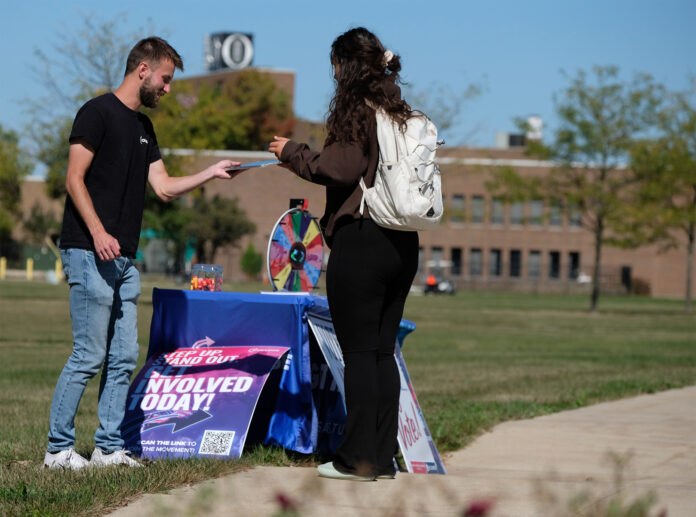
Lucas Zielinksi, with Turning Point USA, hands Amelia Mathkour, a music, business and tech major at Owens Community College, a pamphlet about voting registration. Zielinksi said he was on campus for the day to help students register to vote. (TFP Photo/Lori King)

Lucas County Board of Elections explains voting details, process

Toledo – With Election Day a month away, preparations are in full swing at the Lucas County Board of Elections office.

“We’re up and running and getting everything ready,” said Timothy Monaco, deputy director of the elections office. “It’s a wonderful time. It’s important to exercise your right to vote.”

Logistics that the staff and officers have been handling for weeks on behalf of Lucas County’s 303 voting precincts include preparing ballots, training precinct election officials, and getting early voting dates and times posted on their website.

Monaco said the most commonly asked question from voters during the past couple of weeks has been when absentee ballots will arrive in the mail. 

Here’s the answer: Ohio voters can look for the absentee ballots starting Oct. 8, which is one day after registration ends for the Nov. 5 election.

The Lucas County Board of Elections staff doesn’t give predictions on voter turnout, Monaco said. But, according to state election records, 67 percent of registered Lucas County voters participated in the 2020 presidential election, and 66 percent did so in the 2016 presidential election. This participation includes absentee voting, early in-person voting and traditional Election Day voting.

Those choices are meant to help all eligible voters participate, whether they prefer going in person to a local polling site or to cast a ballot before they travel out of town.

“It’s important to make your plan as to who you are going to vote for,” Monaco said. “Make sure you make a plan and know what is on your ballot.”

While the presidential campaign is the key race of the Nov. 5 election, there are also races in Lucas County for local judges and city officials. For those who want to see the list ahead of time, ballot proofs are available for review on the election board’s website.

“Ballots will be three pages for everyone and four pages for some,” Monaco said.

While some people remember how they wish to vote when going to the polls, others find it helpful to bring paper notes or refer to a list on their phone, Monaco said. “Some folks really come prepared,” he said.

“It’s also important to be respectful at the location,” he added, referring to an Ohio law that prohibits photos of marked ballots. “We do ask that you limit cell phone use at the ballot.”

Many other election details are explained at lucascountyohiovotes.gov.

Election calendar

Key dates for the November 5 election:

  • Military and overseas civilian voting: Started Sept. 20.
  • Voter registration deadline: 9 p.m. Oct. 7.
  • Early in-person voting season: Oct. 8.-Nov. 3.
  • Absentee ballot postmark deadline: Nov. 4.
  • Election Day: Nov. 5.

CAMPUS TALK

OWENS COMMUNITY COLLEGE STUDENTS SOUND OFF ABOUT VOTING

Question: How important is voting to you?

Voting is not my main concern, but it is pretty important because it is the future of America and I would like to have a say in what is gonna be my future. I usually try to vote on voting day, if I can’t I’ll do the absentee ballot.

Oliver Odendahl | EMT Major | Tontogany Resident

I am not a registered voter. If I was to lie to you I’d say yes. But honestly, I don’t have enough time … it’s not really a main priority, even though it should be. I do plan on voting at some point, maybe when I’m in my adult phase. Even though I’m not a registered voter I do think voting is important because it basically determines the society and the rules and regulations we live by.

James Johnson | Broadcast Media Technology Major | Toledo Resident

I’d say voting is very important. There’s certain aspects of it that do feel sort of depressing, when you think about it, because a lot of people would say people voting normally wouldn’t matter because of a small majority in the Electoral College – their votes matter 100 times more than your own. That’s what it feels like at least from what I know. It does feel a little degrading knowing that’s going to happen.

Nivant Dawson | Business Major | Toledo Resident

I think voting is important, but I’m not exactly sure why it’s important. I mean, there’s a lot of things that come from it. You’re voting for someone that you’re putting your trust and you’re faith into to guide us all in the right direction, but we just all don’t know what that direction is yet. So, we’re just kind of free-balling it, in a way. So, I don’t know … I’ve never voted before but this will be interesting. I really don’t know what all is involved. I just have a lot to learn about voting – like what I should be looking for in the leader I’m going to be voting for. So, yeah, it’s coming up soon. There’s a lot to learn.

Sydney Stanley | Chemistry Major | Millbury Resident

Voting is very important, especially in this day and age, when everything’s going on.

David Chase III | Literature Major | Toledo Resident
Registration details

Ohio voters must be registered by 9 p.m. Oct. 7 to be eligible to vote in the Nov. 5 election.

Residents can register to vote, look up voter registration, change their address, find an early voting location, look up Election Day polling location or track an absentee ballot at VoteOhio.gov.

Photo ID requirement

Bring your photo ID when voting. The options are:

- Current Ohio driver’s license or State of Ohio ID card.

- Interim ID form issued by Ohio Bureau of Motor Vehicles.

- U.S. passport or U.S. passport card.

- U.S. military ID card, Ohio National Guard ID card or U.S. Department of Veterans Affairs ID card.

A registered voter who has changed his or her name since the photo ID was issued will need to show proof of legal name change and sign a form. A photo ID card can show a former address if a current address is on file with the voting records. If you forget a photo ID, you can request a provisional ballot. 

How to vote absentee

An absentee ballot in Ohio needs to be requested, signed, dated and submitted for each election. Military personnel and civilian overseas voters can file one application for all elections happening in a given year.

The application asks for the number on your Ohio driver’s license or Ohio ID card, last four digits of your social security number, or a photocopy of other eligible ID such as a U.S. passport or military ID.

Mailed absentee ballots must be postmarked by Nov. 4 and can be hand delivered to the Board of Elections on Nov. 5.

Additional instructions are on the Ohio Secretary of State’s website.

In-person early voting

Ohio’s in-person early voting season begins Oct. 8 and ends Nov. 3. 

The Lucas County Early Vote Center is at 3737 W. Sylvania Ave. Suite 121 Entrance C (at the rear of the Lucas County Board of Elections building) in west Toledo.

Voting times and dates can be found at LucasCountyOhioVotes.gov.

Election Day voting

Polling sites are open in Ohio from 6:30-7:30 p.m. on Nov. 5. You can look up your polling location at VoteOhio.Gov.

What’s on the ballot?

A “ballot proof” is available for review on the Lucas County Board of Elections page. It lists candidates and ballot issues by precinct, so voters know what to expect.

For example: Six president/vice president candidate teams have declared in Ohio, with an additional write-in option available. Other candidate races include U.S. Senator, Lucas County Sheriff and openings on Toledo City Council.

Ohio Issue 1 is a proposed state constitutional amendment that has gained a lot of attention. This issue, if approved, would designate a redistricting commission to draw state legislative and congressional districts.

There are other issues locally, such as a proposed bond issue for the Toledo-Lucas County Public Library and a tax renewal request from the Toledo-Lucas County Port Authority.

Are ballot “selfies” allowed?

Ohio does not permit photos to be taken of a marked ballot. It’s actually a fifth-degree felony should that take place, according to Ohio law.

The “I Voted” Sticker

A traditionally popular way to showcase voter participation is through an “I voted” sticker, picked up on Election Day at the polling site.

Ohio’s current “I Voted” sticker design was adopted in 2019 through a student art contest. A red squiggle depicts a map of Ohio, nestled in a blue circle outline, with the phrase “Ohio Voted.”

Voters are invited to download the image to share on social media at the Ohio Secretary of State website. That website also has also a “future voter” coloring page for children available for download.

Is campaigning allowed at election sites?

Ohio does not allow election campaigning, also known as electioneering, within 100 feet of a voting site. This means no campaigning messages on attire such as shirts or hats, Monaco said.

Two small United States flags are placed at each voting site to designate the “neutral” zone where this applies. 

Where is the Board of Elections office?

If you need to visit the Lucas County Board of Elections regarding a voting matter, that office moved about two years ago from its former location at One Government Center to 3737 W. Sylvania Road in West Toledo.

When are election numbers official?

Ballots cast on Election Day will be delivered in person to the Lucas County Board of Elections for the counting procedures.

There will be numbers reported after that count is complete. 

The Ohio Secretary of State does not consider voter counts to be official until two or three weeks later, after provisional ballots are accounted for and to give time for absentee ballots to arrive that met the postmark deadline.
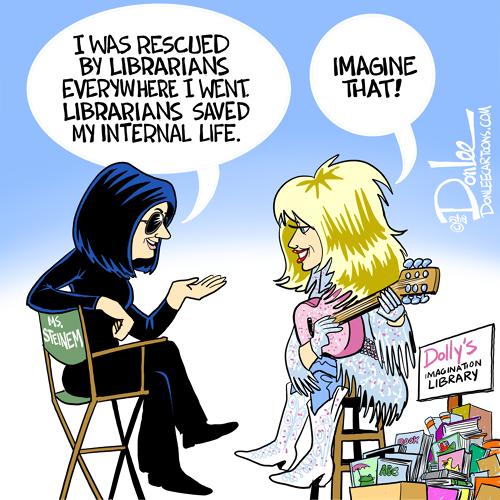

Cartoons by Don Lee: Gloria & Dolly

0
Cartoon by Don Lee

Mercy Health expands forensic nursing care across northwest Ohio

0
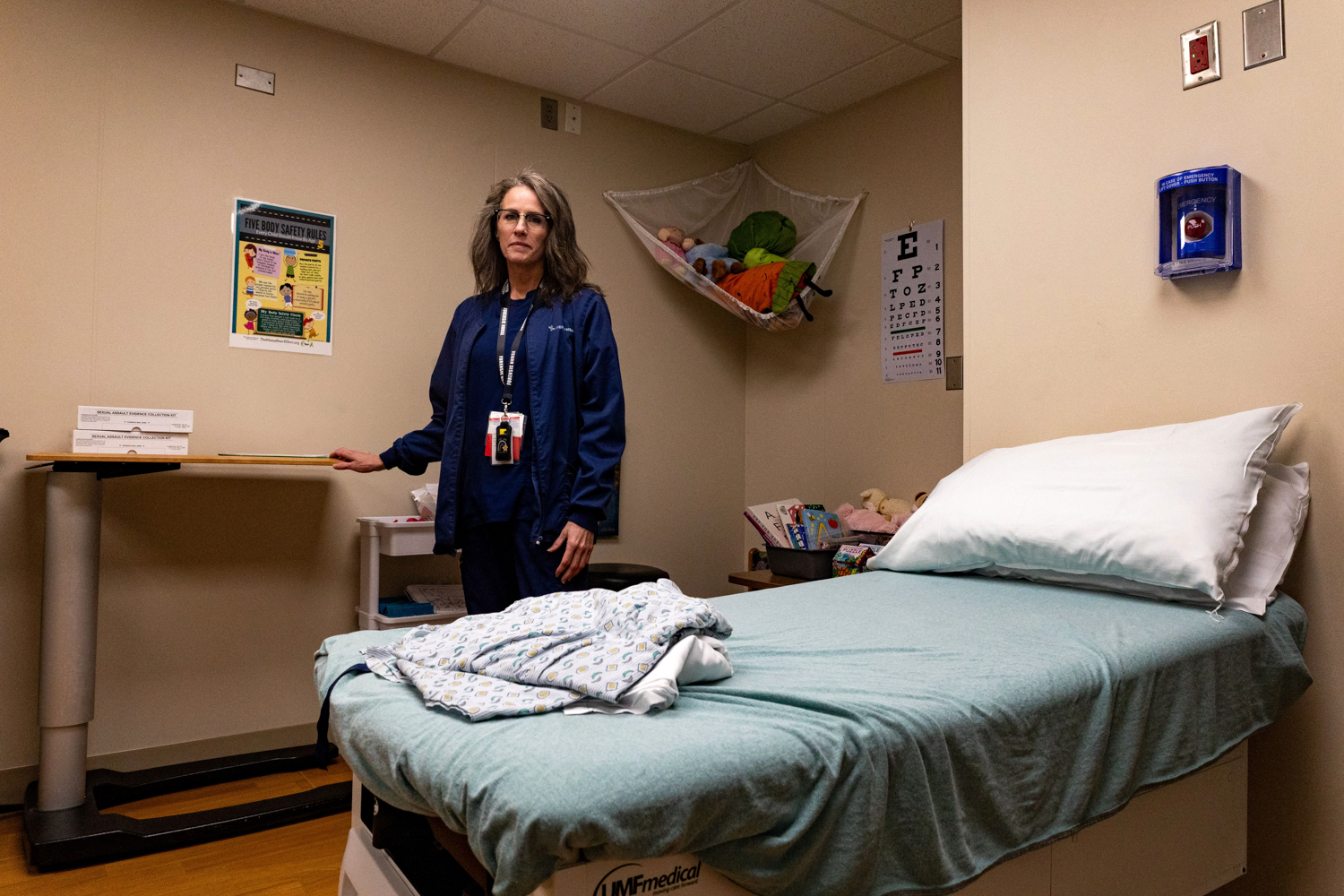
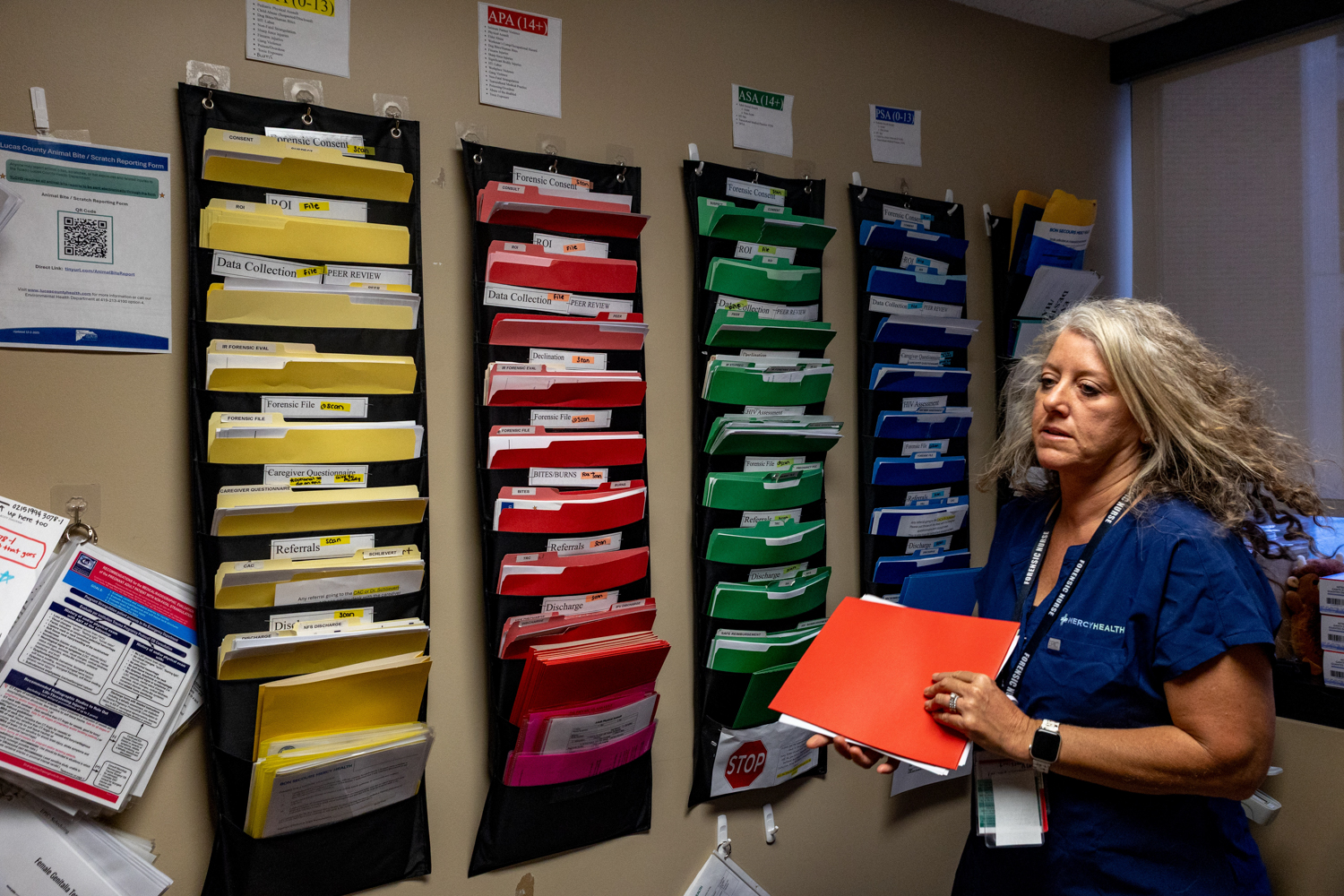
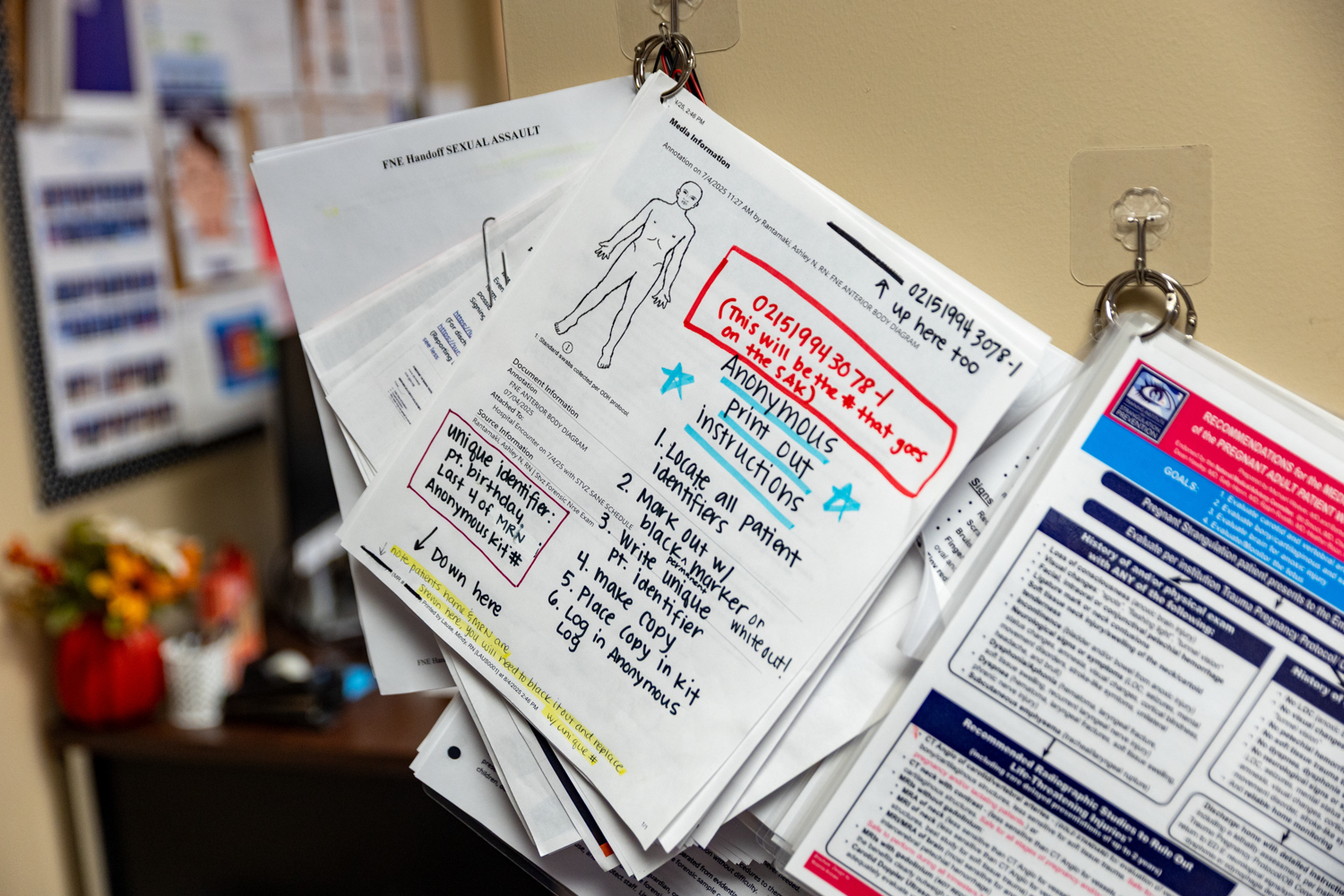
Sexual Assault Evidence Collection Kit inside a forensic nursing station at the St. Vincent Medical Center, 2213 Cherry Street, in Toledo. (TFP photo by Stephen Zenner)

TOLEDO — For someone who has just experienced violence, getting to a hospital can already be a difficult first step. Having to leave that hospital, travel somewhere else and tell the story all over again can make it even harder.

Mindy Lause, forensic nursing program manager at Mercy Health, and the health system are working to eliminate that barrier.

Mercy Health is expanding its forensic nursing program beyond Mercy Health – St. Vincent Medical Center in downtown Toledo, bringing specialized forensic nurses directly to patients at Mercy hospitals throughout northwest Ohio.

Forensic nurses care for patients who have experienced sexual assault, domestic violence, strangulation, human trafficking, child or elder abuse and other forms of violence.

“We’re nurses first,” Lause said. “Everything that we do, the patient experience and providing that holistic care for healing is always going to be our priority no matter what.”

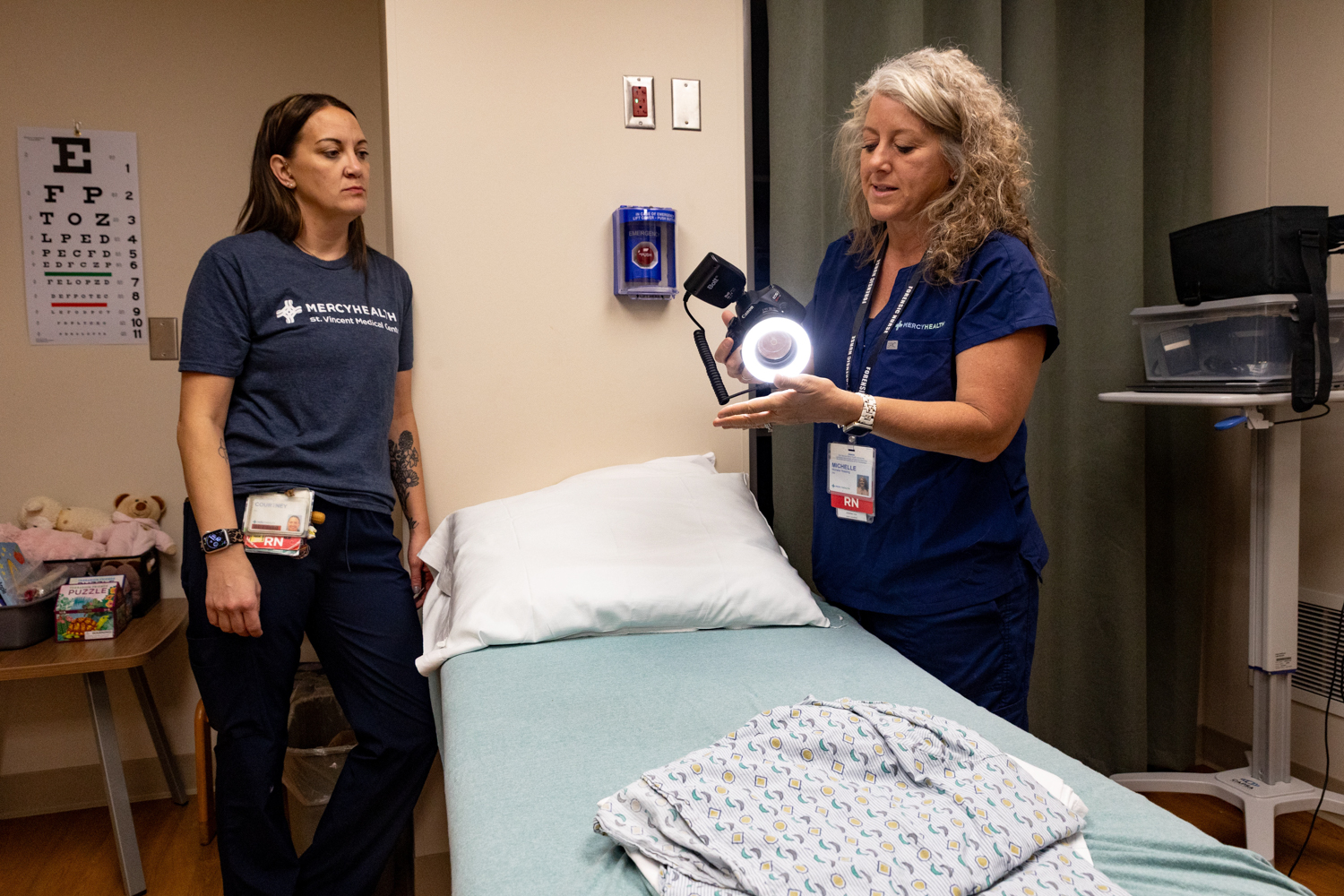
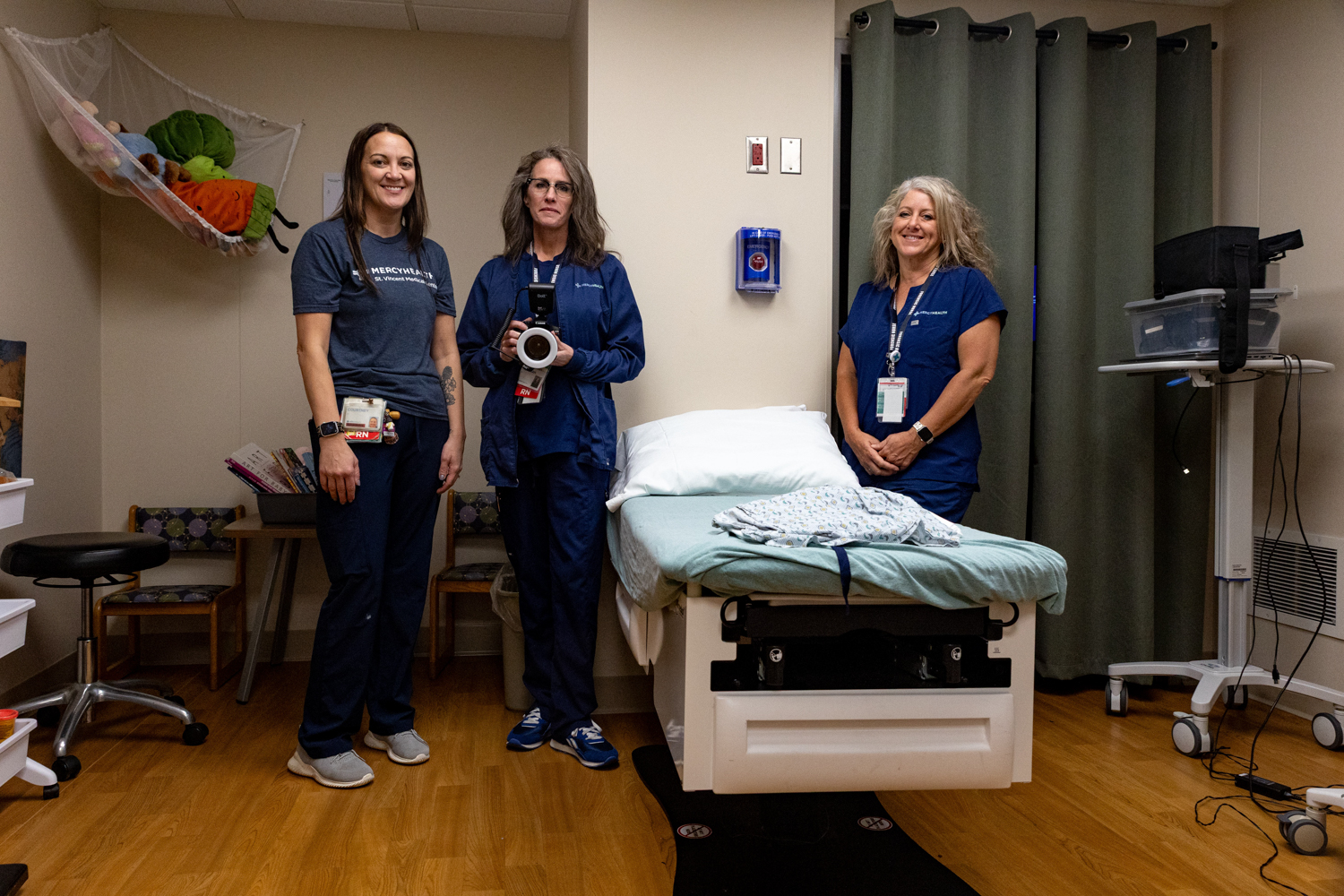
Courtney Hill, Registered Nurse (RN) and Forensic Nurse, stands next to a patient bed while Michelle Yeasting, Registered Nurse (RN) and Forensic Nurse, holds a camera for documenting medical evidence. (TFP photo by Stephen Zenner)

Bringing the nurse to the patient

Mercy Health established its forensic nursing program at St. Vincent in 2022. And as the program grew, so did the number of patients who needed its services.

In 2025 alone, Mercy nurses conducted 648 forensic exams at St. Vincent. Lause said the increasing number doesn’t necessarily mean violence itself is becoming more common. Instead, she believes more people know the service exists and trust it enough to seek help.

“We are providing a reliable service to people on the worst days, and most vulnerable days of their life.”

Lause also began receiving calls to provide care at other Mercy hospitals in the area.

She quickly discovered that patients sometimes had to be transferred to St. Vincent for specialized forensic care, while others faced wait times of up to eight hours as staff tried to locate an available forensic nurse.

“We wanted that to end,” Lause said. “It’s a lot to have to show up and tell somebody, ‘Hey, I was strangled,’ or ‘I was sexually assaulted.’ But then to have to begin again at a new hospital with new staff and waiting those long times … that places a significant amount of stress and pressure on the patient.”

Lause wanted to flip that model: Bring the nurse to the patient.

That became possible through a $200,000 Health Impact Fund grant awarded in 2025, allowing the program to hire two additional full-time positions and expand its reach in 2026.

As a result, forensic nurses are based at St. Vincent and are now dispatched as needed to other Mercy facilities throughout northwest Ohio, including Seneca County.

“Being able to respond to those rural facilities in a timely manner really helps strengthen access to care,” she said.

Michelle Yeasting, BSN, RN, SANE-A, SANE-P, who has worked in forensic nursing since 2008, said bringing that care directly to hospitals also removes practical barriers for patients who may not have a vehicle, money for gas or other resources needed to travel.

“We need to meet them where they are and when they show up,” Yeasting said.

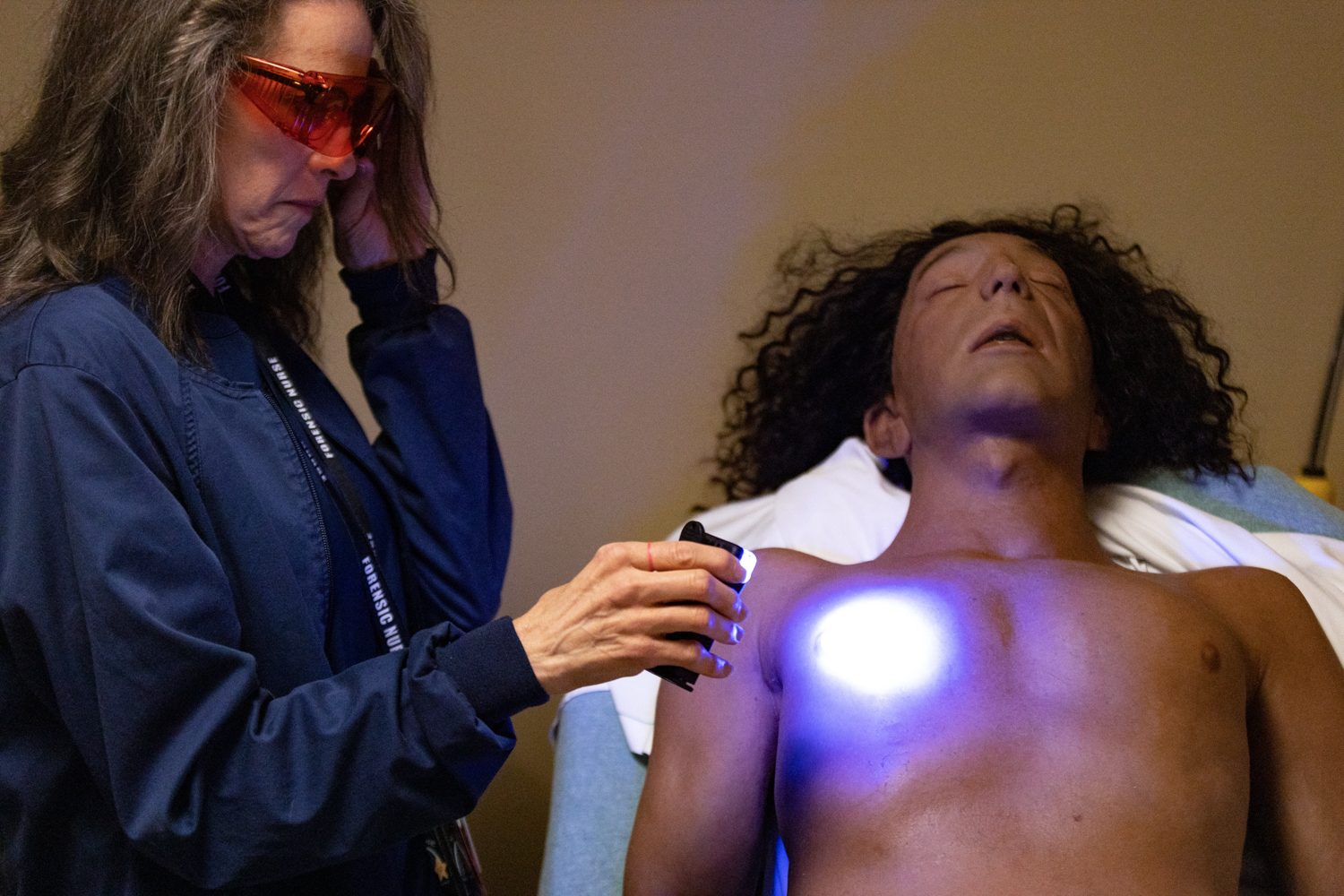
Rebekah Skinner, RN and Forensic Nurse, shines an alternative light source on a medical mannequin. (TFP photo by Stephen Zenner)

Connecting with the patient during the most vulnerable time

A forensic exam can last anywhere from one to six hours, depending on the circumstances.

When the nurse first meets a patient, Lause said the initial conversation is intentionally brief. The nurse explains the process without immediately asking the patient to recount every detail.

From there, nurses can perform a head-to-toe assessment, document injuries, collect evidence when appropriate and use forensic photography. They can also connect patients with advocates, law enforcement and community resources.

“For me, it’s just about connecting with the person and really just seeing the person.”

“Because a lot of these times, these patients feel unseen, and one of the biggest things we do as forensic nurses is be a witness to their experience,” Lause said.

That approach carries through to the forensic nurses on Lause’s team.

“The first thing I want the patient to know is that I am an ally who is there to meet them where they are in that moment,” said Lauren Wright, MSN, RN, CEN, CCRN-CMC.

“I want them to know that I see them as a person, and that I am here because I believe them.”

During these vulnerable moments, patients are not automatically required to speak with law enforcement. Forensic nurses can explain their options, document what happened and preserve information that could become important if a patient later chooses to pursue legal action.

For Madalyn Schlosser, BSN, RN, a forensic nurse examiner, part of building that trust means making sure patients know those decisions remain theirs.

“I remind each patient that they have autonomy over themselves, their body and that they are in full control of what happens next throughout the forensics process,” Schlosser said.

“That helps build trust,” Lause said. “We’re here for them. More importantly, we’re here to care for them and their body and what happened to them.”

Yeasting added that the importance of that care is personal.

“My children and I are survivors of violence,” she said.

While her children were undergoing a medical forensic exam, they met a forensic nurse who Yeasting said changed her life.

“After we healed a little, I decided to attend nursing school to be a forensic nurse and give back what was given to me that day: trauma-informed care and complete understanding of what was happening to us,” she added.

“I try to do this with every patient I meet.”

Instructions and diagrams on vital neck structures. Forensic nurses are tasked with helping patients who have endured strangulation, among other violent assaults. (TFP photo by Stephen Zenner)

Continuing to expand

Lause said the expansion is still evolving, with Mercy collecting data to better understand where patients are seeking forensic care and where additional resources may eventually be needed.

For her, though, the goal remains centered on the person who walks through the hospital doors.

“They’re not alone,” Lause said.

“We have highly educated staff that really just want to provide that care or build those bridges for them to begin the healing process; whatever that looks like for them.”

“We don’t know how this is going to end, but we’re here,” she added. “We’re provided the space to be here with them on their journey to healing.”

A digital video Colposcope, a tool used to visually examine the cervix, vagina and vulva. (TFP photo by Stephen Zenner)
Instructions and diagrams on strangulation. (TFP photo by Stephen Zenner)
Rebekah Skinner, RN and forensic nurse, sheds an alternative light source on a mannequin. (TFP photo by Stephen Zenner)
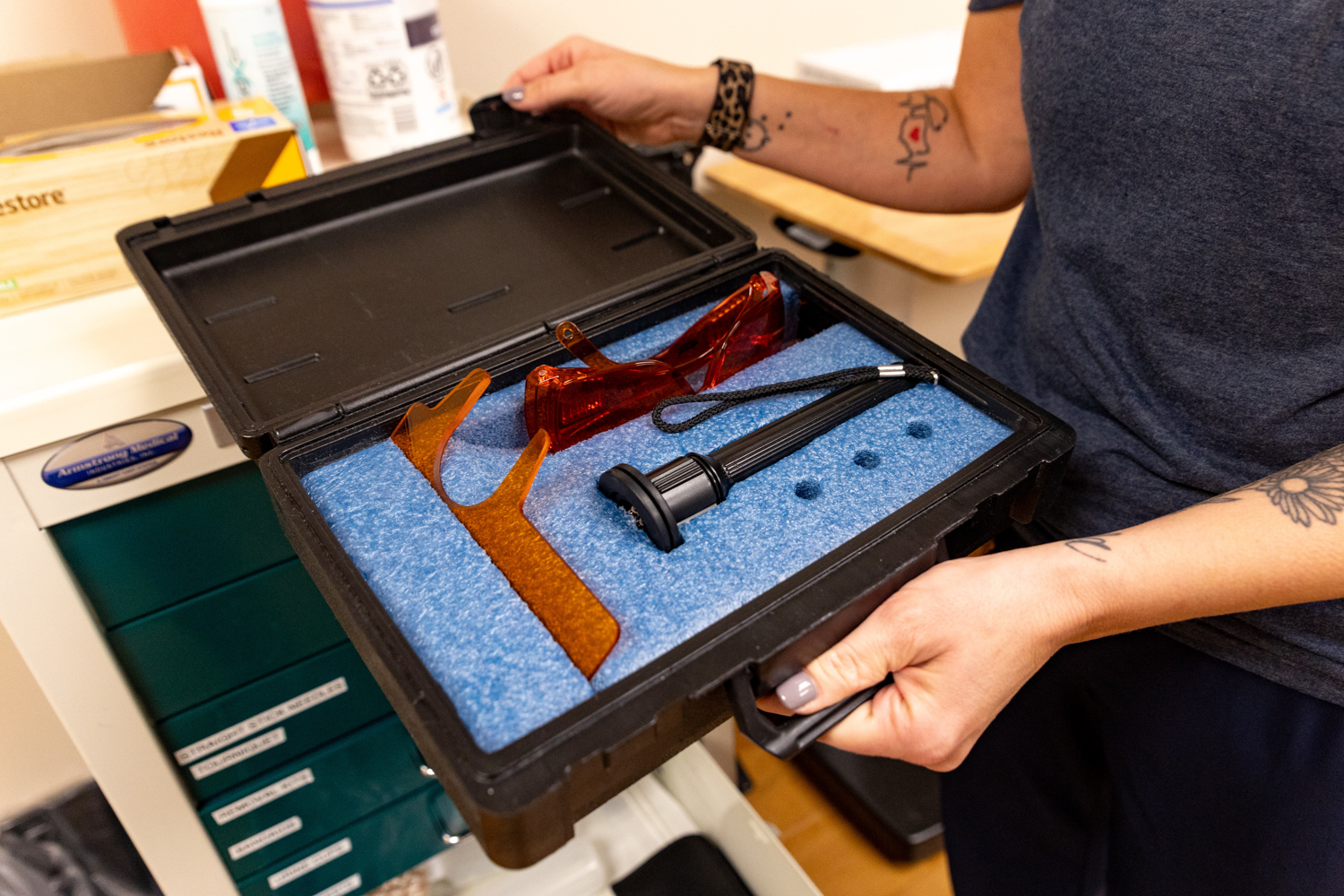
Courtney Hill, RN and Forensic Nurse, shines an alternative light source on her skin, which can reveal additional evidence. (TFP photo by Stephen Zenner)
Courtney Hill, Registered Nurse (RN), Rebekah Skinner, RN, and Michelle Yeasting, RN, all three forensic nurses. (TFP photo by Stephen Zenner)
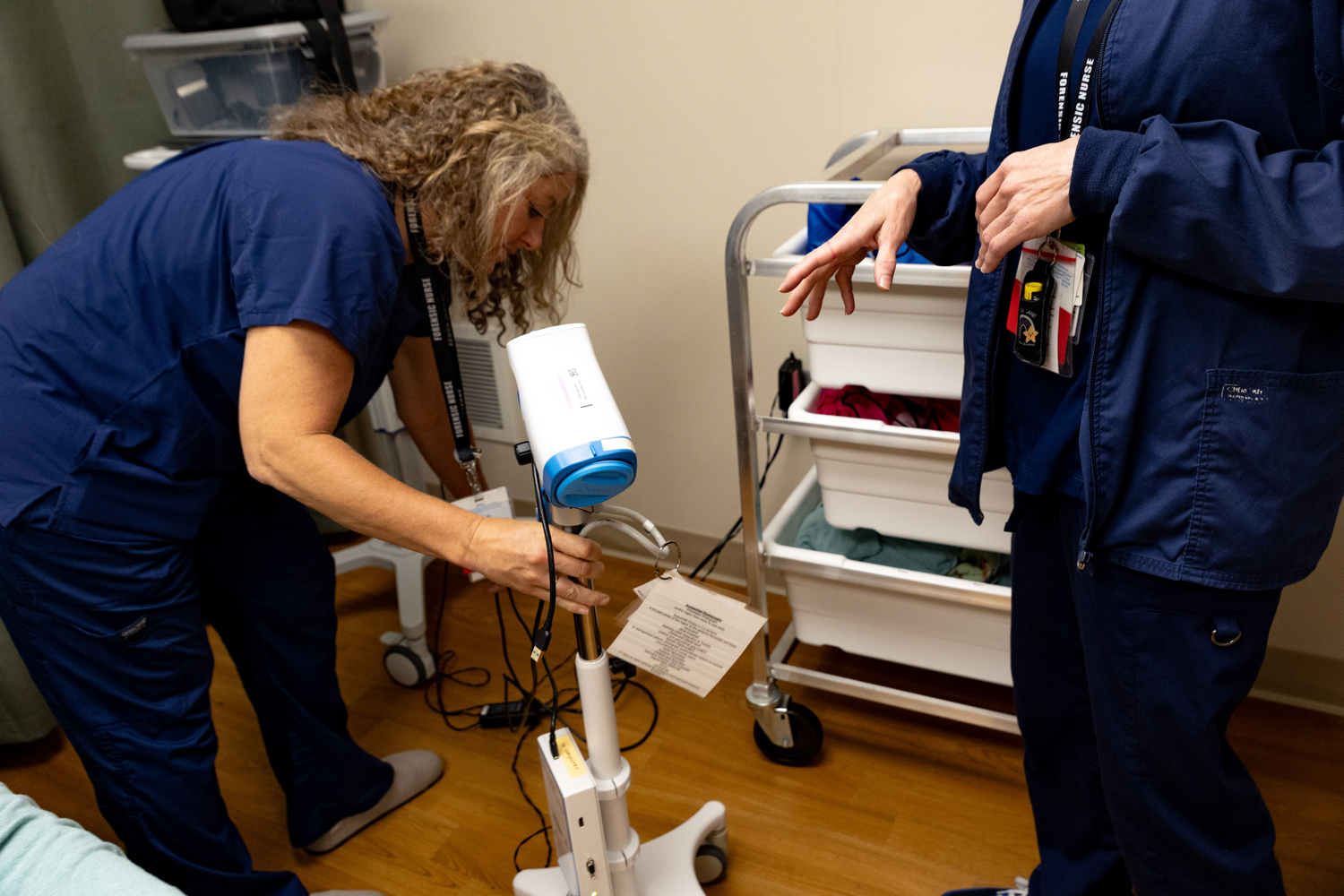
Michelle Yeasting, specialization in forensics, moves a digital video Colposcope next to Rebekah Skinner. (TFP photo by Stephen Zenner)
Rebekah Skinner, Registered Nurse (RN) a Forensic Nurse. (TFP photo by Stephen Zenner)
Courtney Hill, Registered Nurse (RN) a Forensic Nurse, holds an alternative light source. (TFP photo by Stephen Zenner)
Rebekah Skinner inputs data at the forensic nursing office. (TFP photo by Stephen Zenner)
Michelle Yeasting takes a file inside the forensic nursing office area at the St. Vincent Medical Center. (TFP photo by Stephen Zenner)
(TFP photo by Stephen Zenner)

Medal of Honor recipient speaks at sixth annual Veterans Banquet

0
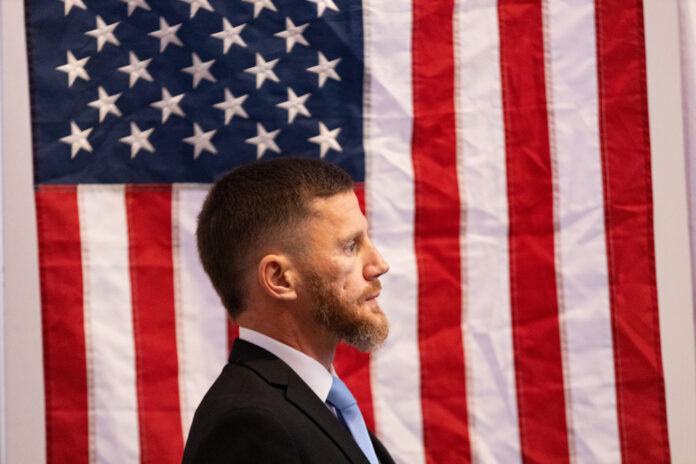
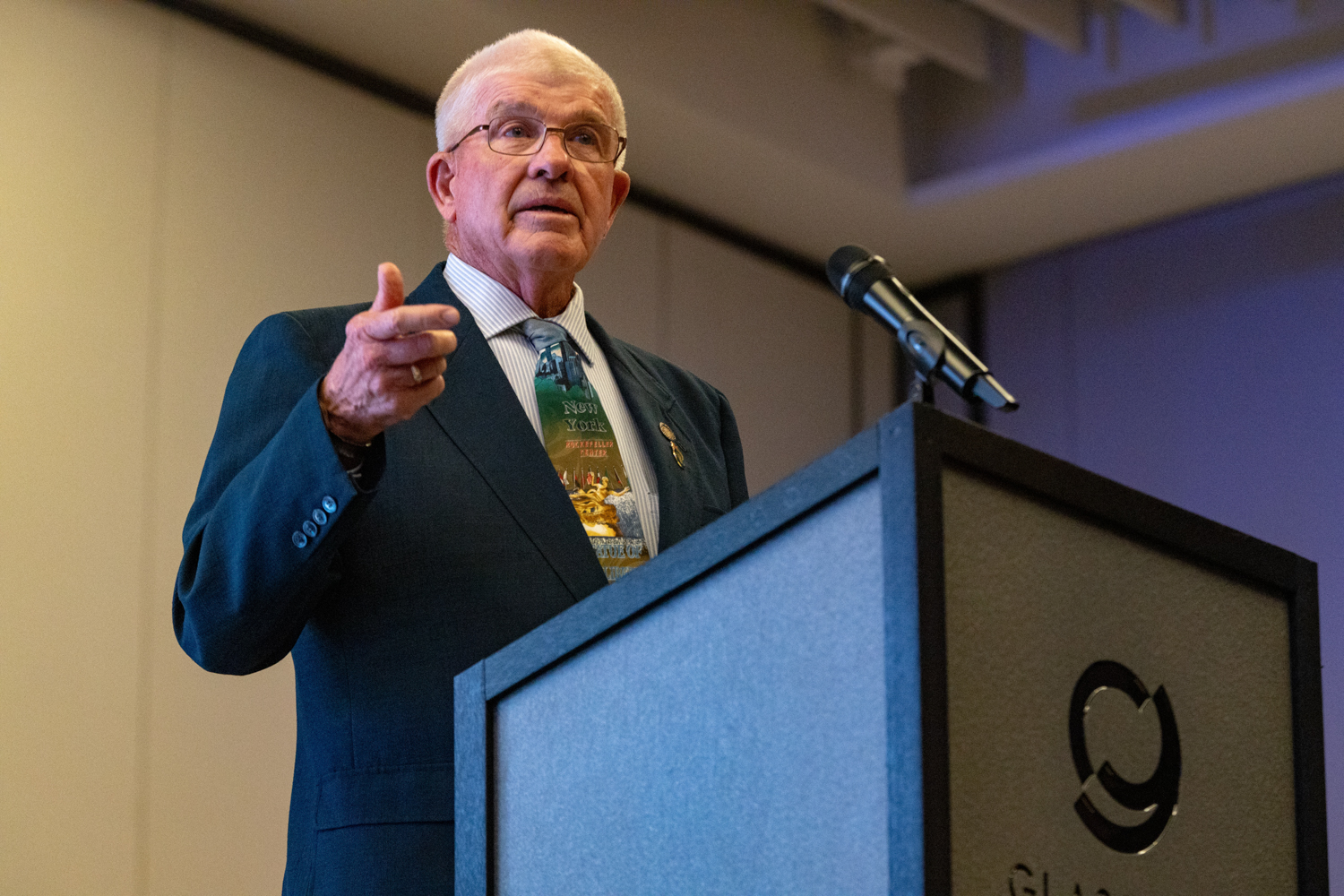
Kyle Carpenter, a corporal in the United States Marines and youngest Medal of Honor recipient, stands in front of the American flag before going on stage to speak during the sixth annual Veterans’ Banquet put on by Task Force 20 at the Glass City Center, 401 Jefferson Avenue in Toledo on Saturday, Sept. 12. (TFP photo by Stephen Zenner)

TOLEDO – The youngest medal of honor recipient, Kyle Carpenter, preached his gospel at this year’s Veterans Banquet put on by Task Force 20 at the Glass City Center.

“The smallest of steps completes the grandest of journeys,” was Carpenter’s refrain throughout his speech; it began with him being blown up behind enemy lines in Afghanistan, detailed his grueling recovery and concluded with a description of a thriving life running marathons.

“You can reach the finish line no matter how hard you get knocked down,” he encouraged his fellow veterans. But Carpenter’s cheerful voice carried weight in its lightness, as he shared his darkest days. 

Kyle Carpenter speaks to his fellow Veterans at the annual banquet put on by Task Force 20 at the Glass City Center. (TFP photo by Stephen Zenner)

After suffering severe nerve damage from the explosion from a grenade, Carpenter remembered his great difficulty trying to eat a bowl of cereal. 

“The milk felt like it weighed a hundred pounds…I struggled through every bite,” Carpenter said, as he recalled his physical, mental and emotional rock bottom. 

The Marine Corps corporal shared his doubt in that terrible moment: “Who’s ever going to love me?”

Carpenter continually encouraged his fellow service members to keep taking small steps before taking their questions.

“It does not take a hand grenade on a roof in Afghanistan to be there for someone,” he ended his speech. 

Founder and Executive Director of Task Force 20, Jason Graven, said the purpose of the banquet in its sixth year is to highlight what others are doing in the northwest Ohio veteran community.

“Our belief is that in order to address the veteran suicide epidemic, there’s no one organization that’s going to be able to do it alone, so we believe in all organizations working together,” he said. “We don’t think that every veteran is going to be cured using the resources of Task Force 20, so we consider it a disservice if we don’t know about or help promote the other veteran organizations that veterans may benefit from.”

According to a 2023 data sheet from the United States Department of Veteran Affairs, “the veteran suicide rate in Ohio was significantly higher than the national veteran suicide rate.”

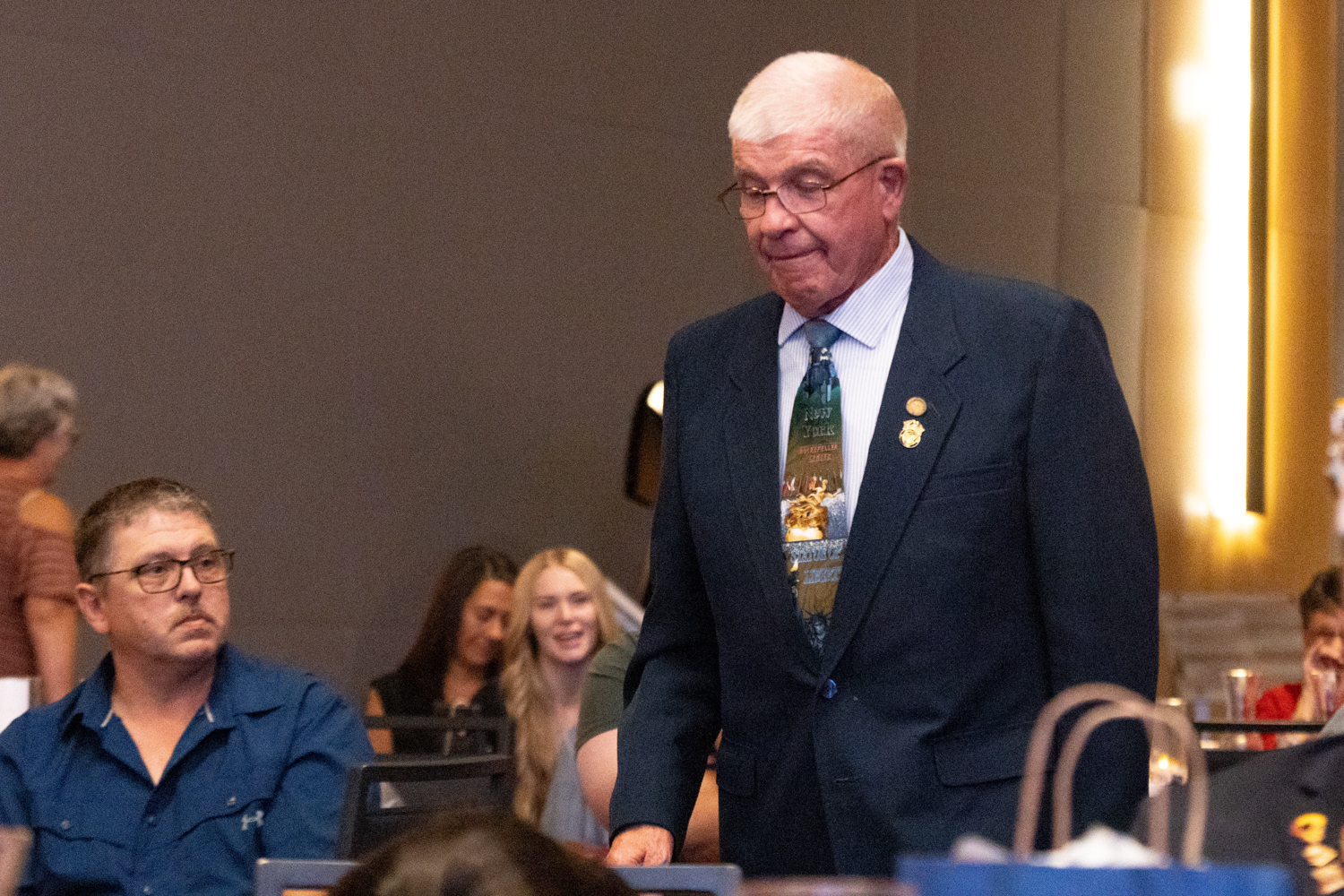
Wayne King, a Vietnam War Veteran and notable Whitehouse community member, walks to the stage to receive the award for Veteran Supporter of the Year. (TFP photo b Stephen Zenner)

Honorees during the banquet included: 

The civilian of the year was awarded to Therapist Christy Wood.

Organization of the year was the Lucas County Veterans Treatment Court.

Vietnam War Veteran Wayne King was named the Veteran Supporter of the Year. King has been involved in the Whitehouse American Legion for decade and with the honor guard. A fixture at Memorial Day and Veterans Day services, King is known in the Anthony Wayne community for his work with service members, both present and past.

King address the crowd as he accepts the award for Veteran Supporter of the Year. (TFP photo by Stephen Zenner)

Finally, the veteran of the year was Vietnam War Veteran David Ridenour.

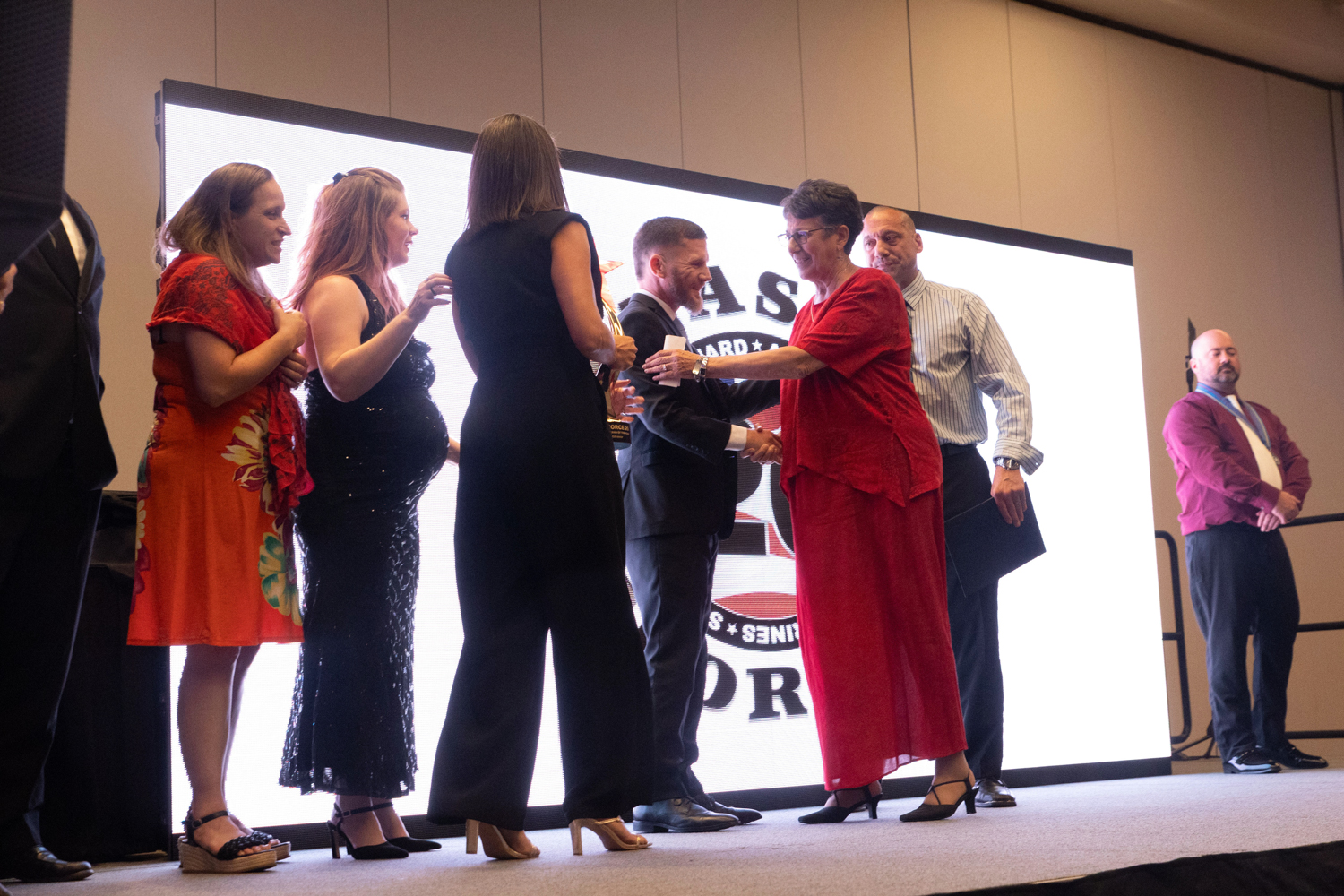
Ridenour passed away this past June, and so his widow, Jane Ridenour, received the award on his behalf. She told the story of when the two first met, and she told him, “Welcome home, after serving in Vietnam. That small sentiment meant a lot to David, and Jane encouraged all in attendance to, “Keep doing what you are doing to support the veterans in your life.”

Carpenter shakes hands with Jane Ridenour, who received the veteran of the year award on behalf of her husband, David Ridenour. (TFP photo by Stephen Zenner)

Student Visionaries fundraise for Blood Cancer United

0
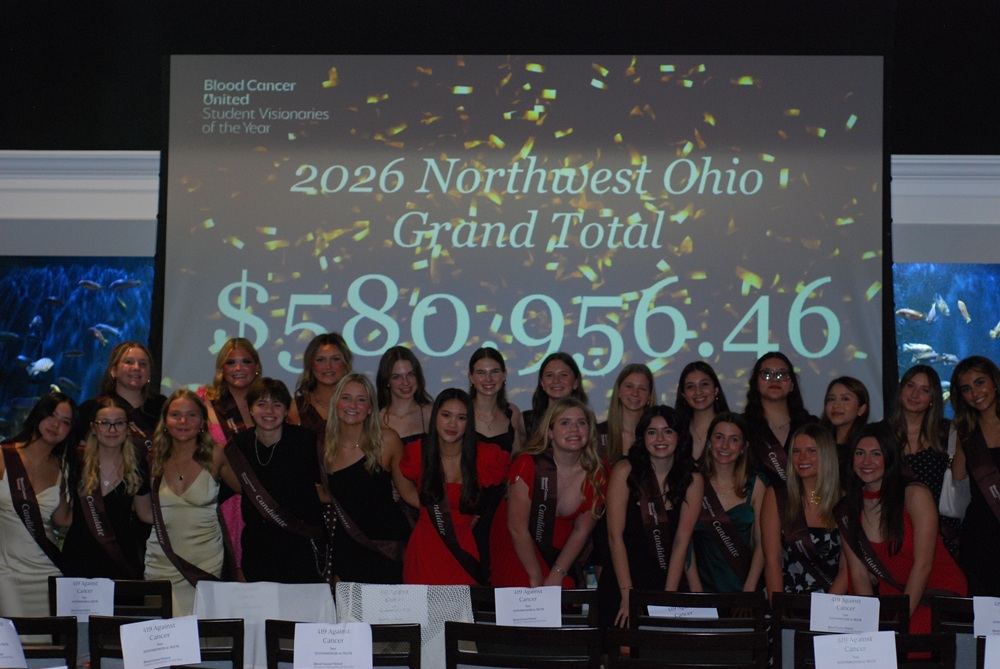
team members celebrating the end of the Student Visionaries of the Year campaign. (Courtesy photo)

Local students bring millions back to northwest Ohio

The Blood Cancer United Student Visionaries Program is a big name that you might not be familiar with, but they are doing powerful things, namely using high school student teams to raise millions to support people affected by blood cancer.

Locally, the Student Visionaries of the Year Program in Northwest Ohio has raised more than $3.1 million in its first 10 years. They’ve also produced nearly 1,000 young adults who are experienced leaders, skilled in business planning, organization, project management and communications.

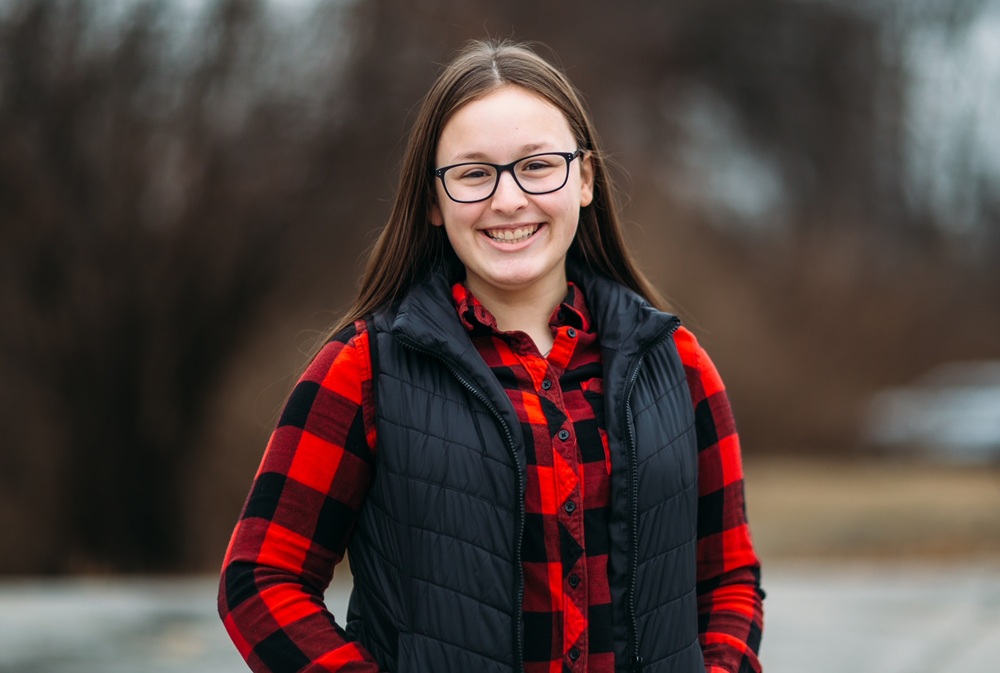
“I realized that I have the ability to create positive change,” said 2019 team member Katie Secord, a 2020 Whitmer High School graduate. “I didn’t have to wait till I was an adult to make an impact.”

Katie Secord, a member of the Northwest Ohio Student Visionaries’ 2019 team from Whitmer High School. (Courtesy photo)

Challenging leaders nationwide

Originally known as the Leukemia & Lymphoma Society, Blood Cancer United is the leading organization in the U.S. for the 1.7 million people living with or in remission from blood cancers. The organization provides patients with blood cancer information, nursing and diet services; caregivers with resources and support; and health care providers with research and treatment.

Blood Cancer United’s Visionaries program seeks out local leaders who can mobilize fundraising and support at the local level. The northwest Ohio program is one of four in Ohio.

In addition, the Student Visionaries of the Year Program in northwest Ohio (one of five such programs in the state) is an annual, seven-week leadership challenge where local high school student teams raise funds for and awareness of Blood Cancer United.

Northwest Ohio Student Visionaries’ 2026 total earnings. (Courtesy photo)

A local focus

In 2025, the Student Visionaries Northwest Ohio program had its best fundraising year to date, bringing in $960,600, according to Allison Boesel, campaign development manager. Combined with the adult Visionaries program, the region contributed a total of almost $1.2 million to Blood Cancer United that year. Its impact is very local, she explained.

“In 2025, $1 million in funds was returned to northwest Ohio. We had 12 teams from multiple schools around the area, and over 200 students participating,” Boesel said. The funding had significant impact in this region during 2025:

  • $921,000 in co-pay assistance
  • $55,300 in patient aid assistance
  • $21,000 in urgent need financial assistance
  • $3,500 in patient aid financial assistance

Also in 2025, the National Team Member of the Year came from northwest Ohio – Piper Downing from Ottawa Hills High School raised $157,000 during the campaign.

Training, organizing and growing

High school students in the Toledo area can apply as an individual or a team or be nominated to participate in the 2027 program until Nov. 1. But the planning for next year’s program has already begun. Boesel said that nine teams have already committed to the next program. A campaign workshop is planned for October to help candidates, team members and parents learn more and prepare for their campaigns. And once the nominations close on Nov. 1, teams are welcome to begin meeting and planning their campaigns.

The seven-week campaign begins in January across the country. Here in Toledo, it includes an introduction to all the teams and pickle ball games at Toledo Pickle Company. And then the teams get down to fundraising work. Boesel works with each of the teams to help them develop their business plans and organize their teams. “It gets very competitive during the fundraising time,” she said. She’s involved regularly with all the teams, encouraging their plans, helping them with presentations to potential donors and working with them on team building.

Along the way, the students build skills in marketing, business planning, entrepreneurship, recruitment and, most importantly, leadership. Students usually spend between 1-2 hours per week during the seven-week period on their work, and everything is worked around their schedules and outside lives.

“Every student is different in this program,” she said. “We help them move from the big picture of the campaign to the detailed daily lists. And all the skills they’re learning are transferrable to every career field.”

Whitmer High School 2020 graduate Katie Secord called upon her own lymphoma cancer experience to lead her involvement in the program. “My involvement was full circle,” from cancer 13 years ago to participation in the program in 2019, she explained. “It was very close to home, and I feel that it’s part of my passion now.” Her treatment was successful, and five years ago she was officially discharged from her treatment.

The 2027 campaign ends in March with a grand finale event, where the top teams and team members, along with fundraising goals, are announced and celebrated. Special activities – including involving program alumni, will be a part of their 10th anniversary celebration.

Since her involvement in the Student Visionaries program, Secord has applied her leadership skills in work and life. “I learned a lot during the program that I’m using now, mostly an overall confidence,” she said. “I’m still working on my public speaking skills.” But she said she moved into a leadership role at work after only six months, getting involved in outside and inside events and scheduling.

“Students get into this program for many reasons – to rally around loved ones or each other,” said Boesel. “It’s so inspiring to see what these students do every year.”

And for Secord, it’s simple. “I’ve gained confidence as a student, as a leader and as a person. I’ve learned every single day,” she said.

Learn more about or donate to the Blood Cancer United Student Visionaries of the Year Northwest Ohio for 2027 here.

Monclova continues discussion on generators

0
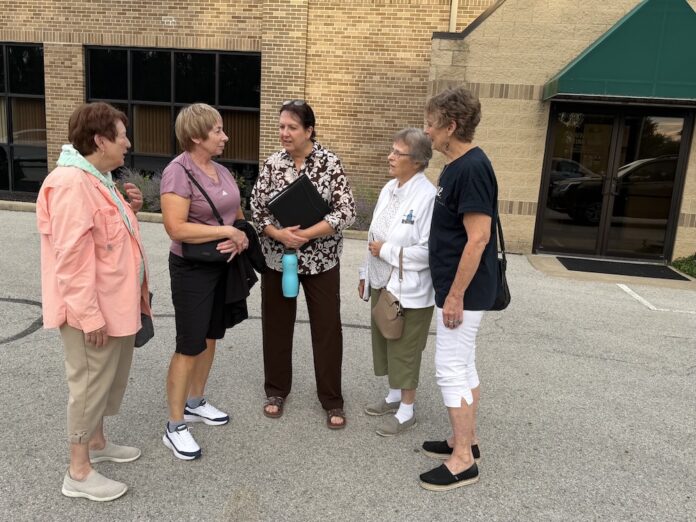
Monclova Township residents Jan Wittman, Liz Crosby, Risa Sindel, Suzanne Riddle and Linda Reiner discuss data centers after a September 8 Monclova Township trustees' meeting. (AWFP photo by Karen Gerhardinger)

MONCLOVA TOWNSHIP – “I’m disappointed,” Waterside resident Risa Sindel told Monclova Township trustees after a Sept. 8 public hearing about regulating generators – one of several suggested changes meant to protect residents in the event of a data center development – failed to move forward.

“It seems like we’ve gotten nowhere. You’re on a time crunch,” Sindel said, noting that a one-year data center moratorium expires on Feb. 17. “I’m just so disappointed…that we have not come farther than this on this issue.”

In June, the trustees held a public hearing looking at four proposed zoning resolution amendments. One change – allowing the public to be notified of zoning changes through the website, Facebook and My Monclova app – was approved, but the rest were tabled, including one regulating auxiliary electric generators for commercial, industrial and residential areas.

During that time, Zoning Administrator Eric Wagner, Law Director Dawn Sanderson and staff worked to make clarifications and revisions that were presented on Sept. 8. But the new language presented needs more refinements, trustees agreed, noting a need to put commercial, industrial and multifamily units in a separate category from residential.

Residential generators are becoming more common, as people are concerned about strain on the electrical grid or losing power during storms, Wagner said. Current language requires a setback of 10 feet or more from the lot line. Chuck Hoecherl wondered if 10 feet is enough, but Sindel said that is not reasonable for some of the condos and villas with smaller lots. Wagner said a number of subdivisions have 5-foot setbacks between lots, but the idea is to encourage people to put generators in the back yard instead of the side.

Trustees also had questions about how to define what is an emergency use, and whether using a generator for a bouncy house at a birthday party would require a permit. Discussion also centered around grandfathering existing whole-house generators and tracking future ones to make sure they meet the new setback rules.

The commercial, industrial and manufacturing uses will be defined separately with a bigger package as the township looks at new zoning classifications, said Trustee Barbara Lang. Wagner said he’s working with Senior County Planner Molly Maguire on language that would protect the township from potential impacts from a data center, including dust, vibration and noise, and submitting that language to Peter Griggs, a Columbus attorney hired last month to assist the township in preparing data center-related regulations. Monclova is considering an M-3 classification for data centers, rather than the conditional use permit process that is currently in place.

“The impression that we have a high-powered, knowledgeable law firm working to protect us is inaccurate,” Sindel said, questioning whether the township is using Griggs only for review or to help author language. Many details need to be worked out, and soon, in order to protect residents, she said.

Administrator Michael Hampton said he understands Sindel’s viewpoint, and with the moratorium expiring in February, he is pooling resources in order to have a document to present for discussion. Lang suggested that the township could imposed a six-month moratorium if they needed more time, but no one else commented on that idea.

“We’re on a time crunch,” agreed Hampton. “There’s a process for what we’re looking at doing – a new zoning classification. We need to get that process started, have a review and get it in front of Peter Griggs.”

The trustees are expected to review the language on generators again during the Sept. 21 meeting.

During the meeting, trustees also:

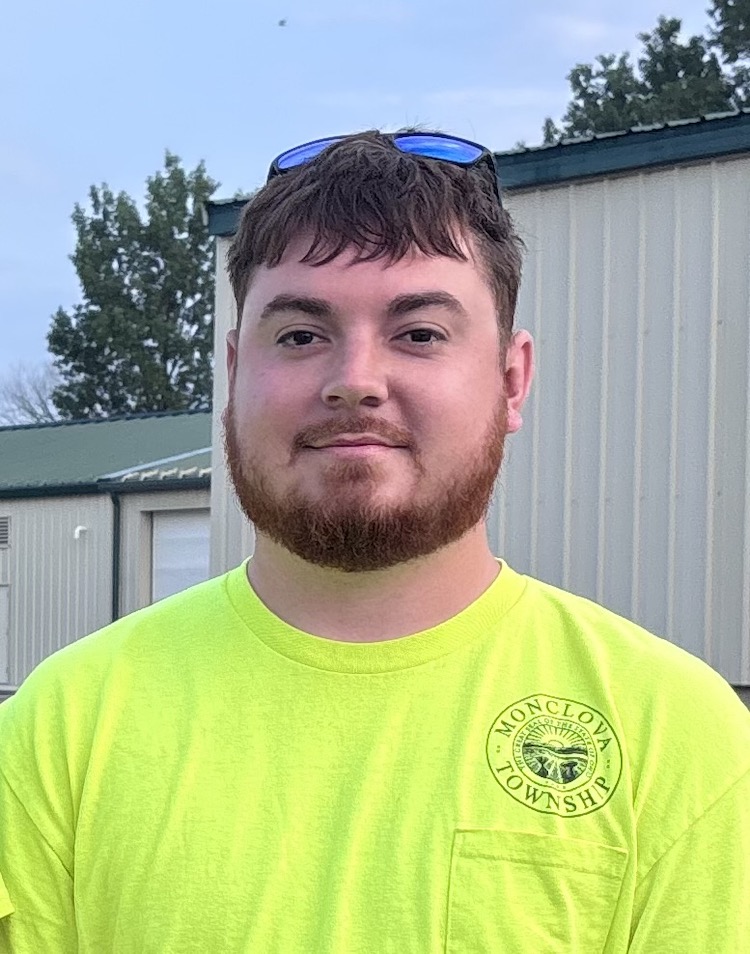
David Clark is the new Public Works supervisor. (AWFP photo by Karen Gerhardinger)

-Approved hiring David Clark as Public Works Department supervisor. Clark has been with the department for four years. In July, trustees announced changing the Road Department to Public Works to reflect the breadth of work completed by employees, and also promoted supervisor Doug Holland to Public Works director. As Clark fills the supervisory position, the township will advertise to fill his spot.

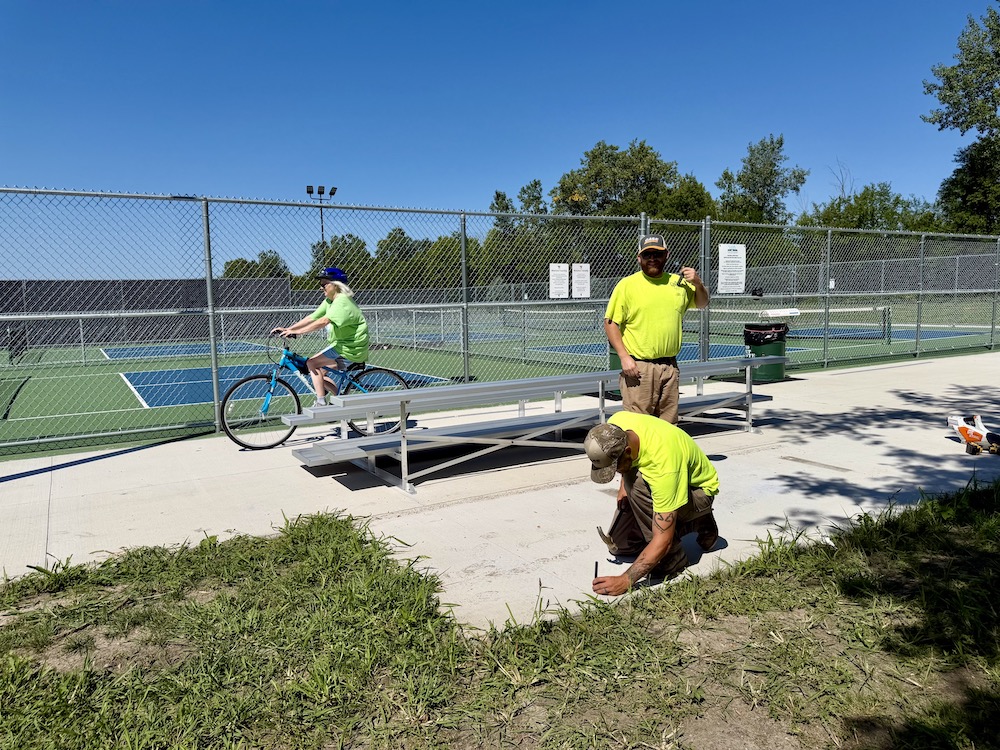
-Learned that the Public Works Department recently completed the installation of new playground equipment, benches, bleachers and trash receptacles in Keener Park.

Kay Paxson of Wauseon pedals past Public Works Department employees Greg Nye and Kyle Keifer as they install bleachers near the pickleball courts in Keener Park. (AWFP photo by Karen Gerhardinger)
Public Works Department employee Greg Nye spreads mulch around new playground equipment at Keener Park. (AWFP photo by Karen Gerhardinger)

-Heard that the roundabout at Waterville Monclova and Monclova roads will be open by Sept. 14. Then the township’s public works staff will install a sidewalk on the section where a temporary access road to the school has been in place. The Strayer Road/US 20A roundabout being installed by ODOT is underway, and a temporary three-way stop at Coder and US 20A has caused some issues, with people not stopping, so the Lucas County Sheriff’s Office is having deputies monitor the area.

-Listened to Lang provide an update from the Ohio Township Association, which recently had both candidates for governor come and answer questions. In the process, both learned that 36 percent of Ohioans live in townships, which “do more with way less money.” She said both promised to learn more about the township model of efficient and effective government.

-Approved speed limit revisions to the township’s portion of Air Cargo Parkway, Whitehouse Spencer between Sager and the north terminus. Swanton Township requested the study and also approved the changes.

-Approved a joint cooperation agreement for drainage improvements, utilizing storm water utility funds. The township will lead and coordinate projects.

-Approved a memo of understanding with the Lucas County Engineer, agreeing that the township will take over maintenance of landscaping on the Albon/Monclova roundabout. The roundabout in front of the school does not have a landscaped center island, Hampton noted.

-Heard that Hampton will make a presentation on Limited Home Rule to Waterside residents on Wednesday, September 16 at 7 p.m. This will be on Facebook live for those who cannot attend.

-Listened to resident Roy Bechtel suggest that the township share not just an agenda but a packet with information pertinent to the agenda, in order to encourage residents to stay informed and involved.

The Press closure and changing landscape of local news

0
After the announcement on Tuesday about The Blade's assets going up for sale, the print weekly The Press announced on Friday that it is closing operations. (Image by Jaden Jefferson)

As the Toledo Free Press recently reported, barring a sale by its owner, Block Communications, Inc., The Blade, will cease operations Dec. 31. While The Blade had shifted to only two days of print delivery, its presence in the digital arena, including an app, website, and social media platforms, were thought of as core to its future. A future that is, demonstrably, uncertain.

However, The Blade isn’t the only northwest Ohio print publication to recently announce difficult news, impacting both its employees and the communities they cover.

On Friday, The Press — a free, weekly print publication that covered eastern Lucas, northern Wood, and all of Ottawa and Sandusky counties — announced its final edition, citing “ongoing economic conditions,” despite attempting the transition to a subscription model.

The Press has been a small, family-owned operation since its inception in 1972, and as one of its final hires told the TFP, that was reflected in her experiences working there.

Reflections from a current and former employee

Katie Siebenaller, who has previously freelanced for the TFP, spent most of her working life as a part-time employee of The Press.

While majoring in communication studies at Kent State University, she said there was a requirement to obtain an internship in the following disciplines: mass communication, journalism, and graphic design.

Unsure of where to turn for one, she was reminded by her father, then an employee of the City of Oregon, that she had earlier designed an advertisement for the city’s Boomfest event, which she had also been tasked with getting placed in The Press. At his suggestion, she once again reached out to the publication’s sales team — this time, with the goal of landing an internship.

“They’re not gonna entertain me, a student, for an internship,” she recalled thinking. 

But, as it turned out, they would. And did.

“Julie, the saleswoman that I had spoken with, had talked to the manager at the time, Mary Perkins, and Mary was like, ‘Yeah, that would be great!’ So, I started interning there in September of 2016, doing graphic design, writing some articles, and just anything and everything.”

Katie Siebenaller, former graphic designer for The Press, is pictured at her desk. (Courtesy of Katie Siebenaller)

Because it was a smaller operation, Siebenaller experienced as hands-on an internship as one could get. 

“I was in the middle of it. It wasn’t just, you know, ‘Oh, do this little thing here, this little thing here,’ coffee runs, whatever. No, I was building ads for the paper, writing articles that went to print, helping lay out pages every week — it was just, overall, a fantastic experience. And at the end of it, they didn’t want to let me go.”

She was hired in November of 2016, and spent the next four years there, before the COVID-19 pandemic brought on new financial pressure. She returned, however, in 2025, where she’s been ever since.

“Everyone there was just amazing. They could have easily been like, ‘Yeah, this kid doesn’t know what she’s doing yet’ or whatever. But no, they fully embraced me: helping me out, guiding me, anytime I needed it; anytime I had an idea, they listened,” Siebenaller recalled.

“There’s so few places out there where you could go and have that kind of experience.”

Former Press reporter and editor Scott Carpenter (1983-95) said The Press was unique from other free distribution, weekly papers (back then, referred to as “shoppers,” he recalled) in its emphasis on news.

“They were primarily advertising, and we were, too, but we had a bigger, what we called ‘news hole.’ We had more room for news than traditional ‘shoppers’ did,” Carpenter explained.

“At one time, I think we had five reporters — full or part-time reporters — covering local governments. We had a pretty wide area: there were ten high schools in our circulation area; cities, villages, townships, and parts of four counties.”

East Toledo, Oregon, Northwood, Gibsonburg, and Genoa were what he described as the paper’s “strongholds.” An Oregon native, he said his reporting often involved people he knew, adding a personal element to the work.

“This paper was really well-read back then, and so astute city/village council people — they knew that — so they knew that when they were speaking at a council meeting, they were talking to 35,000 people who received the newspaper every week.”

Carpenter spoke to how the paper’s closure impacts him in his current role, as director of public relations for Metroparks Toledo.

“From the PR side, The Press was wonderful, because it covered pretty much every home in Oregon. So if I had some information to share with people about Pearson Metropark, for example, that was easy: just go to The Press, because they’re going to reach everybody who lived right around there. That’s going to be harder now.”

An information vacuum and unclear substitute  

Siebenaller shed light on the gap left by the paper’s closure.

“We covered a circulation area that no one else did, so our paper was, first and foremost, an important service to the community,” she said. “Covering local news that wasn’t covered anywhere else. That was kind of the first thing that I thought of when we found out that the paper was going to be closing: the community’s not going to get that.”

Siebenaller said readership skewed older, and that some had even called to say it was their only source for news, which they read cover-to-cover.

“Especially for those smaller communities, sometimes it was just representation,” she said, pointing to an example of a story that carried unique significance.

“One of the last big events that I covered was a Woodville Township trustees meeting, back when there were rumors flying around of a possible data center coming in,” she said, recalling a packed house, given the status of data centers as a “really hot button issue.”

She explained how that kind of turnout, which included reporters from other area newsrooms, isn’t the norm at every meeting. That’s why she worries about the smaller things, which can easily go undetected, without a reporter from The Press being present to document them.

Siebenaller also worries the absence of an established news source will create an information vacuum, which won’t be supplanted by local TV newsrooms. It’s a concern shared by Carpenter.

“Newspapers have more space to tell the story typically, than even TV news, because the TV has so much to pack in, so you do lose some depth and the ability to provide people with more information: not just the decision that was made or something that was done, but the reasons behind it.”

100 years of ownership ends: The Blocks and The Blade

0
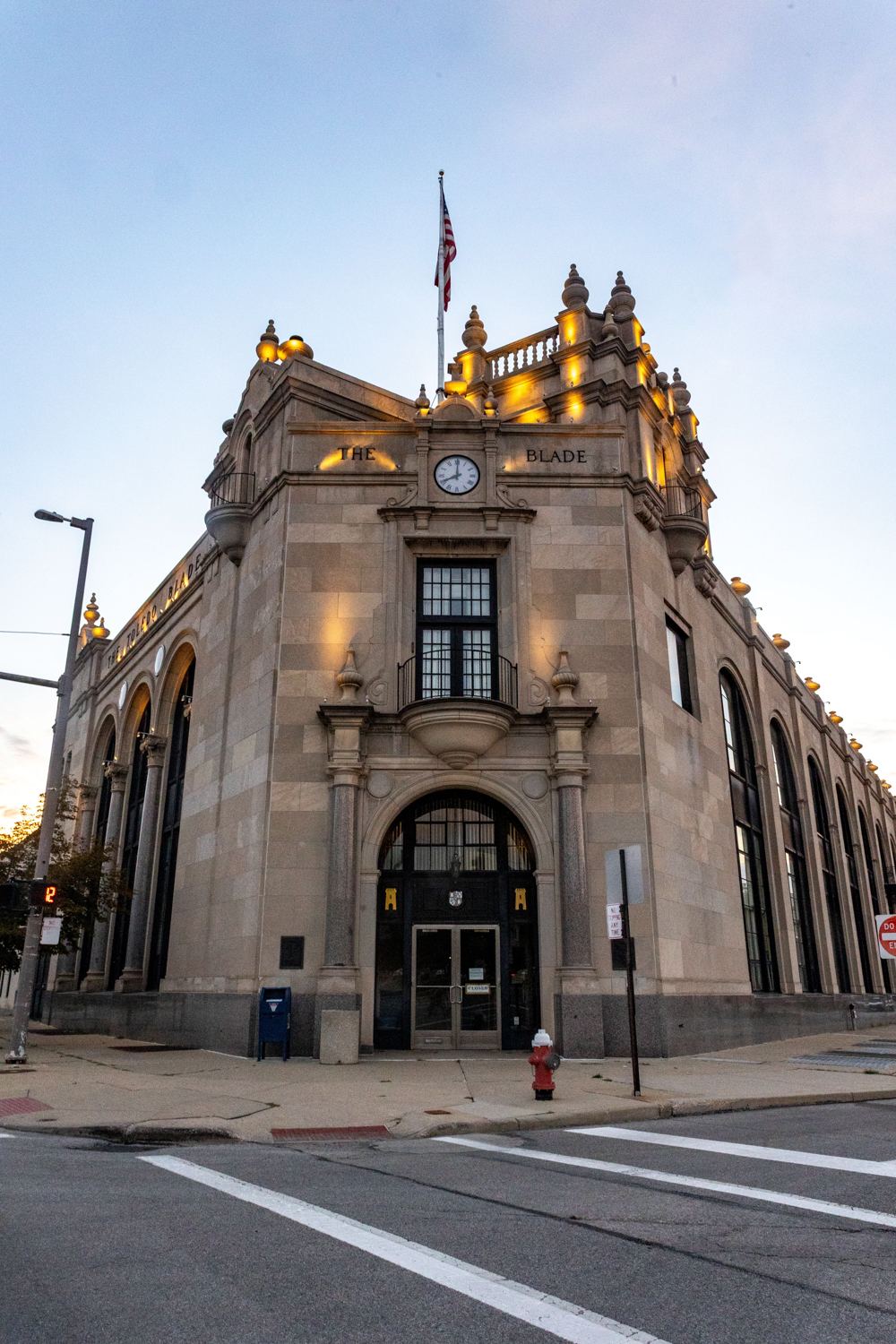
The Blade, 541 North Superior Street, on Tuesday, Sept. 8. The Blade published an article saying that they intend to sell their assets or close by Dec. 31 of this year. (TFP photo by Stephen Zenner)

TOLEDO – As many returned to work post-Labor Day, Toledo learned that its longest continuously operational workplace, The Blade, announced – after a round of failed negotiations with its union – that it would either sell its assets or close by the end of 2026. 

Corporate decision

“‘Unfortunately, an extremely difficult decision has been made,’ Jodi Miehls, president and chief operating officer of Block Communications [the parent organization of The Blade], said in an email to Blade staff on Tuesday morning,” according to an article by The Blade.

“The Block Family’s continued investment to keep the Blade open is no longer an option…Block Communications Board of Directors and the Block Family are truly disappointed to have reached this point. Unfortunately, the realities facing local journalism have left us in this situation,” she continued.

Miehls was the only voice in the article, which ended ominously with the words, “The Blade has 119 employees.” 

The Blade has been Toledo’s longest continuously operational workplace. (TFP photo by Stephen Zenner)

Union reaction

Absent from the decreed article were voices from those 119 employees, some of whom walked in the Labor Day Parade on Monday wearing shirts that read, “The Blade works because we do.”

Before noon on Tuesday, The Blade’s union, Toledo NewsGuild-CWA #34043, prepared a written statement in reaction to the announcement summarizing their side of the dispute: 

“Prior to the announcement [sale/closing], the company [Block Communications] had asked union employees to vote for a contract proposal that would have cut their severance in half, in addition to greenlighting giving away their work to Al, among other outsourcing. Workers voted that down, 46-25.”

Lillian King, a features writer for The Blade, the Toledo NewsGuild bargaining chair and former president of the union, said in the statement, “It’s disappointing that Block Communications would rather shutter the paper than work toward an equitable contract. The Company’s proposal would have axed seniority, halved severance for its most experienced employees, and allowed the outsourcing of all Guild work. All content at The Blade could be created or edited with Al, with no protections for journalists or requirements to disclose Al usage to its readers.”

The Blade, which announced their intent to sell their assets or close by the end of this year, has 119 employees. (TFP photo by Stephen Zenner)

BCI getting out of news

Former and current Blade employees mentioned the announcement was disappointing, but not a surprise.

Block Communications, Inc. (BCI) had already started selling off its television stations in Kentucky, Illinois and Ohio to Gray Media, Inc. in August of 2025 with the help of Jones Day, an international law firm.

Then, earlier this year, BCI announced in January the closing/sale of The Blade’s sister paper, The Pittsburgh Post-Gazette, with a similar timeline of a few months to find a buyer or close.

“The realities facing local journalism have brought us to this sad moment,” Miehls said when the closure/sale of the Post-Gazette was announced, according to reporting by Public Source.

This announcement was made after the National Labor Relations Board (NLRB) ruled in favor of the Post-Gazette’s union, TNG-CWA Local #38061, who had been on strike for three years, the longest newspaper strike in United States history, beginning in October 2022 and ending in November 2025. 

Union workers at the Post-Gazette returned to work in late November after the NLRB ruled as follows according to Public Source:

  • “PG Publishing [a subsidiary of BCI], which owns the newspaper, bargained in bad faith by demanding that the union allow subcontracting, change work hours and scale back health benefits.
  • The company prematurely declared an impasse and sought to impose its contract offer.
  • The company unlawfully surveilled strike rallies.
  • The NLRB has the authority to order the paper to compensate strikers for economic harms.”

A little more than a month after the NLRB ruling, Block Communications announced the Post-Gazette sale, and in April of 2026, the Venetoulis Institute for Local Journalism, the owner of the Baltimore Banner, announced its intent to buy the Post-Gazette, assuming ownership in May. 

(TFP photo by Stephen Zenner)

No more negotiations

Since 2017, both The Blade and The Post-Gazette’s unions have been unable to successfully negotiate new contracts with Block Communications. 

“My surprise was that they, management, chose not to sign a contract that would be much more favorable to workers that would make it easier to sell the paper,” said TK Barger, senior minister at First Unitarian Church of Toledo and the former religion editor for The Blade from 2012-2017, when asked about the announcement to sell/close The Blade. 

“I don’t know of any independents or nonprofit news corporations that would take it over at this time with the current mess that I see it seems to have.”

When speaking to the Toledo Free Press, Barger said he enjoyed the freedom he had to write the stories he wanted as the religion editor, but that even over a decade ago, management struggled with the union and with attempts to step into the digital age. 

“The last raise was more than 20 years ago, so that’s terrible,” he said. “When I worked there, it [The Blade] was struggling to incorporate newer technology and to, I guess, to hold readership.”

The last across the union raise was in 2002, and the 2007 contract was summarized by the Guild in this way:

“The newly approved contract is concessionary, and includes pay cuts, a commission sales plan for sales staff that had been salaried, an even greater share of the cost of health care, longer work hours at the same pay, a second-tier wage scale for new employees, and two less paid days off per year for the duration of the contract.” 

In 2014, The Blade stopped its in-house printing operation at 541 North Superior Street, and in 2019 it stopped printing on Monday and Tuesday. In 2020, the paper stopped printing on Friday and Saturday, and in 2021, it removed the Wednesday edition, only printing on Sundays and Thursdays, as they do now. 

2024 brought instability, as an internal family feud led to an injunction regarding a possible sale of The Blade.

And in March 2025, workers said goodbye to the historic building at 541 North Superior Street, as reporters moved to remote work two months after the announcement of the Post-Gazette sale/closing. 

“It’s a very sad situation for the Block family and for the newspaper guild, of which I used to be a part of,” said David Murray, a previous managing editor for The Blade, when asked for comment on its sale/closure.

Paper of record 

“The story of The Blade is so closely interwoven with the story of Toledo that, as an earlier historian of the newspaper has observed, the two cannot be separated,” wrote John M. Harrison in the opening chapter of his book The Blade of Toledo: The First 150 Years, published in 1985.  

“We hope it [The Blade] would always leap from its scabbard whenever the rights of individuals, or the community, shall be infringed,” reads an excerpt from the first editorial published on Dec. 19, 1835, under the oversight of Editor George Way, on page 5 of Harrison’s book. 

Slightly older than the City of Toledo, The Blade has been a beloved institution regardless of its hardships entering the 21st century and the criticisms of some of its readership. 

Comments were directed at the Facebook post on the official Blade page declaring the sale/closing. “Truly sad for the hard working people who day-in and day-out deliver us the news and a paper of record. Like it or not, the city and community is losing something truly special,” wrote Abner Krill in the comment section. 

Toledo’s Blade has been one of the last holdouts from broad corporate ownership of news media in Ohio, and the historical record of Toledo may potentially receive new stewardship if sold. 

“You hate to lose the history because history is so much of your legacy,” said Juanita Greene, the secretary and treasurer of the Toledo Community Coalition.

“I’m sorry to hear that they’re going to be closing. It’s a great institution…I know that they have helped in various organizational avenues within Toledo,” she said of The Blade and the Blocks and highlighted various community efforts made by both.

Just in Ohio, the Cincinnati Enquirer was sold to USA Today Co., Inc., or Gannett Co. as it used to be called, in 1979, then the Akron Beacon Journal was acquired by USA Today in 2018, and Cleveland Plain Dealer and Columbus Dispatch were sold to USA Today in 2019. Just north, USA Today acquired the Detroit Free Press in 2018, and they bought the Detroit News in January 2026. 

“There’s not local ownership of or really local control of broadcast media these days either,” Barger said. “We had the privilege of being a family-owned newspaper instead of a chain newspaper, and if a chain comes, we’ll see how that might help us to progress.

“Toledo is the fourth largest city in Ohio. Not to have a print publication, I think, would be a hindrance for Toledo’s growth, for Toledo’s ability to continue things.”

In their journal article “No News is Bad News: The Internet, Corruption, and the Decline of the Fourth EstateTed Matherly and Brad Greenwood studied the closure of 65 daily newspapers and wrote a brief summary in the Columbia Journalism Review: “All else being equal, the closure of a newspaper yielded a 6.9 percent increase in corruption charges, a 6.8 percent increase in the number of indicted defendants, and a 7.4 percent increase in cases filed.”

Those who remain hopeful for a buyer of the paper have stated that the Blocks’ era of ownership is ending, but that The Blade will live on. 

“Mr. Block — grandfather of John Robinson Block, The Blade’s publisher and editor-in-chief, and his brother, Allan Block, CEO of the newspaper’s parent company Block Communications Inc. — was introduced to the newspaper staff on Aug. 30, 1926,” read the article by The Blade. 

The end of 2026 will see the end of 100 years of ownership by the Block family, and time will tell if it is the end of The Blade. 

Waterville’s Roche de Boeuf Festival celebrates America 250

0
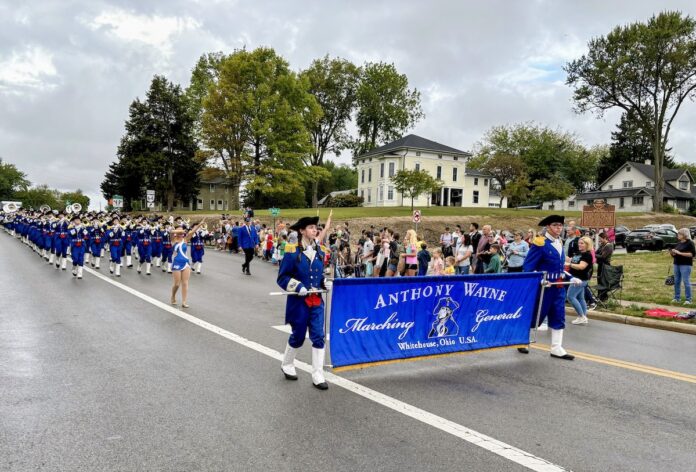
The Anthony Wayne Marching Generals, seen here in 2024, will lead the Saturday, Sept. 19 Roche de Boeuf parade, which steps off at 10 a.m. (AWFP photo by Karen Gerhardinger)

WATERVILLE – Downtown Waterville’s streets will be filled with vendors, music and activities on Saturday, Sept. 19, as the 53rd annual Roche de Boeuf Festival is set for 9 a.m. to 4 p.m.

“Come for the parade, stay for the music, kids activities, historical museums and hundreds of vendors and local organizations that will be set up,” said Michelle Smith, executive director of the Waterville Area Chamber of Commerce, which is hosting the festival.

More than 130 vendor booths and food trucks open at 9 a.m. and include nonprofit organizations, bakers, crafters and other businesses set up along both ends of Third Street and all of Farnsworth from the Trail to River Road.

Second Street will transform into Rue des Artistes, as the Anthony Wayne Area Arts Commission (AWAAC) welcomes a variety of artists, including Waterville photographer Jack Schultz, Mark Luebke‘s found object animal creations, glasswork from Mary Burget and Shannon Jones, jewelry by Sarah Voltz and miniature paintings by Joan Hetzner, to name a few. Copper Moon Studio will be on hand with a fused glass project for guests to make, while Sunshine Studios will offer products made by employees of all abilities.

The Classic Car Show takes place in the Shawn’s Irish Tavern parking lot, 105 S. Third St., from 9 a.m. to 2 p.m. The cost to enter is $10 the day of the show and includes free coffee and donuts, door prizes and raffles, 14 awards in 11 categories, and dash plaques. Music will be provided by The Entertainment Network.

The parade steps off at 10 a.m. from Farnsworth Road “up the hill” near Waterville First Presbyterian Church, and will include the Anthony Wayne Marching Generals, local businesses, dance teams, sports teams, churches, Purple Star Generals, Scouts, nonprofit organizations, fire trucks and politicians. Bring a bag to haul your candy!

Waterville police and fire will be on hand with displays during the Roche de Boeuf Festival. (AWFP photo by Karen Gerhardinger)

The America 250-themed parade will be led by the Anthony Wayne Marching Generals, the Whitehouse American Legion Post 384 color guard and this year’s special grand marshals – a group of 20 of the area’s oldest living military veterans who will ride on a trolley. 

“This is our way of thanking our veterans for their service to our country,” Smith said, noting that the men and women range in age from 75 to 100.

Throughout the day, enjoy the numerous activities lined up in several areas of downtown: a kids area in Parker Square, food trucks on River Road, a dance stage at the corner of N. Third and Mechanic streets, the historical museums on S. River Road and Wakeman Hall, and in the Shawn’s Irish Tavern parking lot.

Jackson Price and his backup dancers will perform from noon to 3 p.m. at Parker Square. (Courtesy photo)

The kids area in Parker Square will be open from 9 a.m. to 4 p.m., with Waterville’s own Jackson Price bringing his backup dancers for a Michael Jackson performance from noon to 3 p.m. under the arch. Pop Star Hunters will stop by for a performance. With a $10 wristband, children can enjoy unlimited use of the bounce houses, face painting, balloon animals and horse and trolley rides. 

Pop Star Hunters will pop into the kids area at Parker Square between noon and 3 p.m. (Courtesy photo)

The dance stage at Third and Mechanic will feature Defying Gravity from 11:30 to noon; Melissa’s Dane Academy, noon to 12:45 p.m.; Blue Grass Band, 1 to 1:45 p.m.; and Dance Fam and Latin Dance Studio from 2:45 to 4 p.m. Another group may be added from 2 to 2:45 p.m.

The Waterville Historical Society will offer two areas with activities and entertainment throughout the day. The South River Road campus features the Robbins House, Sargent House and Cobbler Shop, which will be open for tours. Outside the museums, guests can try their hand at making lace or tin-punching, and check out the military reenactors. The WHS will offer horse-drawn trolley rides on River Road. At Wakeman Hall, 401 Farnsworth Rd., guests can enjoy the free America 250 display featuring items from Waterville’s history.

Guests to the Roche de Boeuf Festival can park and catch a free shuttle service provided by Browning Masonic Community at two locations: Something Special Learning Center, 8251 Waterville Swanton Rd., and BlueSky Restorations at 1300 Michigan Ave. The shuttle service will be interrupted from 10 to 11:30 a.m. for road closures during the parade.

Smith thanked event gold sponsors Karnik on Black, Kaufman Engineered Systems and Thrivent/Pilot Wealth Partners for funding the activities to make many of the events free.

For updates on the festival, visit the Waterville Area Chamber of Commerce Facebook page or visit watervillechamber.com

Named for the large, buffalo-shaped limestone outcropping where meetings were held between the two groups, Roche de Boeuf means “buffalo rock” or “rock of beef.” That name also is used for the interurban bridge, which is undergoing a selective demolition by Kokosing, in preparation for a planned pedestrian and bike bridge to be placed on top of the arches.

On Friday, Sept. 18, the city will host a fundraiser for the Save the Bridge Association, which is coordinating with the city on the bridge’s transformation.

The evening includes a free concert in Parker Square by The Bridges, a high-energy classic and modern rock cover band that takes the stage at 7 p.m. Parker Square will have beer from Buffalo Rock, Chowders ‘n Moor margaritas and other refreshments on site.

Bridges, a rock band from Toledo, will perform on Friday, Sept. 18 at 7 p.m. in a free concert. (Courtesy photo)

On Friday night, Scout Troop 101 is hosting Run de Boeuf, a 5k and kids fun run. Registration begins at 5 p.m. in Parker Square, followed by a 1k kids race at 6 p.m. and 5k at 6:30 p.m. To sign up, visit runsignup.com/RDB.

For updates on the pre-RDB events, visit the City of Waterville Facebook page.

World War II veteran Dick Feusse is 100 years old

0
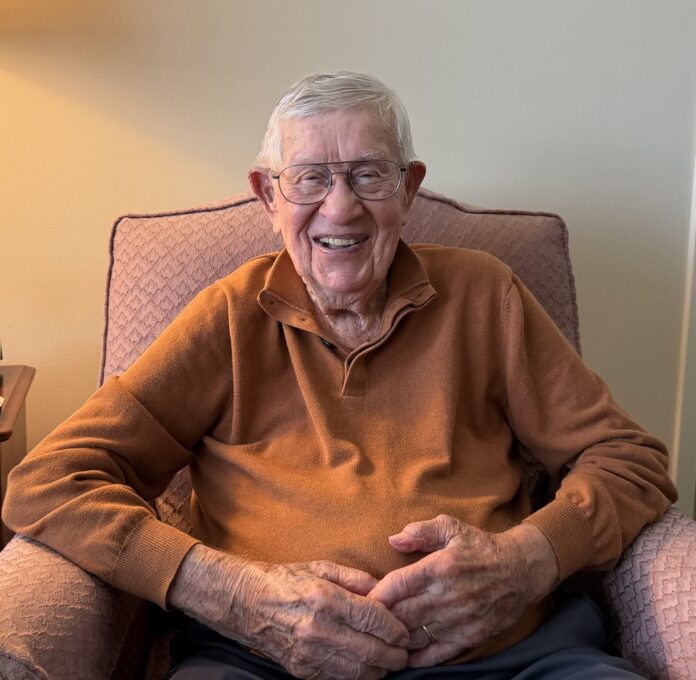
Dick Feusse, a World War II Navy veteran, now lives at Browning Masonic Community. He will turn 101 on November 17. (AWFP photo by Karen Gerhardinger)

Waterville – Richard “Dick” Feusse has been to many Roche de Boeuf Festivals over the years, and loves watching the Marching Generals in the parade. But this year, the 100-year-old Browning Masonic Community resident will lead the parade, as one of 20 area veterans who will be honored as grand marshals.

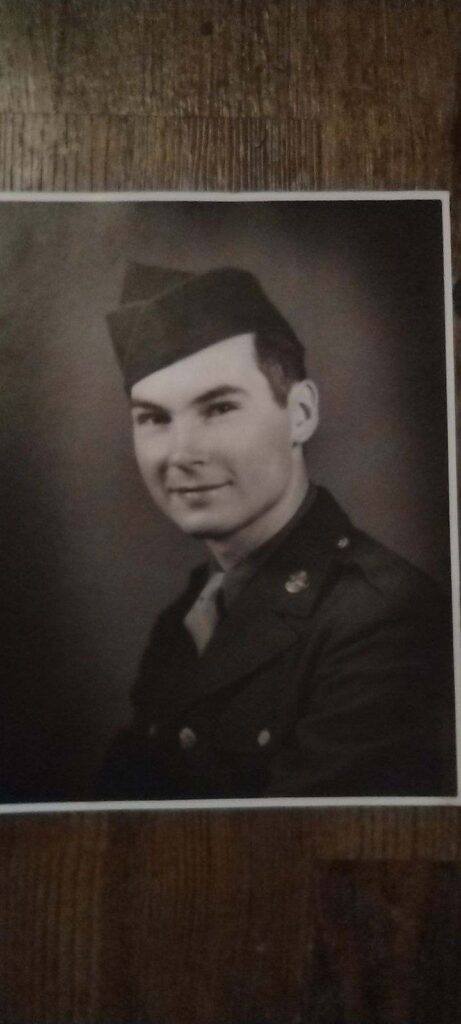
A World War II veteran, Feusse was 18 when he signed on with the U.S. Navy shortly after graduating from Hemlock High School near Saginaw, Mich. in 1943.

“World War II was on, so I went almost directly from high school to the war,” he said. “That was the way it was. I was willing to go to the war and most of my friends were too.”

After getting his physical exam in Detroit, Feusse was given a choice between joining the Army or the Navy. He chose Navy, figuring he’d be safer. After boot camp, he was assigned to the medical corps, despite no medical experience.

“I think it was because I wasn’t used to shooting guns…and I think because I’m a caring person,” Feusse said. 

His first year was spent training at the San Diego Naval Hospital. During that time, he was assigned to take care of Evans Fordyce Carlson, a Marine Corps officer who led a daring raid on Japanese-held Makin Island in the Pacific Ocean in 1942 – inspiring the 1943 movie Gung Ho!

President Franklin D. Roosevelt came to the hospital to visit Carlson, who he considered as a friend.

“It was just the four of us: me, Col. Carlson, the president and his driver, in the car. They talked for about a half an hour,” Feusse recalled, adding that they spoke about the war and about Roosevelt’s sons, who were also serving.

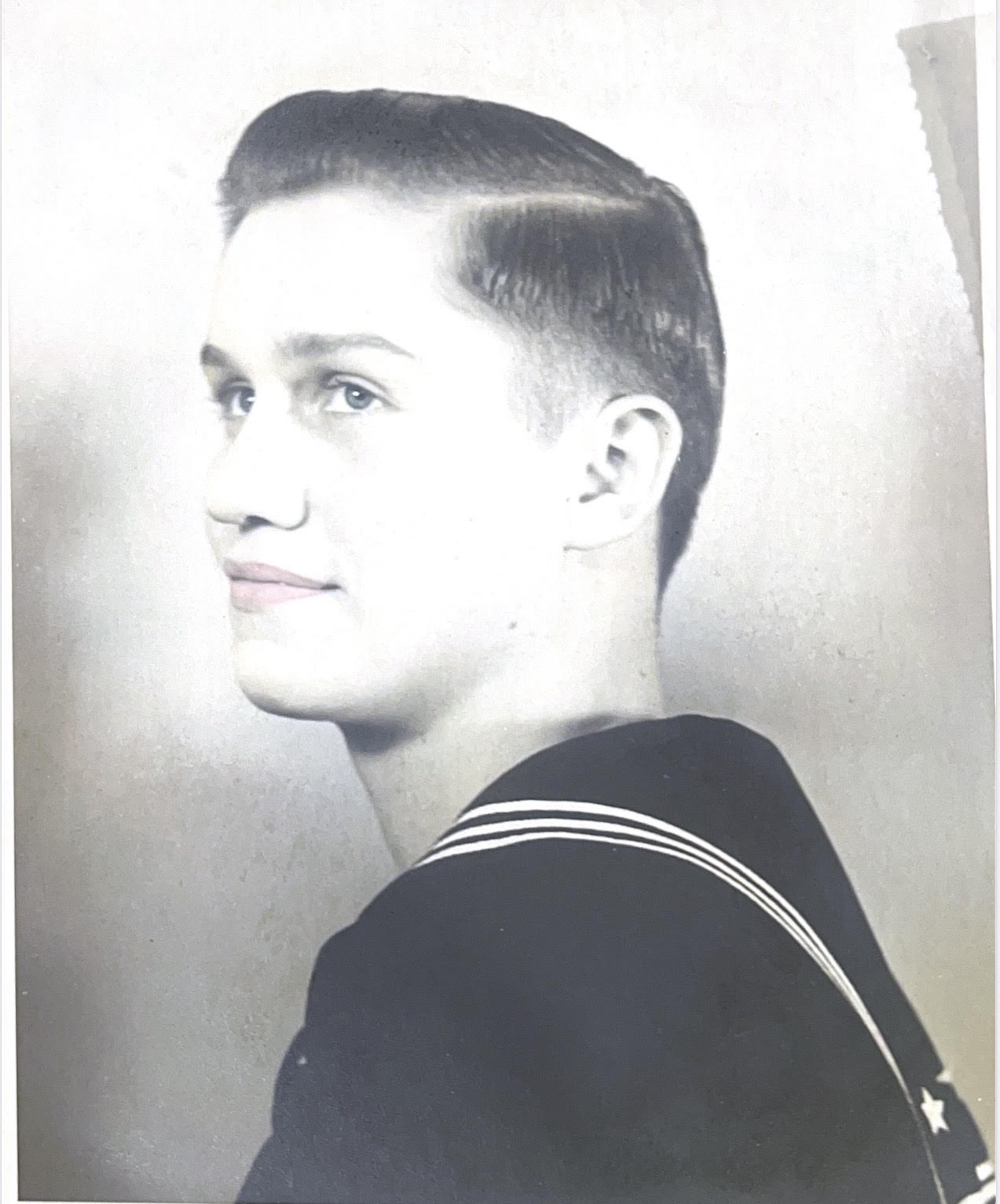
Richard “Dick” Feusse in 1943 when he joined the Navy. (Courtesy photo)

From San Diego, Feusse was shipped to Adak, one of the largest islands in the Aleutian Island chain that stretches from Russia to Alaska. American forces had fought from 1942-43 to reclaim that territory from Japan. This was before Alaska became a state in 1959. On Adak, Feusse was in charge of the X-ray division, doing scans on everyone injured in the Pacific Theater. 

In his spare time, Feusse spent a lot of time in the gymnasium. 

“I had never been into drinking or smoking. I went to the gym and exercised and shot hoops. My whole life, I’d always been sports, sports, sports,” he said, explaining that he was the short stop on his high school baseball team all four years, in addition to playing basketball, golf and tennis. 

While the war ended Sept. 2, 1945, Feusse remained in the Navy until 1946, then headed to Central Michigan University to earn a bachelor’s degree. It was there that he met his wife Virginia (Ginny). He also earned a master’s degree from the University of Michigan, and spent 32 years teaching high school and business classes, coaching several sports and serving as athletic director in schools in and around Dearborn, Mich.

When his daughter, Laurie Wimmer, moved with her family to Waterville, he and Ginny joined them in 1990.

“It’s been a great town to live in,” Feusse said, adding that he and Ginny got involved with Zion Evangelical Lutheran Church and Luther Home of Mercy, where they funded a new kitchen for the Williston Road facility that was named Ginny’s Kitchen in her honor. She died in 2014 after 64 years of marriage. An avid reader, Feusse has frequented the Waterville Branch library so many times that the staff knows what types of books he’ll like, and sets them aside. He considers the Waterville Library staff to be the best.

Feusse now calls Browning Masonic Community home, and he enjoys getting books out of the library, playing euchre and following his favorite teams: Detroit Tigers, Detroit Lions and University of Michigan Wolverines. But living in Waterville, he’s also become a big Generals fan, watching his grandchildren, Brad, Jillian and Maddy Wimmer, play sports.

“Now that I’m 100, I don’t go to games all the time like I used to,” he said, pointing to the walker he now uses. 

He’ll turn 101 on Nov. 17. Last year, his hosted a 100th birthday party and over 150 people showed up. 

“It was unbelievable,” he said.

His family now includes seven grandchildren and nine great-grandchildren.

“I’ve had a wonderful life. I am a Christian, and I know that God controls everything. God kept me safe,” he said, noting that he was never in danger during his time in the Navy.

Less than .2 percent of the 16.4 million Americans who served in World War II are still around. Feusse said most would be about his age. In 2001, his son Tom came up from Dublin, Ohio to accompany him on an Honor Flight trip from Toledo Express Airport to Washington DC to see the war memorials. It was his first and only trip to the nation’s capital, and one he’ll never forget.

“I’m really proud to be a World War II veteran,” he said.

Veterans to lead Roche de Boeuf Parade

0
Pexels photo by Steph Quernemoen

WATERVILLE – Twenty Waterville-area veterans, ranging in age from 75 to 100, will lead this year’s Roche de Boeuf Parade, set to begin at 10 a.m. on Saturday, Sept. 19.

“With this being the 250th anniversary of America’s Declaration of Independence, we thought it would be a fitting tribute to honor our area veterans this year,” said Michelle Smith, executive director of the Waterville Area Chamber of Commerce, which is hosting the day-long festival.

The veterans, listed below by dates of service, include 100-year-old Richard Feusse, a World War II Navy veteran who has called Waterville home since 1990. Read more about his story here.

Dale Johnson was drafted into the Army and served from January 1952 to December 1953, ending his service as a corporal. He and his wife, Jeanne, were married in 1951 and will soon celebrate their 75th anniversary.

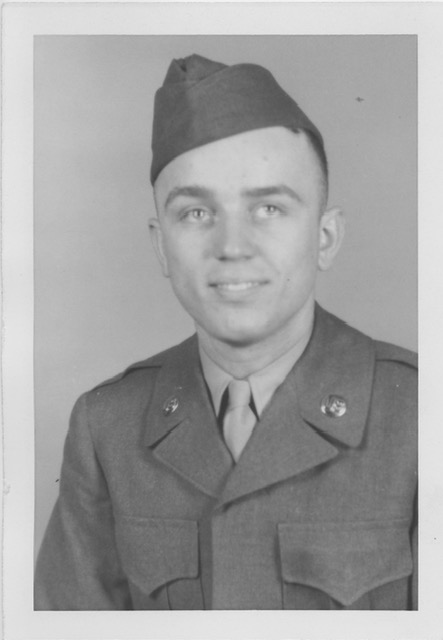
Dale Johnson in 1952 after joining the Army. (Courtesy photo)

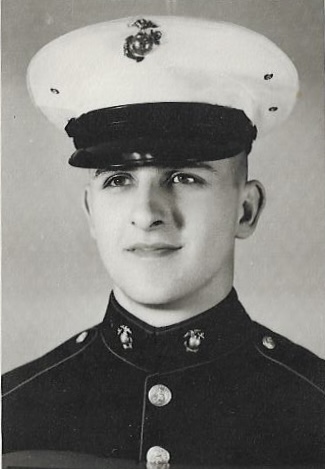
Ferd Seipel of Waterville was living in Springfield, Ohio when he enlisted in the Marines in 1953, rising to the rank of sergeant before his service ended in 1957.

Ferd Seipel in 1953 after joining the Marines. (Courtesy photo)

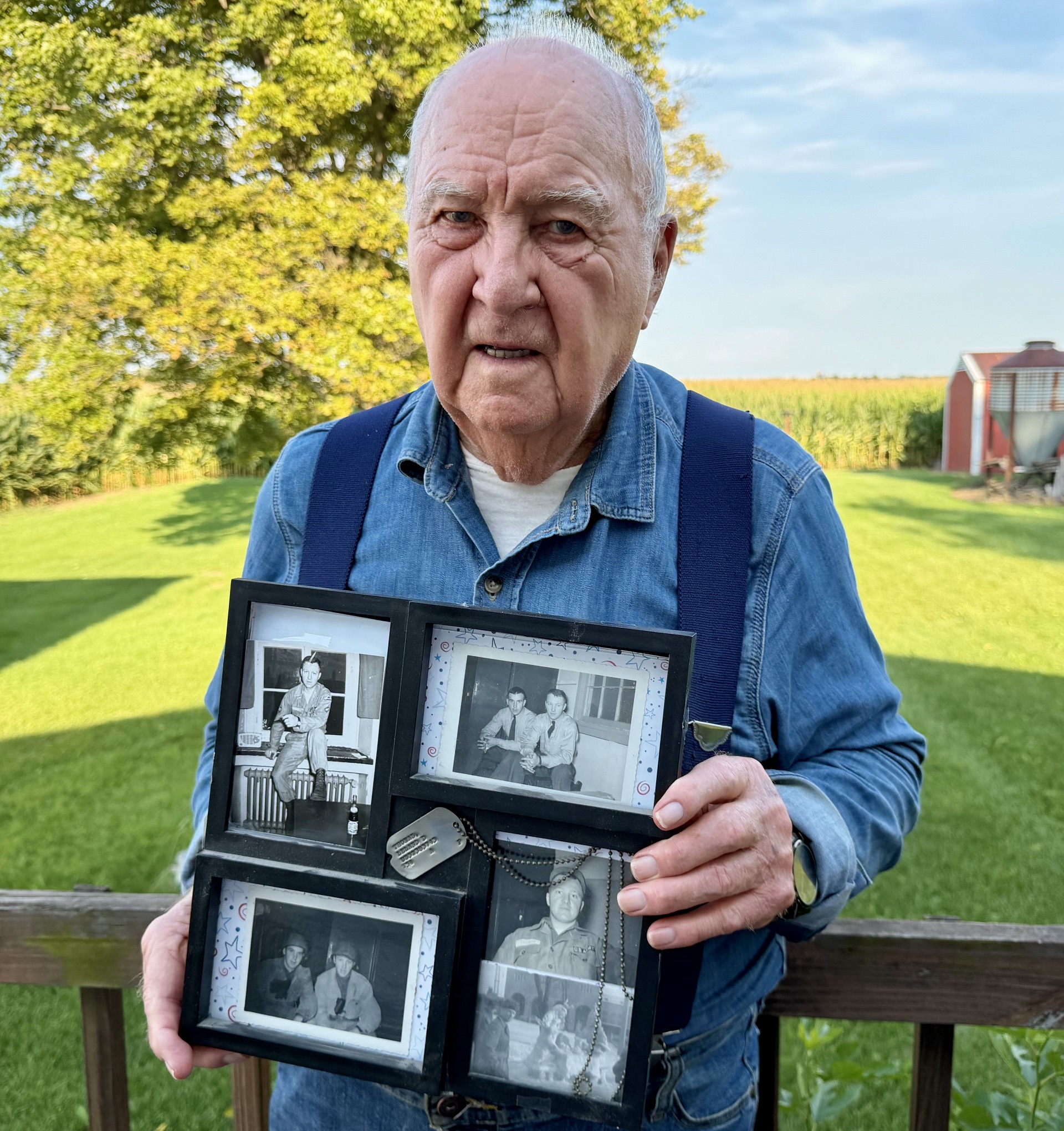
Lee Thomas, a lifelong resident of Providence Township who attended Whitehouse School until Anthony Wayne Local Schools was formed in 1952, joined the Army two years after graduation.

“The draft was still going. A lot of kids from Whitehouse were getting married and buying houses, but we decided to sign up and get on the head of the list before they decided to take us – so in a sense we were drafted,” said Thomas, who joined along with his friends, LeRoy Lashaway and Gene Walters.

Thomas spent 16 months of his two years in service stationed in Nuremberg, Germany, where he was housed in a former SS Stormtrooper headquarters. He drove an armored personnel carrier and then a truck hauling gasoline, ending his service as a specialist.

“I took advantage of my service and traveled twice to Amsterdam on vacation, then Paris and England – and the Angel’s Nest in the Alps,” Thomas said.

When he returned home, Thomas married Joyce within a year, settling in a home on Heller Road where his ancestors settled in the mid 1800s. He no longer has his Army uniform.

“My mom tore up my dress uniform and made it into rags in the kitchen,” he said.

Lee Thomas holds photos and dog tags from his two years of service in the Army. (AWFP photo by Karen Gerhardinger)

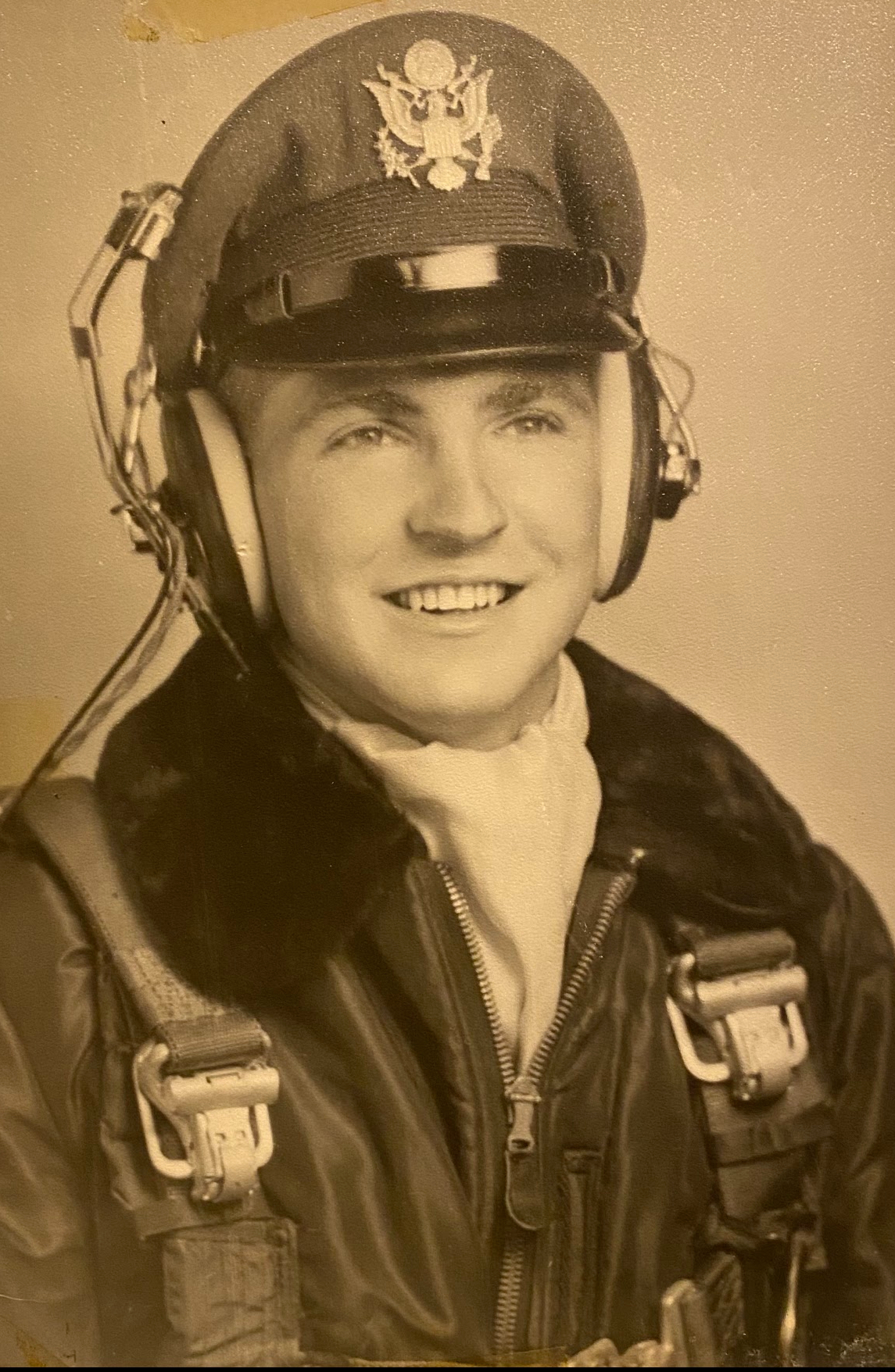
Robert Hires, of Waterville Township, was attending Ball State Teachers College in 1953 when he decided to attend an Air Force officers training college to become a pilot. He served as an F-100 Super Sabre fighter pilot for 25 years.

“My last assignment was as the Air Force advisor at the 180th Air National Guard base,” said Hires, who was a lieutenant colonel when he retired in 1978.

“It’s a great honor to be a grand marshal in the Roche de Boeuf parade,” Hires said.

Robert Hires, pictured in 1953, served as an F-100 Super Sabre fighter pilot for 25 years. (Courtesy photo)

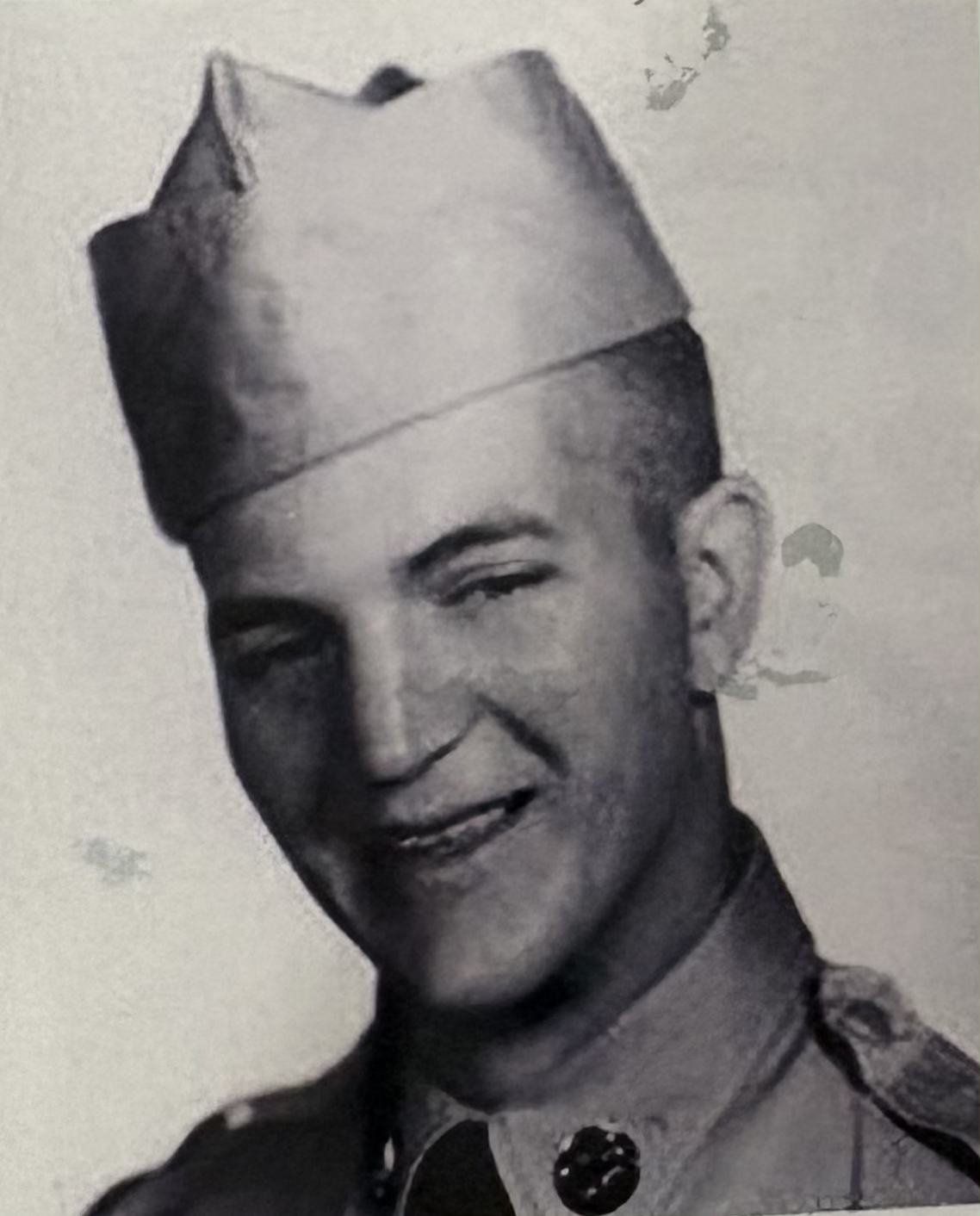
Walter Wiewiora, of Waterville, was living in Barnesboro, Penn. when he enlisted in the Army in 1955, serving for four years. He achieved the rank of specialist second class. His daughter, Dawn Bialecki, said her father was often noticed for his resemblance to Elvis Presley.

“They were born the same year and both served in Germany, but never met,” she said.

Walter Wiewiora enlisted in the Army in 1955. (Courtesy photo)

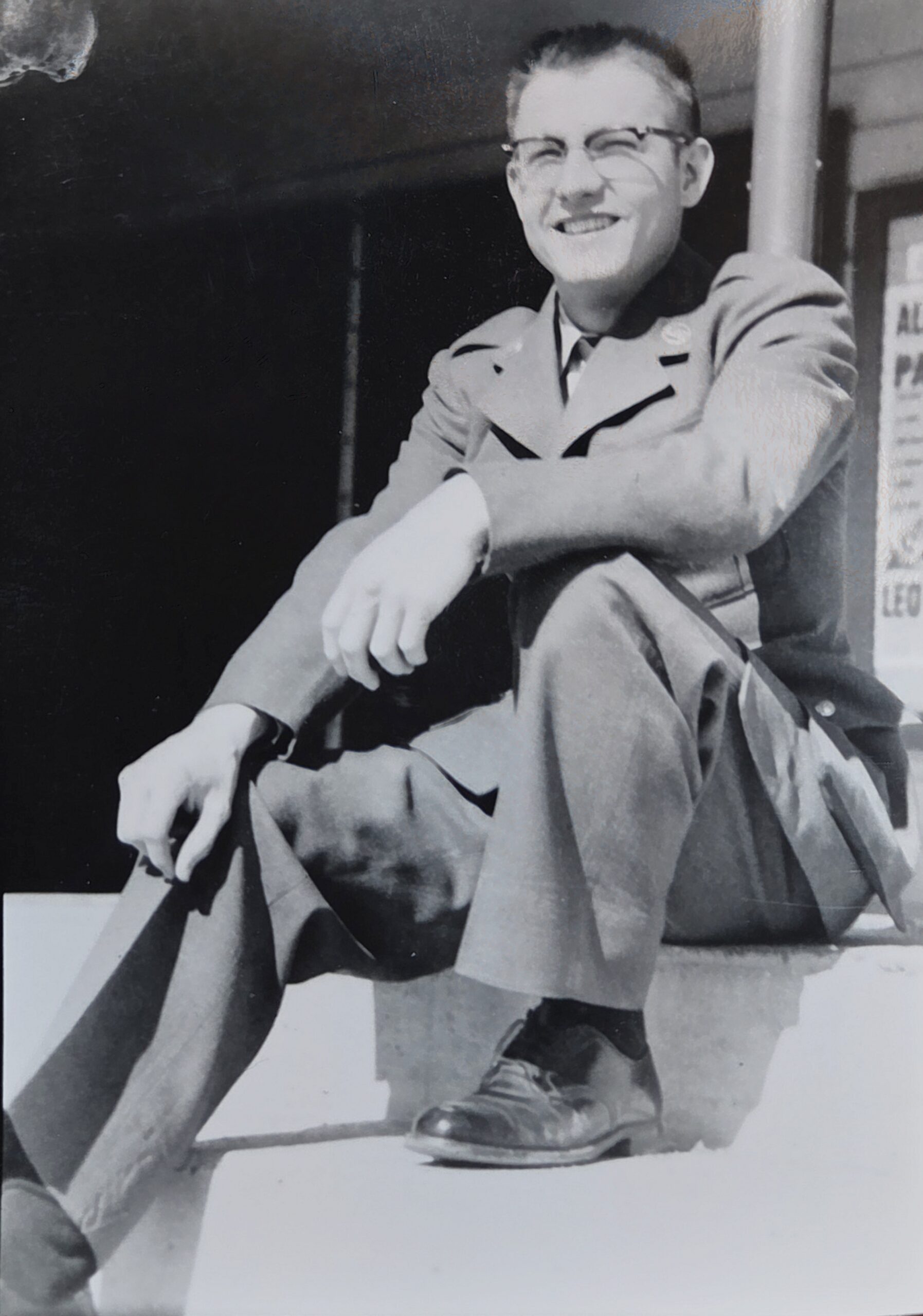
Darryl “Bud” Bauman of Swanton was living in Whitehouse when he joined the Ohio Air National Guard in 1957. He was almost deployed for the Berlin Crisis in 1961. He achieved the rank of airman first class before he finished his service in 1962, returning to operate Whitehouse Motors.

Darryl “Bud” Bauman joined the Ohio Air National Guard in 1957. (Courtesy photo)

Adrian Montanaro of Waterville was living in Ashtabula when he enlisted in the Ohio Army National Guard in 1960 and achieved the rank of sergeant first class before completing his service in 1967.

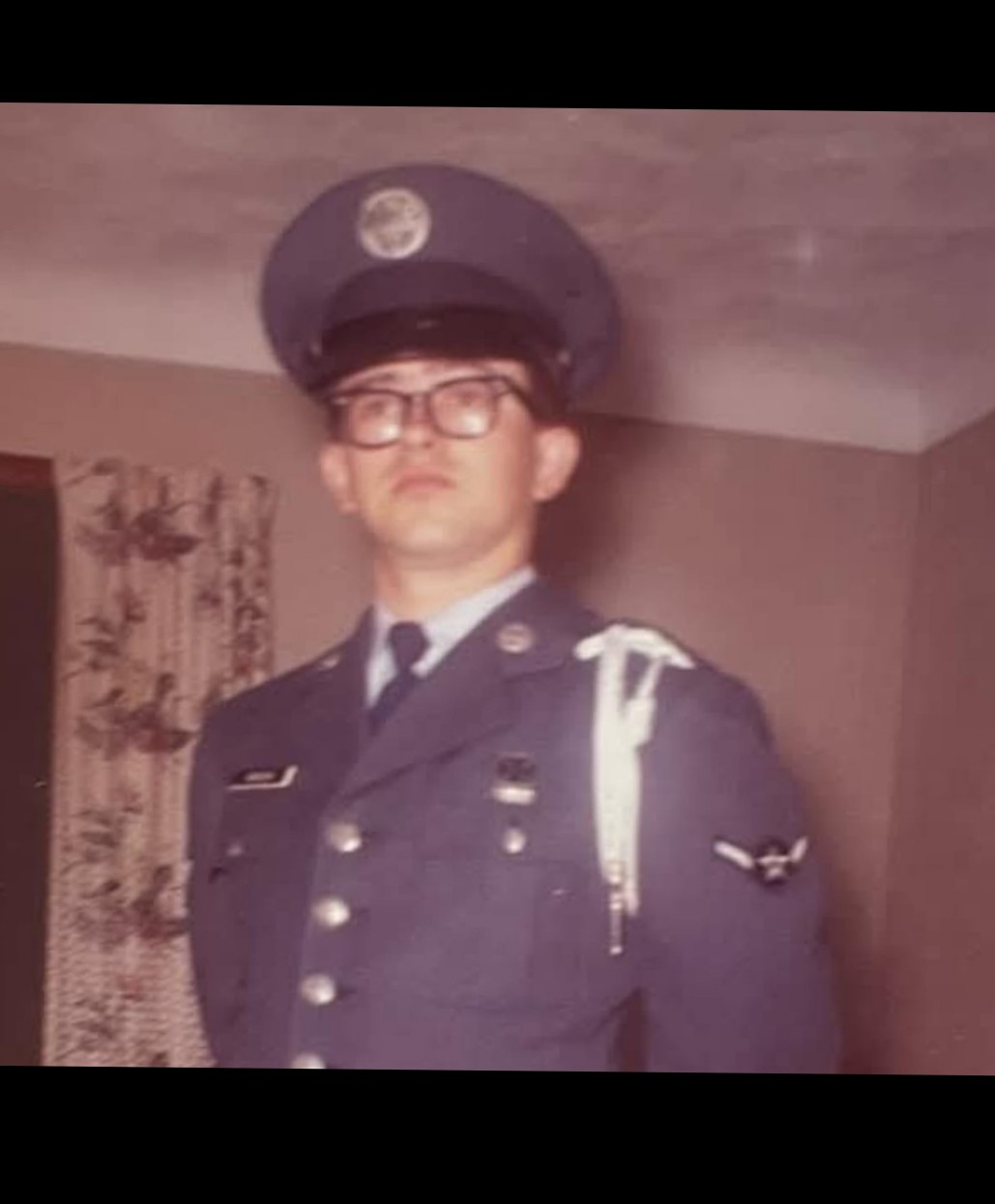
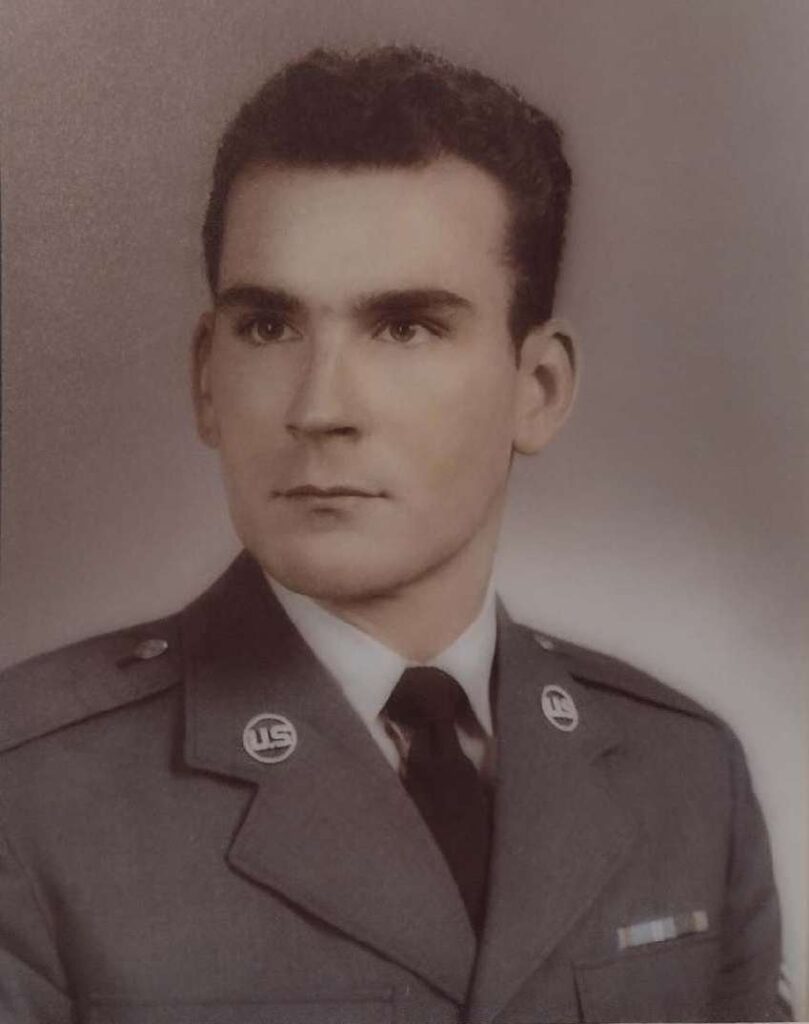
Rodger Green, a Toledo resident who lived in Whitehouse for 50 years, enlisted in the Air Force three months after graduating from West Unity High School in 1962. He served through 1966 and achieved the rank of Airman First Class. Being a part of the group of veterans riding on the Roche de Boeuf parade is a fitting way to show his pride in the military and support for all service members, he said.

Rodger Green enlisted in the Air Force in 1962. (Courtesy photo)

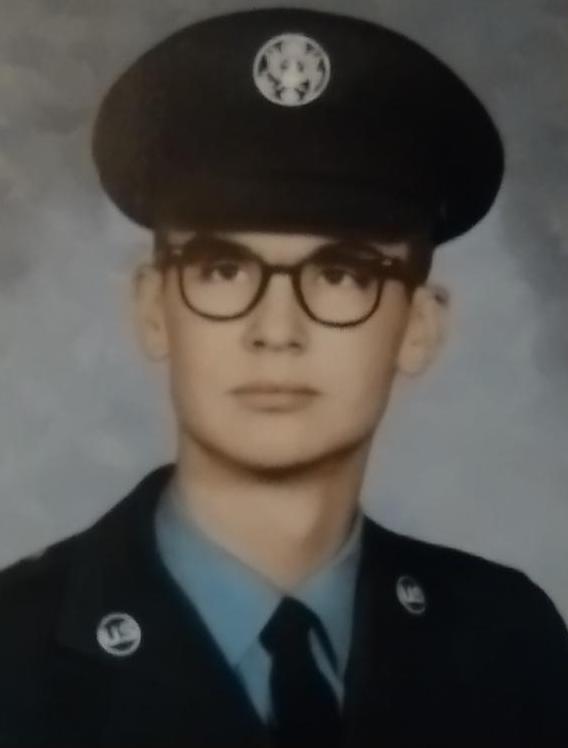
Dené Helwig, of Whitehouse, was 18 when he joined the Air Force in 1968 and ended up serving for 20 years. For eight years, he was a life support specialist, preparing the survival gear for troops jumping out of planes – like helmets, oxygen masks, gravity suits and parachutes. For 12 years, he was a maintenance analyst, maintaining data on aircraft and missles. He ended his service as a technical sergeant. Now he belongs to the Whitehouse American Legion, serving as a member of the honor guard during home football games and parades.

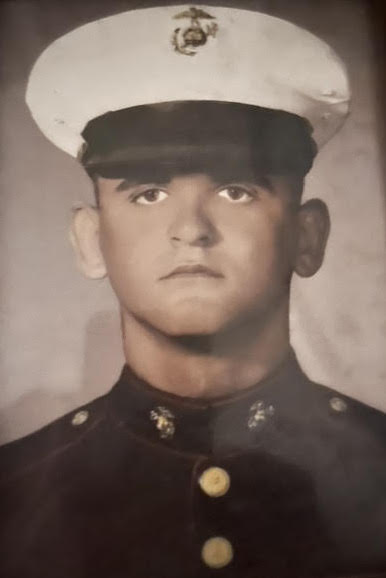
Jack Petree, of Waterville, joined the Marines in 1966 and was assigned to the 1st Marines Division, K battery 21st Marine Regiment, serving in Vietnam. He rose to the rank of corporal before his service was complete in 1969.

Jack Petree joined the Marines in 1966. (Courtesy photo)

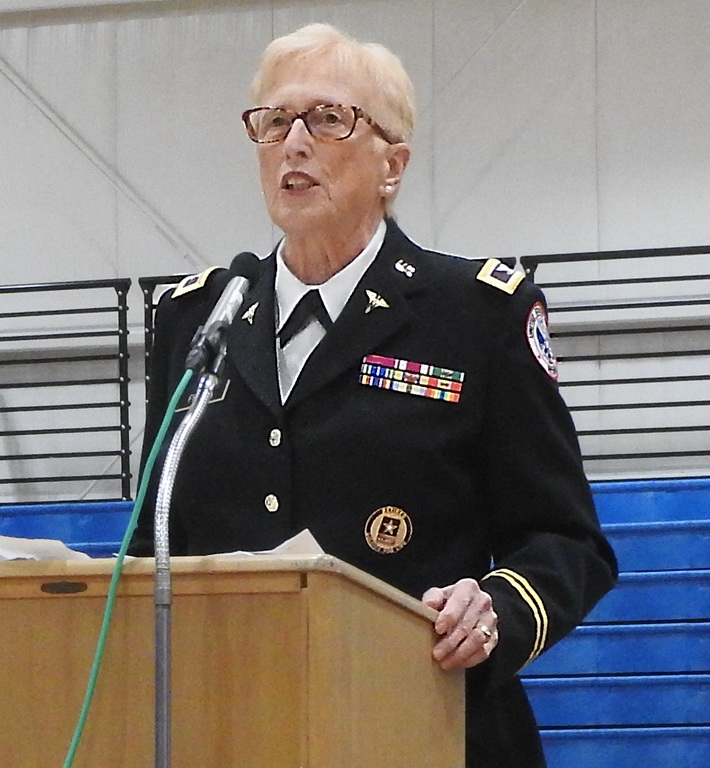
Diana French, of Waterville, has served in both the Navy and the Army. After graduating from St. Vincent School of Nursing in Toledo in 1966, the war in Vietnam was heading up. She was commissioned as an ensign with the Navy and promoted to lieutenant during her two years of active duty and four years in the reserves.

In 1983, French joined the Army Nurse Corps reserve and did a combination of active and reserve service before retiring with the rank of colonel in 2005. Her final duty assignment was as a commanding officer of the 256th Combat Support Hospital, USAR.  

Diana French served in both the Army and the Navy. (Courtesy photo)

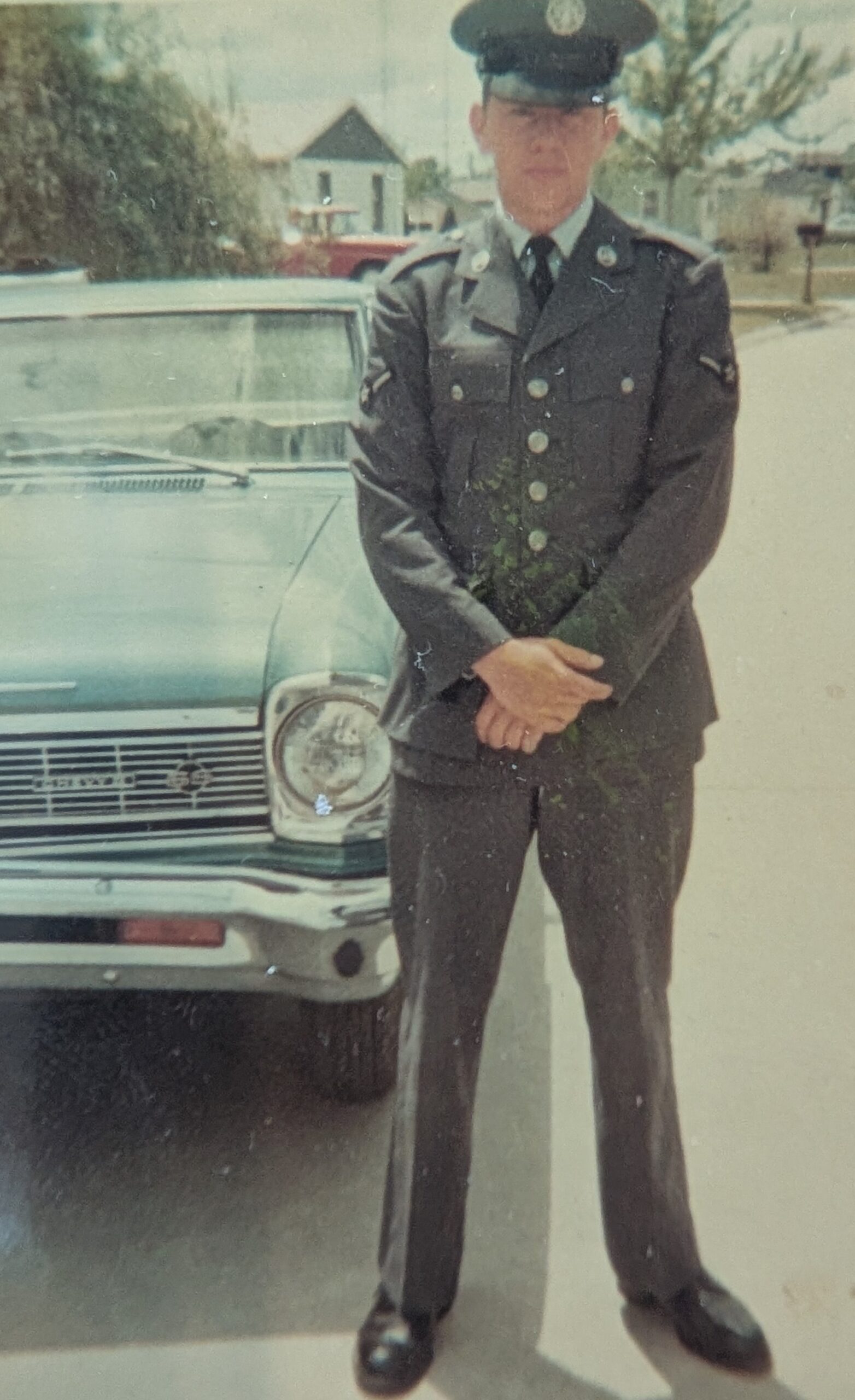
Garry Snyder, of Whitehouse, joined the Air Force in 1966. He served in California before shipping off to Bien Hoa Air Force Base in vietnam from 1968-69. He completed his service as a sergeant.

Garry Snyder stands in front of a 1966 Chevy, wearing his Air Force uniform. (Courtesy photo)

Tom Shadle, of Waterville Township, joined the Air Force in 1963 – just two years after graduating from Anthony Wayne High School. He served as a missile systems analyst and rose to airman second class while serving as part of the Strategic Air Command ( SAC) 17th Missile Maintenance Squadron at Wright Patterson Air Force Base.

Service was part of the family, Shadle said, explaining that his brother, the late Robert Shadle Jr. (Bob), was a 1958 AW graduate who served in the Air Force as part of the Air Defense Command. Their father, Robert Sr. was a 1935 Whitehouse School graduate who was in the Army in the Philippines during World War II.

“Dad was the rural mail carrier out of Whitehouse for 40 years. While he was in the Army, my mother delivered his mail route,” Shadle recalled.

In 2024, all three Shadle names were added to the Anthony Wayne High School Military Wall of Honor. In June, Tom Shadle participated in the Flag City Honor Flight to visit the nation’s capital.

Having the veterans be recognized during the Roche de Boeuf parade is a special occasion, he said.

“I appreciate that veterans are being recognized for their service to our country – this wasn’t always the case,” he said.

Chris Matheny of Waterville agrees, noting that this will be his first parade where he will be part of the procession. He was living in Stony Ridge in 1970 when he was drafted into the Army and sent to Vietnam. While he was trained as a combat mechanic, he wasn’t needed in that role. Instead, he worked in supply, rising to the rank of corporal.

“I was in charge of toilet paper,” he laughed.

Also joining the parade are veterans Thomas Hahn and Jim Howard, as well as others to be announced.